-
Schizopolitan: The Podcast – Episode 2 – Guardians of the Galaxy
And we’re back! Our first podcast went better than we expected, we got some nice feedback from a few people, so here, for your delectation and bewilderment, is episode 2 of the Schizopolitan podcast, featuring 75 minutes of Saxon Bullock and Jehan Ranasinghe talking about stuff! This time we tried to be a little more structured, and spent most of the podcast discussing Marvel’s latest hit Guardians of the Galaxy, looking at the many aspects of the movie that worked surprisingly well, while also examining the parts that didn’t come off quite so effectively. (There are a few spoilers in what we talk about – nothing huge, mainly about story structure (especially as relating to big Marvel bad guy Thanos), but it probably helps if you have seen the film already, and it isn’t spoil-free.) After that, there’s also time for a short update on the first podcast’s discussion on Female Superheroes, as we examine Sony’s plans for a female-fronted superhero in the Spider-man universe and try to work out whether any of them have any chance of working…
Hope you enjoy the podcast (feel free to let us know in the comments if you do), and stay tuned for another episode in the not-too-distant future!
Also – you can now subscribe to the podcast on iTunes! Follow this link to subscribe, and episode 2 should be available there relatively soon after this post goes live…
(The opening and closing music on the podcast is ‘Ouroboros’ by Kevin MacLeod (incompetech.com). Licensed under Creative Commons: By Attribution 3.0. creativecommons.org/licenses/by/3.0/)
-
Attack of the Living Podcast
News: my long dormant movie/comic/book/everything blog Schizopolitan is back, and this time it’s in the form of a podcast. I’ve teamed up with my very good friend Jehan Ranasinghe to venture into the murky depths of the podcasting world, and you can hear the results right now! It’s going to take us a while to get used to the whole process, so do excuse some awkward moments and epic rambling, but this first one has been fun, and we’re going to explore the idea and see where it takes us. So, for an hour and a half of me and Jehan talking about movies, comics, superheroes and more, head on over to Schizopolitan – an iTunes feed so you can subscribe to the podcast is in the process of happening, and hopefully we’ll have more content for you very soon…
-
Podcast: Schizopolitan – Episode 1 – The Saga Begins…
It’s been a long time, but Schizopolitan has risen from the grave… and this time we’re trying something a little different – presenting the SCHIZOPOLITAN PODCAST! I’ve teamed up with my friend and occasional collaborator Jehan Ranasinghe (on Twitter as @Maustallica) for what we’re hoping is going to be a regular series of podcasts looking at the world of Movies, TV, Animation, Games, Comics, and whatever else grabs our attention. It’s our first attempt at anything like this, so bear with us as we figure out various problems, wrestle with technical difficulties and generally ramble like there’s no tomorrow.
In this debut episode (running for 95 minutes), we use the recent aftermath of San Diego Comic Con to discuss some of the con’s announcements and reveals, but that soon spirals into a general discussion of blockbuster cinema in general – there’s talk about Star Wars and the new TV animated show Star Wars: Rebels, the first photo of the Wonder Woman costume and how much we know about Batman V Superman: Dawn of Justice, the potential upcoming DC Universe movies, and then a more wide-ranging talk about the ‘problem’ of a Female-fronted superhero blockbuster and why Hollywood seems so nervous about the idea…
Hope you enjoy our first episode, and stay tuned for more editions of Schizopolitan: The Podcast soon!
(The opening and closing music on the podcast is ‘Ouroboros’ by Kevin MacLeod (incompetech.com). Licensed under Creative Commons: By Attribution 3.0. creativecommons.org/licenses/by/3.0/)
-
Convention Schedule (or: Everybody’s Doing It, So Why Can’t I?)
A quick update (for anyone who’s interested):
I’ve spent the last couple of months rewriting my current book. I’m 80% done with a draft. The last 20% is probably going to be hard as hell, but it’s nice to be almost there.
I won’t be getting much done in the next couple of weeks, because the 10 days of Convention Insanity (which I’ve been watching approach like a custard pie flying through the air towards me) finally arrive at the end of this week.
From the 8th of August to the 11th of August, Emma and I are at Discworld Con 2014. It promises to be great fun – I’ve heard very good things about Discworld Cons in the past, and it’s happening in Manchester, so we finally get to go to a con and sleep in our own bed. I am also DJing the Saturday night party – my first time ever – which is going to be a very interesting and hopefully fun experience, as long as I don’t get lynched thanks to my absolute refusal to play ‘Star Trekkin” by The Firm (I’ve been to one too many con discos where that’s been played, and my only response is NOT ON MY WATCH).
On the 12th of August, we’re not doing anything. Yes, I was surprised too. (Although by ‘not doing anything’, I mean we’ll be frantically getting our stuff sorted and our clothes clean while also doing our best to recover from Discworld Con).
Then, on the 13th of August, we’re off on the train to London for six days, and the mind-juddering experience that is going to be LonCon 3, otherwise known as Worldcon 2014, the biggest con in the SF calendar. I’ve never been to a Worldcon, mainly because they’re usually held in easy-to-get-to locations like Denver or Tokyo, and this Worldcon is on course to the biggest ever, with a current membership of around 9000 people. (That’s four times the size of the biggest con we’ve ever been to). It’s going to be fascinating and strange and a little boggling, and the programme is so terrifyingly huge that I’ve barely got my head around what I’m going to be catching (there’s very few hours of the day where there aren’t at least eleven different things happening AT THE SAME TIME). But, for anyone who wants to know, I’m going to be on three panels! And my schedule runs like this:
1: 2014 Hugos: Best Dramatic Presentation, Short Form
Saturday 11:00 – 12:00, Capital Suite 13 (ExCeL)
The nominees for this year’s Hugo Award for Best Dramatic Presentation: Short Form, are:
An Adventure in Space and Time written by Mark Gatiss, directed by Terry McDonough (BBC Television)
Doctor Who: “The Day of the Doctor” written by Steven Moffat, directed by Nick Hurran (BBC Television)
Doctor Who: “The Name of the Doctor” written by Steven Moffat, directed by Saul Metzstein (BBC Televison)
The Five(ish) Doctors Reboot written & directed by Peter Davison (BBC Television)
Game of Thrones: “The Rains of Castamere” written by David Benioff & D.B. Weiss, directed by David Nutter (HBO Entertainment in association with Bighead, Littlehead; Television 360; Startling Television and Generator Productions)
Orphan Black: “Variations under Domestication” written by Will Pascoe, directed by John Fawcett (Temple Street Productions; Space / BBC America)
But which should win? Our panel will discuss the strengths and weaknesses of the nominees, try to second-guess the voters, and tell you what else should have been on the ballot.
2: The Seriousness Business
Sunday 18:00 – 19:00, Capital Suite 16 (ExCeL)
Perhaps the two most critically acclaimed SF series of the last decade are Battlestar Galactica and Game of Thrones, and in each case the most common reason for that acclaim is their supposed seriousness: here are SF and fantasy with depth and darkness. Why is this the kind of genre material that the mainstream has embraced? Does the presumed “realism” of this approach hold up to scrutiny? Has seriousness become a cliche? And to what extent do these shows, and their imitators, tell original stories, and to what extent do they reinscribe a normative straight white heroism?
()
And…
3: You’ve Ruined It For Me
Sunday 19:00 – 20:00, Capital Suite 3 (ExCeL)
Screen adaptations of genre works are big business, and fan conversation about them often revolves around issues of accuracy and deviation. But what are the other discussions we could be having about the relationship between novel and film? How does our experience of an adaptation shape the way we read a particular book, whether for the first time or on a re-read? Is it possible, any more, to talk about The Lord of the Rings without reference to Peter Jackson? Are ‘book purists’ too defensive against what is, after all, simply someone else’s reading of a work with a budget, or do blockbuster adaptations carry a popular cultural weight that makes them hard to escape?
)
Yes, two consecutive panels. On Sunday night, when the con will have already been going since Thursday, and I’ll probably be fighting off serious levels of exhaustion. What could POSSIBLY go wrong?
So, that’s the next couple of weeks we’ve got in store. And when we get back, I’ve got a birthday happening, and any rumours that I might be turning 40 are all bald-faced lies that have been spread by obvious communist sympathisers. In between recovering from the con, I’ll be celebrating relatively quietly and will definitely not be 40. Glad I was able to clear that up.
I’ve also got another creative project that I’ll hopefully be able to announce in the next few days, as long as luck and technical issues are on my side. But until then, all I can do is look at the next couple of weeks and try not to go “Wibble”…
-
Messing About in Boats
(Okay, this a big life-related news update. The short version is: my girlfriend and I are planning a very big change in our lives over the next couple of years. If you want to know exactly what that change is, read on…)
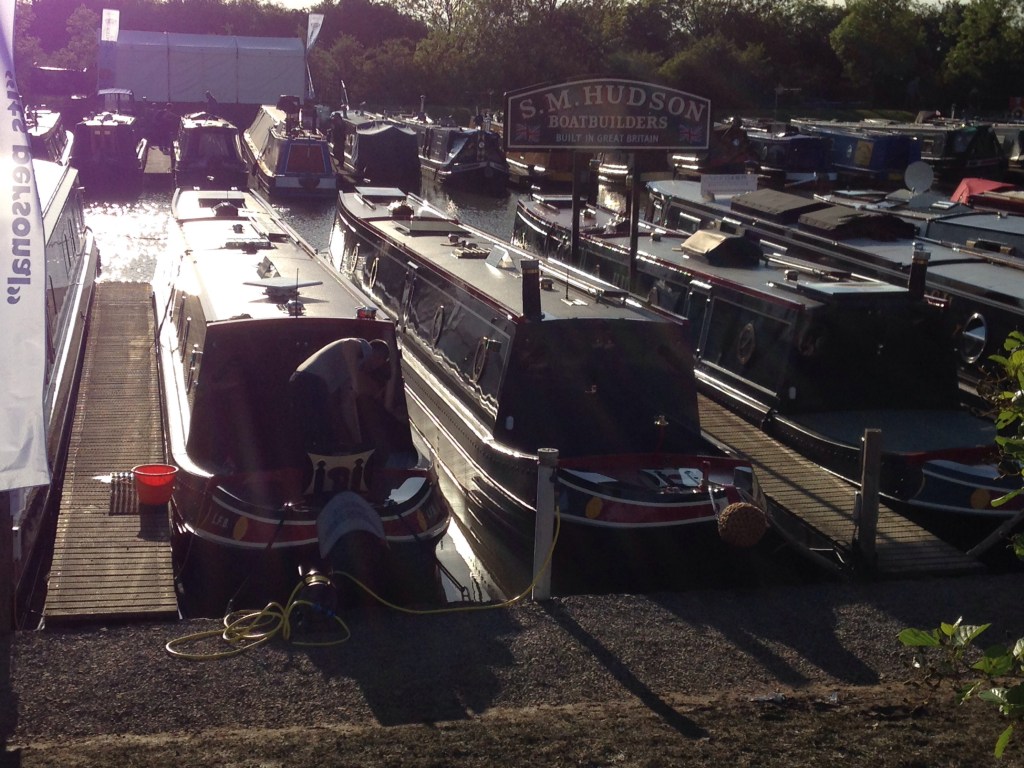
Major life decisions often arrive through very unexpected directions.
Emma and I have been living together for three years now – we’re both freelance, neither of us earn a great deal of money, and we’ve both known for a while that the likelihood of us being ever able to own a house is not ideal. We’re freelancers, so if we were to get a mortgage, we’d need a 40% deposit, and considering how ridiculous house-prices are at the moment, we’d be talking somewhere in the region of £50,000 if we wanted to own somewhere that wasn’t either tiny or in need of a terrifying amount of work. That would take us a long time. Owning somewhere has always felt like an odd, nebulous concept for me – I don’t like renting and find moving tremendously stressfull (thanks to a variety of house/flatsharing adventures in my twenties) but my life hasn’t really given me other options so I basically figured I’d have to put up with it. For Emma it’s different – she owned a house for a while, and then after her break-up was catapulted back into the rental world, and the aftershocks of that get to her a lot.
It hasn’t helped that my MA Creative Writing course means we have to stay in Manchester until about September next year, and that we can’t afford to move anywhere nicer. The flat we’re in at the moment isn’t bad, and does have plenty of plus-points, but we’ve been here long enough that the minus-points (the lack of direct sunlight, the distance from the shops) are getting very repetitive. I’m pretty good at putting my head down and shouldering through difficult times, sometimes to my detriment, but it’s been harder for Emma, and at the start of this year she ended up very depressed about our situation, and looking into ways of ‘getting off the grid’ and living in a more self-sufficient way.
When she first mentioned the friend of hers who lives on a narrowboat, I took it in, but it was one of the many possibilities, hypotheses and general dreams she was throwing around. “It’d be awesome to live on a boat,” she said, and it sounded like the working definition of one of those things other people did. Hell, I didn’t even know that much about canal boats (Emma knows a little – she went on a few canal trips on her grandfather’s cruiser when she was younger). She then mentioned the concept of ‘continuous cruising’ – that if you buy the right licence (for about £800), you don’t have to pay for a boat mooring as long as you keep moving every two weeks (and as long as it’s a definite journey of progression, not just going back and forth between two points). And then she mentioned that a wide-beam canal boat that was 10ft wide and 60ft long would (if we could get ourselves to a point where we could afford one) actually have as much space in it as our current flat.
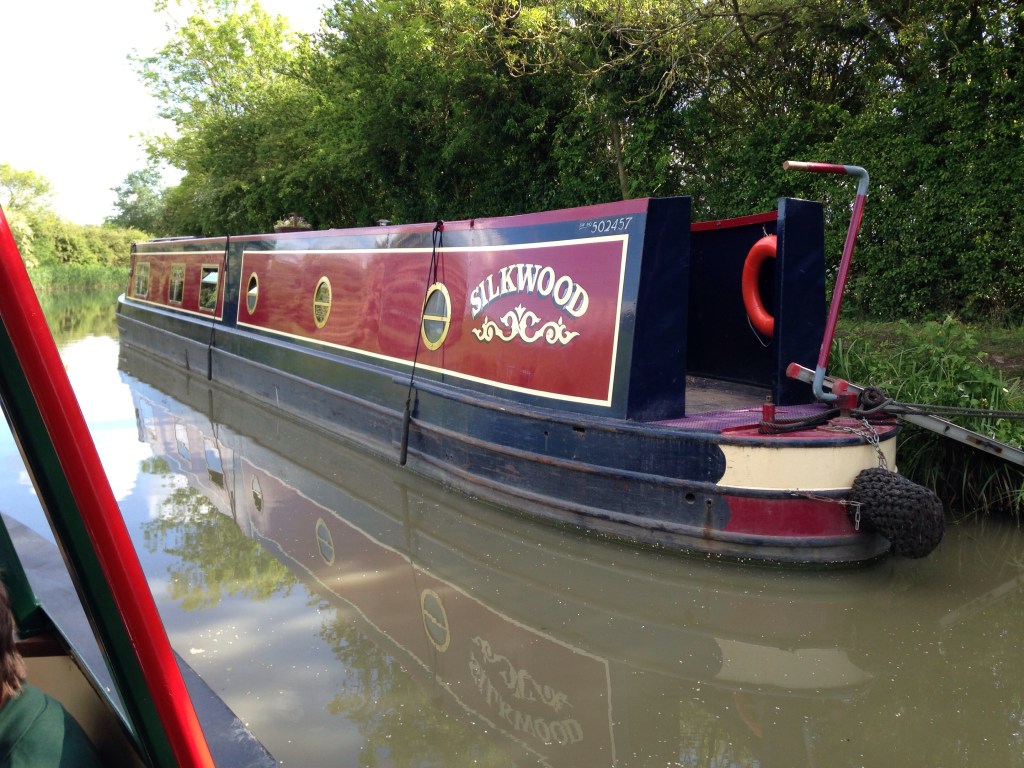
That gave me pause for thought – at least, for a moment. Yes, it’s true that we’re both freelancers so we’re not technically tied to any one place, but it really didn’t seem workable. And it was way too much of a leap. Plus, my work as a proofreader is pretty much dependant on having a postal address. And then there was the internet, which neither of us would be able to function without.
Game over.
Or so I thought.
You see, the idea wouldn’t go away. One of the downsides of the apartment block we live in is that one of our neighbours got into a deeply unpleasant shouting match with us on the day we moved in, thanks to us comitting the cardinal sin of parking our moving van in the wrong place for too long. (It was one of those situations where even apologising straight up didn’t help – they just wanted to argue and complain, and then things spiralled…) Thankfully, we’ve never had any trouble with them since, but much of the first year here was tense (they haven’t moved out, sadly), and it’s frustrating that there’s always the chance of running into them in the corridor, even if it’s just for a moment. And of course, even if we owned a house, we wouldn’t be able to choose our neighbours. We’d have to cope with the situation as best we can.
That was the first penny that dropped – that if we lived on a boat (and I knew at that stage it was a very big ‘if’), we wouldn’t have to worry about neighbours that much. If we didn’t like an area, or the people, we could just start the engine and go somewhere else. The idea of not being limited by where we are – that was extremely seductive. That, and the idea of being quite that close to wildlife. I bounce between being a city person and a country person, but I grew up in the country, and there’s a lot about the idea of being able to lurk around rivers and canals that appeals. Hell, there’s something about just walking next to a large body of water that I find instinctively relaxing.
There was also the fact that once you’re past the intimidating set-up costs, the day-to-day cost of living on a canal boat is surprisingly small. It varies, of course, and there are certain costs you can’t avoid relating to the upkeep of the boat, but we were suddenly looking at our general living costs reducing by a factor of over 70%, if we went ahead and did it. Given that we’ve been surviving on a small amount of money for a while, being able to do that in a situation where after a certain amount of time we’d be able to save significant amounts of money was… tempting. Even if it meant taking up a life with its fair shair of downsides, inconveniences and lack of certain luxuries it’s easy to take for granted, the temptation was there. Plus, being in a situation where massive chunks of money weren’t simply going into the landlord’s pocket? Being in a situation where we’re only beholden to ourselves, where we own the place we live, even if it’s a relatively small boat? Again: temptation.
Also, I did a little looking, and it turns out that Satellite Internet is a thing, and can pull off some fairly decent data speeds if you have the right kit. It isn’t exactly fiber-optic speed and I won’t be watching a massive amount of streaming video, but it’s enough for us to be able to do what we need. Plus, it turns out that there are options for postage – there are post forwarding services especially designed for continuous cruisers, plus there’s the ‘Post Restante’ services where a large number of Post Offices will let you have stuff delivered to them. Even some marinas will let you do that – and while there’ll be complications and problems, these discoveries shifted the needle closer to the ‘Not Entirely Impossible’ level.
So, we started talking. Seriously. Just in a theorising, hypothetical way, but we sat down and discussed possible ways of doing it. We also started going for walks around the canals in Manchester, places I’d never really explored before, and it turns out there’s a whole other world tucked away from sight, a world that’s surprisingly peaceful (even if it does have a few scuzzier areas as well – the joys of built-up metropolitan areas). We started looking at canal boats parked in marinas, in a slightly-more-serious way.
And, slowly but surely, the idea became real.

We still haven’t hit a point where we’ve thought “No, there’s no way we can do this.” There are some serious mountains to climb, and some things we really need practice at – research is great, yet practical experience beats it – but we have a plan, and we’re approaching this in the frame of mind that this is something which is actually happening. On the budget we’re on, which is not huge, we’re going to have to start on a narrowboat, which means (a) not much room so some serious life-downsizing will be happening, and (b) we will be able to go anywhere – the entire canal network will be open to us.
This map of the canal network will give you an idea of exactly how many places that is, and part of what’s seriously appealing about this concept is that we would be able to have so many choices and so many places to explore. I’ve always had a certain level of wanderlust – there’s something immensely satisfying about just choosing a direction and seeing where it takes you – and I really like the concept of making that my life.
Plus, if we can make this work, we can get ourselves to a point where we’re debt free. It will take years – we’re already theorising that once we’re on a narrowboat, we’d probably have to stay on one for about five years to make it completely worth our while, and that’s a hell of a commitment. But I’ve got various responsibilities and things I need to pay back that I’ve never really been able to because I’m functioning on such a small income (and because, honestly, I chose a really difficult path in life that I knew only had a small chance of netting me BIG MONEY.) Living on a boat should make this work – we’ll be living much smaller, but we’ll be able to make the money we’re earning stretch a lot further. Going for a holiday – an actual, let’s-go-somewhere-sunny holiday – will not be an impossibility.
And, because we’re planners, and it’s hard to stop a snowball gaining momentum once it’s tumbling down a mountainside, we’ve got some long term ideas as well. Once our debts are paid off (including the debts we’ll probably have to take on in order to make the boat happen), we’re going to start serious saving. Because yes, we could build up enough money to finally be able to buy a house somewhere, if the housing market doesn’t somehow continue its ridiculous upward swing. But the idea we like at the moment is that if we save enough money, we could upgrade to a bigger boat. Either a wide-beam canal boat (which can be 10-12 feet wide, which makes a massive difference from the 7ft width of a Narrowboat), or an actual Dutch Barge – and the advantage of a Dutch Barge is that if you get the right type, they’re seaworthy, which would mean that while we’d be limited to certain canals on the UK Network, we’d be able to go to Europe and explore the canals there. The amount of places we could explore would exponentially increase, and I like the sound of this.
Are there downsides? Hell yes, there are downsides and issues and lots to learn about. I’ve certainly discovered more about plumbing and toilets in the last few months than I ever wanted to know, and aspects of living on a boat are going to take a *lot* of getting used to. This is not a lifestyle that’s for everyone, and while there’s a certain “This sounds fantastic, we have to find a way of making this work!” attitude to us right now, we are also realising that this isn’t something we’ve done before. That kind of change is scary as hell, and I’m sure when this actually happens, I’ll be bouncing between insane excitement and soul-crushing dread that I’ll suddenly be thinking “Oh God, I’ve made a huge mistake.”
Is it possible that one day I’ll look back at this and go “What was I thinking?” Maybe. But I’ve rebooted my life twice now – once when I moved to London in 1995, and again when I moved to Manchester in 2008 – and this time, I wouldn’t be doing it alone. Plus, I’d rather know that we tried it and it didn’t work out, than stay trapped in the same situation, hoping that something will come along to make life better, when often it doesn’t. Often, you’ve got to find a way to make it happen.

We’ve been onboard plenty of narrowboats in the last three months, especially thanks to Crick Boat Show in late May, and various visits to marinas. We’ve seen beautifully designed, cleverly fitted-out boats that make a brilliant use of maximising the available space on a narrowboat. We’ve also seen some frighteningly tatty boats that often display horribly 1970s decor and furnishings, often look glum and depressing, and are sometimes borderline dangerous (including one which was in such a state we nicknamed it ‘Death Boat’ while we were onboard). It’s helping to get an idea of what we want, what we can afford and what’s actually acheivable, and Emma has been engaged in playing with various design programs to maximise what we can actually fit on our ‘ideal’ boat.
So. The plan:
We’re staying in Manchester until my course is finished. Once I get past May 2015, I’ll be working on my dissertation, and I haven’t completely ruled out the idea of leaving Manchester a little earlier if I feel like I can cope with it… but this course is important to me, and I don’t want to risk messing up my most important project if I can at all avoid it. The dissertation hand-in is at the beginning of September, so the latest I’d like to be out of Manchester is the end of September 2015. That’d also be my 7th anniversary of arriving in Manchester, so there’s a nice bit of synchronicity.
The plan is that we will move to Nottingham for about six months or so. Emma’s family is based in Nottingham, it’s cheaper to rent there than in Manchester, and it’ll give us a nice base from which to start the major prep work. Because, as long as we can make the budget work, what we want to do is start from scratch on a boat. Buying a second-hand boat and doing it up is a possibility, and we’re not ruling it out, but there would be major compromises in doing it that way – we’re developing a clear idea of what we want, and if we’re going to be living on this boat, we’d like to get as close to what we want as is possible.
(One of the biggest stepping stones is the simple fact that I won’t be able to take that much stuff on the boat, which is going to involve downsizing a LOT. This is another advantage to the two year plan, and not moving until mid-2015 – it gives me the time to do this right. And while some of this downsizing is going to be difficult (especially not being able to buy new physical books or comics unless I can really, really justify it), a lot of it is making me realise exactly how much stuff I have, and exactly how much stuff I don’t use. We are budgeting for some long-term storage if we need it, but even so we’ll need to keep it as small as possible, and I will be whittling my book and comic collections all the way down to the stuff that’s really important. Some of it I’ll miss, but I don’t want the stuff I own to end up owning me. I love having things – especially physical books, and physical comic books – but I don’t want them to be a burden, and I don’t want them to prevent me from following the life I want to live.)
We’re taking the harder route: the plan is to buy a ‘Sailaway’, essentially a hull with insulation and an engine in it, and fit it out ourselves. This is going to require LOTS of work, alongside learning about carpentry, getting advice, trying stuff out. Emma has more experience at this kind of thing than I do, but we both know this is going to be a hell of a lot of work, hence the six months in Nottingham. (We’re also doing it that way because we don’t really want to start life on the boat heading into winter – life can be tricky on a boat in winter, especially if it drops below freezing, and we’d rather have a bit of acclimatisation before tackling the bigger problems).
If everything goes according to plan, and hopefully it will, by April 2016 we’ll have our own boat, and by around May/June 2016, we’ll be on our way.
Are there things that could go wrong?
Definitely.
Will I have to make compromises?
Oh yes.
Am I letting that stop me?
Hell no.
There will be ups and downs, I’m willing to live with that. But there’s been too many times over the last few years where I’ve let my lack of self-confidence stop me from doing things, or where I’ve judged myself according to what others think (or, more often, what I think they’ll think). I may never get exactly the kind of life I want from trying to be a writer. There may be a lot more disappointment on my way. But, considering I’m only a couple of months from being 40 years old (*sobs at the vanishing of youth*), I want to try and find ways of making my life as interesting and varied as possible. And if I need to remix my life so I can do that on a limited budget, then that’s what I’ll do. I’ve got a wonderful companion in Emma, and we’ve got somewhere we want to go, so we’re going.
Either way, you’ll be hearing more about this on the blog.
Big changes are coming.
(*gulp*)
And we feel pretty good about them right now…
🙂
-
New Frontiers (The Creative Writing M.A.: Half-Time News)
Time sometimes moves uncomfortably fast. It doesn't seem like that long ago that it was late August 2013, and I was getting myself ready for the adventure that was going to be my first year on my Creative Writing M.A. at Manchester University. And now, due to the way that being a part-time student works… I'm done until September.
Basically, full-time students do two semesters (with two course 'modules' per semester) followed by a dissertation, while people like me only have to do one 'module' per semester, and get the summer off. It does mean that because of how the course is divided up, I'm not actually doing any course-related creative writing work until January 2015, but otherwise I've got the summer to work like crazy on earning money and getting my current book project in better shape.
Things I have learned:
1: I love libraries – proper, full-on academic libraries that you can get lost in, and where you need to know exactly what you're looking for otherwise you'll never find it because BOOKS BOOKS BOOKS. If there's one thing I'm going to seriously miss once the course is over, it's this.
2: Reading a book a week is heavy going – at least, it is when they're heavyweight examples of Contemporary Fiction, and many of them weigh in at 500 pages. Anyone thinking “Ha, a book a week doesn't sound too much like hard work”, go and read GB84 by David Peace (500 pages of aggressively modernist fiction about the Miners' Strike) and then we'll talk, okay? There were plenty of points in Semester 2, where all I was doing was reading stuff for seminars, when I was regularly thanking God that I was doing the course part-time. If I'd been doing fiction workshops as well, my brain may have exploded.
3: I'm a better writer than I thought I was. (But then, considering how my brain works and how I often have a ridiculously low opinion of myself, that isn't exactly hard). But seriously, I feel like the course has genuinely helped me already – I've got some of my confidence back, and I now have a slightly better concept of how I want to proceed, and the kind of writer I am.
4: Academic essays do not agree with me. At all.
5: Cloud Atlas by David Mitchell is a ridiculously fascinating book. It was one of the novels I wrote my essay about, and it's like staring at one of those Magic Eye 3-D pictures – the more you look, the more you find. I want to read more David Mitchell, at a point when my To Be Read pile is not quite so damn terrifying, so that'll probably be sometime around June 2024.
6: I really mean it about the academic essays.
7: Jeanette Winterson is a fiercely intimidating person – so scarily smart it's a bit like staring at the sun, and a bit like being around one of those whip-smart school teachers in whose lessons you always behaved simply because you Did Not Cross Them. She did a selection of voluntary seminars that involved reading a whole load of stuff I'd never have touched otherwise, many of which left me feeling as if I was attempting to catch butterflies with a hopelessly small net, but it was still an experience that was more than worth having, even if I did spend most of them ferociously taking notes while thinking “Oh God, please don't ask me a question, please don't ask me a question…”
8: An off-shoot of the academic essay stuff – I'm not sure a PhD is for me. I was thinking seriously about it, and I've done lots of research and finding out of info, but despite the advantages, I'm not sure if it's something I want to spend three years of my life doing, especially since it ain't necessarily going to guarantee being able to teach at a University level anyhow, and there are different ways of playing that route. And, frankly, I've got loads of writing that I want to do, and I don't want to put it off for three years in order to do something that I'm really not sure I want to do.
There were lots of other things, obviously, and while I've got three months of summer to look forward to, it's going to pass in the blink of an eye. And then I'll be back for another year, heading for next Summer, and my dissertation. I've done my best to make the most of this course – and now, with one year to go, I want to do even better. Only time will tell…
-
News: The Sci-Fi Chronicles (Or: Blimey, I’m in a proper book…)
I’ve been wanting to shout about this for quite a while, but I didn’t want to do anything until there was a proper announcement, or I had any idea about an actual date. The short version: my work is going to be appearing in a book, to be published in September. I got asked around June last year by Guy Haley, writer and editor (who was also responsible for giving me my first writing work on SFX many moons ago) if I’d be interested in being one of a big bunch of writers doing articles for The Sci-Fi Chronicles, a massive book on science fiction that he was putting together. My answer was “Hell, YES”, and I ended up doing 15 articles on a variety of topics, including a timeline for the original Flash Gordon comic strips that almost made my head explode (It turns out, trying to research the entire 70-year history of a daily comic strip is really damn difficult. Who’d have thought it?). Anyway, it was hard work and lots of fun, there’s quite a few pieces there that I’m very proud of, and The Sci-Fi Chronicles has appeared on Amazon, with a release date of 2nd October 2014. In the same format as The Rock Chronicles, it’ll be a big chunky reference work full of pictures and graphical timelines, and I’m looking forward to seeing my articles in print. It’s been a fun ride so far, and I’ll be doing some more shouting about this when we get closer to the release date…
-
From The Vault: Richard Morgan Interview (2002)
(Another resurrected post from previous iterations of my website – this is an interview I did with SF author Richard Morgan back in 2002, shortly after the release of his first novel, the turbo-charged SF thriller ‘Altered Carbon’. The interview was for an online magazine set up by some friends of mine who worked at a bookshop, and I’m still proud of it – even though I’d only been professionally writing for two years, so I’ve still got plenty to learn here…)
There are certain things prospective book authors have to tell themselves in order to keep their sanity. Don’t expect huge acclaim first time around. It’ll take a long time to establish yourself. And don’t even bother thinking about the film rights…
For 35 year old Richard Morgan, things have worked out rather differently. With his funky, dark and razor-sharp debut novel Altered Carbon he’s gained the kind of widespread acclaim most self-respecting authors would commit mass murder for, while Hollywood has already come calling;- the film rights have been enthusiastically snapped up by Matrix producer Joel Silver for a seven figure sum.
Take a look at the novel, and it’s not difficult to see why so many people are getting excited. It’s a dark William Gibson-edged crime thriller set in San Francisco a few centuries from now, when the main difference in society is the ability to digitally record the soul and download personalities into new bodies after death. Dying is no longer an obstacle thanks to the “sleeving” technology (as long as you’re not Catholic and you have the right insurance policy) and prisons exist digitally, meaning that while you’re incarcerated for a minor crime, someone else can either rent or purchase your body. Crashing into this society comes Takeshi Kovacs, an ex-member of a UN sponsored gang of borderline psychotics called the Envoys, who is downloaded into an unfamiliar body and unwillingly hired by the wealthy and near-immortal Laurens Bancroft. His mission is to investigate Bancroft’s recent (but not final) death, a mystery that the Police are viewing as suicide but which Bancroft views as murder.
Naturally, this investigation soon spirals out of control and Kovacs finds himself caught between the police, the criminal underworld and a face from his past… but what’s most suprising about Altered Carbon is how effectively it manages to weld provocative and adventurous cyberpunk sci-fi onto a slick, gripping and page-turning crime thriller. Oozing the kind of attitude found in classic crime writers like James Ellroy or Jim Thompson, it’s an effortless read that, like the best noir, manages moments of profundity amidst suprising plot twists and some genuinely shocking violence. To find out more, here’s Richard Morgan himself, on life, brutality, karma, and that vaguely worrying interest in firearms…
How did the idea for Altered Carbon first develop?It started out from an argument I was having with a Buddhist. The point of conflict was the karma system. He was arguing any suffering you undergo in this life is a direct result of something bad you did in a previous life, which sounds fair until you realise that you can’t actually remember any of your previous lives. Then, it suddenly starts to sound existentially pretty fucking unfair. After all, if you can’t remember a previous life then to all intents and purposes that life was lived by another person. And why should you be paying for someone else’s crimes?
Once I got hold of the idea, it fascinated me and I couldn’t let it go. I decided that I wanted to tell a crime story based around this injustice. And since I’m not in any way a religious man, the only way I could make it work was to go shopping for the hardware in the SF Mall of Fame. There are precedents for the kind of technology Altered Carbon describes all the way back to writers like Robert Sheckley and there’s even an episode of the original Star Trek that has the same basic premise. So I just ransacked the genre and made off with the goods. Later on, of course, I had to sit down and figure out how to make all this stuff work in a social and political context, and that was where the fun really started.
Where did you grow up, and when did you start writing?
I was born in London, bustled out in my crib to East Anglia aged 5 months and subsequently spent the next seventeen years of my life in and around Norwich. Not a bad place to grow up if you don’t count the total lack of bumps in the landscape – Norfolk looks as if Slartibartfast took a huge pair of scissors and cut out any geographical feature more than about ten metres above sea level. I grew up just outside Norwich in a semi rural dormitory village called Hethersett. It was a very restful, stress free upbringing, aided and abetted by incredibly supportive parents and a series of private schools old fashioned enough to try to hammer my natural idleness out of me. In 1983 I got into Queens’ College Cambridge where for the first time I found myself surrounded by people as smart or smarter than me – I never got over the shock and recoiled out of academia three years later with a very average degree in political history.
By that time I’d decided I only wanted two things out of life;- One, to be a writer and Two to travel as extensively as possible. As a result I didn’t really bother with things like earning a decent living until about a year later when it became apparent that my seminal short stories weren’t going to (a) make me famous, (b) pay the rent or (c) get published. I consoled myself by qualifying to teach EFL and pissing off forthwith to exotic locations (specifically Turkey, which back then was still pretty much untouristed). I’ve been an EFL teacher and trainer of one sort or another ever since. I lived mostly in London and Madrid with some extensive time out in North and Central America. Writing was a spare time thing until….today actually. September 20th 2002 is the official date of my leaving the teaching profession and becoming a full time SF writer. Timing´s good – after fourteen years in the classroom, I’m about ready for a change.
Kovacs is definitely an “old school” noir hero, and in no way afraid of inflicting serious damage on people. Was it difficult or therapeutic to have a borderline psychopath as the main character?The latter, definitely. You need the patience of a saint and the outlook of a hippie to survive in TEFL. There are actually teacher training books with titles like “Caring and Sharing in the EFL Classroom” – and worse still, if you’re going to do the job well, you have to buy into that dynamic, at least to a certain extent.
You end up spending a lot of your time being kind and supportive to people who in some cases you’d really rather just punch out. I mean, what can you do when a student – a group of students actually – front you with something like “Ah, yes, Hitler – now he really knew how to handle the Jews.” That’s an extreme case, of course, but it did actually happen to a colleague of mine. And there are a host of less offensive but thoroughly unpleasant attitudes to be found in the heads of some of the people you teach. And for some reason these people seem to feel that the EFL classroom is the ideal place to just come out with all this shit. So Kovacs dripped out of me one corrosive drop at a time, as the side of my character I had to repress in order to do my job well.
How did you approach the extreme violence in the book- and were there ever any points where you thought you might have gone too far?You can’t ever go too far with violence. You either write it or you don´t. If you choose to avoid it, that’s fine, but if not, you’ve got to do it justice. I’ve taken some stick for passages in Altered Carbon which people complained had sickened them, but then violence should be sickening. I have no time for the sanitised approach you find in so much contemporary literature and film – the gun battles where bullets make neat red holes and bad guys fall conveniently and quietly dead, the interrogations where people get slapped about a bit and then rescued. Or worse still the Lock, Stock brand of violence where it’s all seen as a bit of a giggle and as long as you’re enough of a cheeky geezer, it all comes out OK. It´s precisely because of this “light” approach that we misunderstand the subject of violence so badly. I´m not interested in pursuing that line. Where violence arises in my books, it is intended to shock, to horrify and to some extent to get the reader to face up to their own ambiguity on the subject. Because we all like seeing the bad guys taken down, but we don´t usually like it so much when the flesh and blood reality of that act is rubbed in our faces. That ambiguity is exactly what I´m after.
The image of the future is incredibly detailed- how much did you work out before hand, and how much came out of the process of writing the novel?
It’s been a process of marinating more than anything else. The basic ideas for Altered Carbon have been kicking around in my head since at least 1993, and before that I’d written a couple of short stories featuring Kovacs and variants on the Protectorate universe. So I already had a lot of the background detail to hand, carefully aged in casks of reflection and unpublished brooding. Obviously that made it very easy to throw out hints and references along the way, but the process of writing also generated a lot of circumstantial stuff.
In a lot of cases it´s hard to remember which is which. Kovac’s home planet Harlan’s World, the Martians and the general process of diaspora are all ten year old single malt, laid down back in the early nineties, but the Meths were invented on the spur of the moment to provide a realistic backdrop for the characters of Laurens and Miriam Bancroft. The Envoys were a bit of a blend – in an attenuated form they’ve been around as long as any other element in the story, but a lot of the finer detail was added later on. And to be honest, that accumulation of detail is an on-going process. There’s a lot of new stuff on the Envoys in the second novel, Broken Angels, as well as more about the Martians and the archaeologues. The third novel, which I’m working on now, goes back to Harlan’s World and takes a closer look at some of the cultural and historical influences that have made Kovacs who he is. The great thing about having invented a universe like this is that you then have a practically unlimited licence to explore it.
There’s a convincing edge to the drug sequences, as well as an amazing amount of detail about the various weapons (particularly when Kovacs goes shopping for guns). How much was research and how much was experience?
I must be a walking advertisement for the Nature Not Nuture argument, because I was brought up next best thing to a pacifist and still managed to develop the standard unhealthy male fascination with guns. I wouldn´t like to say what it is. Something about their functionality, something about the power to reach out over distance and do damage. In my teens I became quite the little expert on contemporary small arms, and though the phase seems to have passed – I don’t subscribe to Guns and Ammo or own any firearms of my own – the base knowledge has stood me in good stead. I find I acquire new arms-related data almost effortlessly – very often I’m hard put to remember where I read/watched/heard the information, but it´s there. This is confusing for me because, as I said, I’m not into weapons in any discernable way. Kovacs, of course, is. He’s a soldier after all, so he needs to be conversant with the technology of killing. I don´t know, maybe he’s just a distillation of my own repressed fascination with the area. Put it down to being incurably male, I suppose.
The drugs – well, that’s another story. I can hardly lay claim to a misspent youth, but I think I’ve taken my share of illicit recreational chemicals (not to mention the licit ones, which were probably more dangerous and damaging) and I’m at a complete loss to understand the current hysteria about (pounding drums) “THE DRUG PROBLEM”. (There isn’t one, of course – the PROBLEM is poverty and a whole stack of other issues that no-one wants to look closely at, but that´s another rant). So anyway, I had enough background experience to describe altered and altering states of consciousness without too much difficulty. For the rest, it was imagination and wishful thinking. Who wouldn´t want to score some Merge Nine if the stuff only existed.
Did you ever expect the film rights to be sold for so much money?Basically – no. In fact, I didn´t really expect the film rights to be sold at all. It had never occurred to me that Altered Carbon would make good cinema, until I found myself being taken out to lunch by a London film company the day after the book was launched. Later on, I heard that a number of major studios had shown interest at the London Book Fair, and finally Gollancz told me that an agency in Los Angeles had taken Altered Carbon on. At that point I pretty much had to believe that if it sold, it would go for a good price, because those guys don’t mess about with pennies. Brutally speaking, they operate on commission, and it wouldn´t have been worth their while putting in the work unless they had high hopes of a high price.
Could you ever see yourself going all “Iain Banks/Iain M Banks” and writing either a modern day crime novel or something completely non-genre?
Right now I´ve got at least another three SF novels lined up, plus ideas for a revisionist sword and sorcery epic. I suppose I might come up with something non-genre at some point, but it isn´t on the horizon at the moment and to be honest, having just arrived on the SF scene, I´d like to just stick around and do some more work. The great thing about SF is that you’re free to do pretty much what you want (I’m not one of these respect-the-physics types) and then stand or fall by the limits you set yourself. That´s very much my temperament
What was the first story you ever wrote?
The first piece of fiction outside of my English Studies exercise book was an SF short called Process. I wrote it when I was about 13 or 14; it’s about an unfortunate collision between an alien, fauna-eating plant and a human criminal on the run in a wrecked spaceship. The human lands on the plant’s world, gets attacked by the plant in standard Quatermass-type fashion and…dies. Haha, shock twist! Unfortunately for the plant, Earth-derived bodily juices turn out to be rather stronger than those of the local fauna with the result that the usual osmosis goes into reverse and the human protagonist’s blood sucks the plant’s vital fluids out through its roots. So it dies as well. I had this pretty bleak world view, even at that tender age…
What’s next- will you be sticking with the Altered Carbon universe, or zooming off in a different direction?The sequel to Altered Carbon, Broken Angels is done and comes out in March next year. It´s set in the same universe, though not on Earth, and is built around the same central character. The contexts are a little different – Kovacs is caught in the middle of a planetary war this time instead of just an unwelcome investigation, and his motivations are that much more desperate as a result. (So I guess I´ll be taking some more stick for the extreme violence, and here´s fair warning to those who couldn´t cope with it in Altered Carbon – you guys won´t like this one much either). I´m currently at work on a third Kovacs novel, the one set on his home world, and this is focused on issues of organised crime, weapons de-commissioning and revolutionary politics as evidenced by the Quellist movement. After that, I think I´m going to retire Kovacs for a while.
I´ve got something a little different waiting on the back burner, set ten minutes into the future – it´s a novel focused on an unpleasant corporate practice called Conflict Investment. Basically the corporate types in the novel make their living from putting money into various third world conflicts and gambling on the outcome. If their particular troop of revolutionaries win, they then have stakes and rights in the emergent economy. The toast at the quarterly do is “Small Wars – Long May They Smoulder”. Tenders and Promotions are decided in Mad Max style driving duels on motorways that are empty because no-one except the executive class can afford to run a car anymore. It´s intended to be very bleak and very unpleasant – the challenge will be making at least some of the characters sympathetic to the reader. I´m looking forward to that.
Finally- beyond the technology and the murder mystery, what would you say Altered Carbon is trying to say?
Good question. Don’t visit Earth, perhaps? Seriously, I’d like to think that each individual reader takes away something different. You can read Altered Carbon as a simple future crime story and leave it at that, equally you can see it as a love story of sorts, or you can understand it as a social and political commentary on the uses and abuses of technology. Jon Courtenay Grimwood, reviewing for the Guardian, called it “a hypermodern vampire tale.” From my point of view, any interpretation is a compliment because it indicates a depth of engagement on the part of the reader, but I wouldn’t want to dictate what message that reader is supposed to take away.
What I personally see is Kovacs’ affirmation at the end of the book that society is, always has been and always will be a structure for the exploitation and oppression of the majority through systems of political force dictated by an elite, enforced by thugs, uniformed or not, and upheld by a wilful ignorance and stupidity on the part of the very majority whom the system oppresses. But that’s just me. Another reader might think Kovacs is a self destructive, pessimistic burn out and doesn´t know what he’s talking about. It all depends on where you stand and who your sympathies lie with, and it´s not for me to dictate those sympathies. I just write the stuff. It´s up to the reader to judge – if they can.
-
From The Vault: The Secret History of Monsters (2005)
A guide to the ups and downs of Cinema’s greatest Creatures…
(This is one of the articles I was most proud of, simply because the original comission was totally different. Done for Hotdog magazine in December 2005 to accompany the release of Peter Jackson’s version of King Kong, it was supposed to be a “Monster Deathmatch”, kind of a comedy wrestling-style face-off between different legendary screen monsters. One problem – I simply couldn’t get it to work, or be remotely funny. So, after a great deal of panic, I brainstormed a different idea that felt like my kind of lunacy, pitched it, and amazingly they accepted it. Due to complicated reasons I never actually got paid for it, but there are various bits in here that still bring a smile to my face (even if certain gags have dated – God, I’m not sure if anyone nowadays will even remember Dragonheart…))
Ever wondered what Kong was getting up to between his infrequent movie appearances? Wonder no longer, as we unearth the behind-the-scenes lives of cinema’s greatest (and not so greatest) monsters…
KONG (King Kong, 1933)
He may have initially struggled to match his 1933 success, but Kong finally found massive acclaim on the London Stage, particularly during his unbroken two-year run as Bottom in A Midsummer Night’s Dream. Romantically linked with a string of screen beauties including Jean Harlow and Katherine Hepburn, Kong remained a committed bachelor, spending most of the Forties and Fifties as a representative of the World Wildlife Fund. Probably the most unexpected turn in his lengthy career was his Avant-Garde period in the Sixties, immortalised in the Andy Warhol film “Kongdom”- a four and a half hour single shot of the giant ape asleep in front of New York’s Carnegie Hall. Appearing in the unsuccesful1974 King Kong remake was an unwise move, resulting in Kong losing out on a role in Beyond The Poseidon Adventure, while his self-written sitcom “Who Brought The Ape?” was eventually cancelled after two seasons. He now lives in Northern California running his own vineyard, and is credited as an “Executive Consultant” on Peter Jackson’s remake.
GODZILLA (Godzilla, 1953)
Fondly referred to as ‘the hardest working Monster in show-business’, the 50-metre tall radioactive lizard and self-confessed ‘Renaissance Beast’ has barely stopped working between his 28 movies. Since 1964, he’s appeared regularly on Japanese television in the Sesame Street-style education show Gojira Chikara Kazu!! (Number Power Godzilla), where he teaches children to count how many buildings he’s just knocked down. The Eighties saw the start of the Big G’s infamous talk show Shiawasena Gojira (Godzilla Happy Chat), while he’s recently moved into directing with a series of highly acclaimed (and destruction-heavy) arthouse dramas.
T-REX (Jurassic Park, 1993)
The star of Jurassic Park started developing a substance abuse problem when his starring role in the mooted remake of One Million Years B.C. failed to materialise. After being overshadowed in Jurassic Park III by the supposedly scarier Spinosaurus, the T-Rex was arrested for drunk and disorderly conduct on the Universal Studios lot. In and out of rehab for the next few years, the T-Rex has now cleaned up its act, spending much of its time hanging out with Corey Feldman, and is strongly tipped for a comeback with a vital role in Quentin Tarantino’s Inglorious Bastards.
THE SCORPION KING (The Mummy Returns, 2001)
Widely mocked at the time for his unconvincing, CGI-like appearance, the Scorpion King made the move into professional wrestling, but was booted out of the sport for accidentally slicing the heads off some of his opponents. After an unwise attempt at shifting careers into Telemarketing, he was declared bankrupt in 2004, and is currently living as a derelict on the streets of Downtown L.A. According to reports, he can regularly be found flexing his claws outside the Bradbury Building wearing a cardboard sign that says “Will Raise Eyebrow For Food”.
THE BALROG (The Lord of the Rings: The Fellowship of the Ring, 2001)
Already a legend on the Lord of the Rings set for his practical jokes involving banana skins and lava, the Balrog’s hard-drinking lifestyle was exposed after he publicly brawled with one of the Nazgul’s Fell Beasts at a 2003 post-Oscar party. Despite this, he remains friends with all the Rings cast members, and his cameo opposite Orlando Bloom in Elizabethtown will be re-instated on the forthcoming DVD release. He lives in a New Zealand volcano, and is currently suing Peter Jackson for a percentage of the profits from Fellowship of the Ring,
BRUCE THE SHARK (Jaws, 1975)
After many years trying to get out of the iron-clad contracts that forced him into the shoddy Jaws sequels, Bruce The Shark has finally left the world of Hollywood far behind. He now lives at an exclusive resort in the Cayman Islands, where he’s allowed to snack on any guests who don’t pay their bills on time, and is strongly rumoured to be writing a candid expose of his film career that will ‘set the record straight’ on the supposed rift between him and Steven Spielberg.
THE SKELETONS (Jason and the Argonauts, 1963)
The sword-wielding stars were an instant success in the early Sixties thanks to their novelty hit record version of “Dem Bones”. Sadly, the sextet soon split for artistic reasons, with one Skeleton recording a 3-volume concept album, and another launching a series of pop art “happenings” with fellow Argonauts star Talos. Thankfully, the group was re-united in the mid-Eighties as a result of the “We Are The World” Ethiopia charity single, and today can still be found performing their spectacular “Boneyard” theatrical extravaganza at the Mirage Hotel in Las Vegas.
DRACO (Dragonheart, 1996)
Despite Dragonheart’s lack of success, Draco the last dragon did, briefly, manage to carve out a successful career as a witty, urbane sidekick in TV shows like Dragon P.I. and Flaming Hell, but his flippant attitude soon stalled his film career when he got himself fired from As Good As It Gets, with his role being switftly rewritten to fit his replacement Greg Kinnear. Draco currently runs his own Flame Grilled Barbecue restaurant in the San Fernando Valley, as well as earning money on the side doing Sean Connery-impersonating prank calls.
-
From the Vault
A quick note to declare that for the immediate future, I'm going to be regularly reposting some of my older articles up here, many of which date back from my 8-year sojourn as a film journalist, some of which are more recent. There'll be articles, interviews, reviews and plenty of other stuff appearing on a relatively regular basis – there'll be plenty that will have dated, but hopefully there'll still be something which will be of interest to someone, so feel free to join me on the nostalgia bandwagon, and I hope you enjoy the ride…
(The first 'From the Vault' post will be hitting in the next hour…)
 Posted with Blogsy


-
Subscribe
Subscribed
Have a WordPress.com account? Log in now.

