-
TV Review: Doctor Who S6 E07 – ‘A Good Man Goes to War’
Cast: Matt Smith, Karen Gillen, Arthur Darvill, Alex Kingston, Frances Barber ~ Writer: Steven Moffat ~ Director: Peter Hoar ~ Year: 2011

[xrr rating=4/5]
The Low-Down: The finale to this first chunk of Doctor Who‘s season 6 is exactly the kind of big, broad and expansive adventure that we needed. A Good Man Goes to War may still leave us with plenty of questions and is arguably a little shapeless in places, but it also delivers satisfying adventure, well-timed twists and some truly brilliant dialogue, while finally casting some light on one of Who’s biggest current mysteries…
What’s it About?: Making the Doctor angry is not a good idea. With Amy Pond having been abducted, the Doctor and Rory are battling across time and space, calling in old debts in order to carry out a daring rescue on the asteroid known as Demon’s Run. What they don’t realise, however, is that they’re walking into a trap that’s been waiting for the Doctor for a long time – while it’s also finally time for River Song to reveal who she really is…
The Story: (WARNING: As with most of my Doctor Who reviews, the following contains a hefty load of spoilers…)
Yes, I saw it coming. It helped that I’d seen the idea bandied around as a theory online following the broadcast of Day of the Moon, but it was a concept that fitted all the facts, especially with the very obvious touch of both characters having water-based names (I can remember thinking “Pond? Why on earth is her surname Pond?” back when the companion was first announced. Now, of course, it all makes sense). Once Amy announced that her daughter’s name was Melody, it was pretty much on the wall – but all credit to Moffat for still managing to throw in a couple of moments of doubt, from the Doctor’s abrupt “It’s mine” line (when talking about the crib), to the point where we’re briefly left thinking “Wait a minute – ye gods, they’re not seriously going to have River turning out to be one of the Doctor’s family, are they?”, and all the serious Luke-and-Leia-style wrongness that might mean.
But, they weren’t. After a whole lot of waiting, we finally know that River Song is Amy and Rory’s daughter, and that her part-Time Lord DNA led to her being utilised as a weapon to kill the Doctor (which led eventually to her imprisonment in the Storm Cage facility). And while SF-savvy viewers will have unpicked Moffat’s complex web of plotting, the fact remains that this is still tremendously ambitious storytelling for a Saturday night family-aimed show, and that Doctor Who is still aiming high in terms of demanding storytelling and narrative twistiness.
(It’ll also be interesting to see exactly where the relationship between the Doctor and River goes from here, and what the ultimate resolution for him is (as we already know for her) – one of the quietest bits of characterisation is the nicely played sense of sadness from River Song when she realises the point in time that she’s reached, and that the period of the Doctor not knowing who she is has come to an end (and it also, in retrospect, makes the flirting between them that’s happened up until now a lot more poignant – River has always known exactly where this was going, and that her relationship with the Doctor was going to completely change once her identity was finally out in the open. Things will be different – but exactly how different?)
Naturally, of course, there are already people online moaning that the revelation of River’s identity was all rather predictable (simply because, as I’ve said before, moaning comes rather naturally to some Doctor Who fans), but while A Good Man Goes to War wasn’t perfect, it’s given S6 the injection of adrenaline it needed and ended this ‘pod’ of episodes on a serious high. It’s also possibly the most deliberately referential and continuity-crammed episode we’ve had yet (even managing to beat The Impossible Planet/Day of the Moon), and yet did succeed in getting most of the relevant information across in a way that’s still accessible, lively and fun.
It also leaves the weaker episodes of this run – especially Curse of the Black Spot – looking even weaker by comparison, simply because Moffat at his best is able to fire new concepts at the viewer at a rate that’s almost dizzying. Not only does he take the time-and-galaxy-spanning action of The Pandorica Opens and crank it up even further, but he also throws in a selection of new characters that do that wonderfully Doctor Who storytelling trick of hinting at a scope of adventures far beyond what we’ve seen. Top of that, of course, is the jaw-droppingly improbably yet hugely enjoyable Victorian duo of sword-wielding Silurian Madam Vastra (Neve McIntosh) and her maid Jenny (Catrin Stewart), who turned out to be one of the highlights of the episode. I’m still not sold on the Silurian make-up (less human-looking eyes would make such a difference) and initially thought “What the hell?!?” on Vastra’s first appearence, but was rapidly won over. McIntosh gets to have much more fun here than in last year’s tepid Silurian two-parter, and the banter between them combined with some choice innuendo pack a whole lot of life into the story (while once again showing that despite RTD’s departure, the so-called ‘Gay Agenda’ that a small minority of fans still complain about is alive and well.)
Even the deliberately comedic take on the Sontarans – played even more for laughs than they were in S4’s two parter The Sontaran Stratagem/The Poison Sky – managed to grow on me, with Commander Strax’s eventual fate turning out to be surprisingly touching, and Moffat keeps the tone shifting throughout, going from laugh-out-loud funny to emotionally intense. It’s how Doctor Who should always be – funny, fast-paced and deliriously inventive – and once again proves that Moffat is seriously good at delivering the goods when it comes to the big show-stopping episodes.
He also does the sensible thing in keeping it driven by emotion, while also being prepared to pull off some pretty dark moments – from the Doctor’s burst into all-out anger (brilliantly delivered by Matt Smith), to the horribly brilliant revelation that Baby Melody had been switched for a Flesh/Ganger duplicate. The baby disintegrating in Amy’s arms into a puddle of the Flesh is such a fantastically unpleasant image and packs a serious punch, and it’s good to see that Moffat still has a good sense of how far he can push things – that Who shouldn’t be too nasty, but that it also shouldn’t be too safe either.
There’s barely a weak link in the cast, and especially notable was Christina Chong as the mysterious Lorna, giving a really compelling performance despite the fact that you’re barely told anything about her. Both Karen Gillen and Arthur Darvill did great work, giving more nuances and levels to Amy and Rory’s relationship (and making the chemistry-free mess that was their initial relationship last year feel like a very long time ago), but the episode completely belongs to Matt Smith, who takes the Eleventh Doctor to some very dark and angry places and yet still manages to be kookier and more eccentric than ever (especially in the scene where he’s awkwardly discussing with Madam Vastra when Amy and Rory’s daughter “began”).
A Good Man Goes to War romps along at a fast pace and delivers the most enjoyable and genuinely satisfying ‘blockbuster’ episode since last year, along with some impressively mounted Star Wars-esque SF production design – but it still manages to notch up a few problems. A couple of Moffat’s narrative ticks are a little predictable (especially the reveal of the Doctor), and the Headless Monks themselves are initially intimidating yet ultimately end up as slightly unsatisfying villains, with the end action sequence not quite carrying the punch it needed. Frances Barber does a good job with her surprisingly short screen-time as the eye-patch-wearing Madam Kovarian, but I was expecting to learn a lot more about her than we got.
Naturally, this is the mid-season cliffhanger so there was no way Moffat was going to tie off every plot thread, but we’ve now got another set of bad guys whose motivations we don’t entirely understand – and, just to make things even more complicated, they’re bad guys we previously met (presumably in the future) as good guys (or at least guys who didn’t start their conversation in The Time of Angels/Flesh and Stone by saying “Oh, by the way, sorry about that time we mounted an incredibly complex plan to try and kill you…”).
Using the Clerics from S5’s two-parter is an interesting yet odd choice, and we really need a slightly clearer motivation for this astonishingly big-scale plan (which obviously involved the Silence) than River Song’s end speech where she makes it clear that the Doctor’s impact on the Universe is now coming back to bite him (Does Kovarian have other paymasters than the Clerics? Is there another big bad waiting in the wings?). There’s also the fact that we really need this to tie together with The Impossible Planet’s 2011-set scene of the Doctor’s death (Was the astronaut-suit-clad Melody brought back from 1969 specifically for this reason? How does this fit in with the rest of the story?)
In short, Who has a gigantic number of questions that still need to be answered – but at least, with River Song having finally unburdened her secret, there’s the chance for genuine answers (and hopefully we’ll get them, rather than more questions). A Good Man Goes to War does end up feeling a little shapeless thanks to this lack of meaty explanations for the story’s backdrop, but Moffat’s dialogue, energy and inventiveness means it’s still full-tilt SF entertainment – big, bold, confidant, and not afraid to be just a little insane.
The Verdict: A thoroughly enjoyable mid-season finale that shows Moffat hasn’t lost his touch when it comes to emotionally engaging SF adventure, this is an episode where the minor problems and the flapping plot-threads aren’t enough to spoil the rollicking entertainment. It’s certainly hard to work out what on earth Moffat will have in store for us in the next batch of episodes – all we can do is wait for September, the aftermath of all these revelations, and the hilariously titled next episode “Let’s Kill Hitler”…
Previous Doctor Who Season 6 Reviews:
S6 E05/E06 – ‘The Rebel Flesh’ / ‘The Almost People’
-
Video: Doctor Who Anime
Found via BoingBoing (and lots of other places), this is one of the more impressive fanfilms I’ve seen out there – mainly the work of one person, this is essentially a 12-minute ‘highlight reel’ that gives you an Anime-style look at what would have happened in the 1980s if a Japanese animation studio had got their hands on Doctor Who. And it’s rather astonishing – there are rough edges here and there (and the voicework that isn’t hi-jacked from the classic series is a bit on the rough side), but some of the design and animation work here is really good, especially the stylised anime take on the Third Doctor, and all in all it’s a gloriously fun mash-up of genres that has to be seen to be believed…
-
Comic News: Reboot In Your Face (Major restarts coming in the DC Universe…)

There’s been a lot of rumours about what’s coming up in the DC Comics superhero universe, the home of heroes like Batman, Superman, Wonder Woman and Green Lantern. The current big DC event comic Flashpoint, where the whole DC universe is transformed into a dark alternative, is supposed to be leading to yet another one of those moments where ‘things will never be the same!’ On top of this, it was initially announced that in the last week of August, DC would be publishing exactly one comic – the fifth and final issue of Flashpoint. Considering DC normally has around a dozen titles coming out every week, this is a pretty major route to go for – and while it’s now been modified slightly (there are two comics coming out, rather than one), it’s clear that DC isn’t messing around.
Now, DC has started releasing official news of what they’re doing… and it’s pretty big. In a press release that’s turning up in lots of places, they’ve announced that they’re basically rebooting their whole line of superhero comics, and renumbering everything. In September, there’s going to be 52 issue ones, all of which are apparently designed to be accessible jumping-on points for new readers (and considering some of these titles are things like Action Comics, which recently crossed the 900-issue mark, this is quite a big move). Added to which, it does seem like there’s a certain amount of tweaking going on – artist and DC bigwig Jim Lee has apparently done redesigns on over 50 superhero costumes, the word ‘contemporary’ is being bandied around a lot, and it does seem like this is definitely going to be a different take on the DC Universe (with, for example, plenty of characters being aged-down into younger models). Considering that this is following Flashpoint, an event where the DC Universe is altered beyond recognition (meaning it might still be a bit different when it gets put back), it does seem like they’re going for permanent alterations to continuity, and the status quo. And, on top of all of this, every single one of these comics is going to be available day-and-date as a digital comic, through the Comixology platform that DC’s been using up until now.
The easiest bit of this to take on is the digital decision – it was obvious that at some point, one of the ‘big two’ was going to jump into the digital world with both feet (and considering DC are still running second to Marvel at the moment, it’s not a loopy idea). It’s big, and despite that they’re apparently going to run some incentives for comic shop retailers, there are going to be some unhappy people out there. Trouble is, digital isn’t going away, and this could be a very healthy move as well. The day-and-date comics will probably be exactly the same price as print (which is a tad steep for a digital comic), but it’s still a major step forward. For the first time, people who torrent comics because “Oh well, I want them on the day, and only a few titles are done day-and-date” aren’t going to have the excuse. Don’t know if it really will make piracy go down, but it’s a major step along the way to having a good legal digital alternative to piracy.
It’s the rest of it that is… interesting, if not completely convincing. Comic book continuity is a massive double-edged sword – it creates fascinating, intensely complex sagas, worlds that you can get lost in, interlocking stories that can be unlike anything else out there… but then, it can also make it impossible to keep up, especially if you’re not aware of all the tiny pieces of comic-book continuity that the story is tying into. Last week, I read the first two issues of Marvel’s The Mighty Thor, which is a relaunch of the Thor title done to tie in with the release of the Thor movie, and yet if I was a random cinemagoer who’d seen and enjoyed Thor, those two comics would have perplexed the hell out of me. (There’s a lot of reasons why comics have drifted away from being self-contained, and many of them actually only work now collected as trade paperbacks – it’s a complicated problem, and is slightly compounded by the fact that modern comic storytelling doesn’t let you easily put in narrative captions that bring everyone up to date.) And part of this problem is that the majority of the people who buy comics are the die-hard fans, who know the continuity and don’t want to read stuff that ‘doesn’t matter’ (which is one of the reasons why the brilliant out-of-continuity comic Thor: The Mighty Avenger got cancelled after eight issues, despite being a fun, all-ages and thoroughly charming adventure comic).
So, there’s a certain logic in DC’s move… but the fact that they’re going for such a drastic reboot leaves me slightly perplexed. What I’ve seen of the new costumes (shown above in the cover for Justice League issue 1, by Jim Lee) doesn’t exactly fill me with confidence (especially that ‘styled up’ version of the Superman logo, which brings back worrying memories of the Nineties ‘Electric’ Superman redesign), and the statement that they’re doing “younger, cosmetically changed versions” of these characters immediately opens up questions as to what’s in and what’s out continuity-wise. The various dark events in the Justice League’s history in Identity Crisis? Batman being presumed dead in Final Crisis (leading to the current activity in Batman Incorporated)? There’s all sorts of knots they could tie themselves in, especially with ongoing series like Grant Morrison’s Batman Inc, which certainly doesn’t feel like it’s going to end in about three months. (And what about the notoriously delayed David Finch-drawn Batman series The Dark Knight? We’re barely onto issue 3 (after it being launched in November) and now they’re bringing in filler artists – is that going to get a relaunch, or will it just stagger to issue 6 and then get quietly cancelled?)
Another question – violence. DC Comics have been getting ridiculous in terms of violence and pretty damn unpleasant adult content recently (the biggest and most ridiculous of the lot being issue 3 of Rise of Arsenal, which plays like somebody read Alan Moore’s Watchmen and took every wrong lesson from that book that it’s possible to take). Is this going to continue? If DC are looking to bring new readers in, are we still going to get showers of gore, brutal violence, and incidents like the infamous rape of character Sue Dibney?
Also, there’s the Justice League. At the same time as Flashpoint issue 5, we get issue 1 of Justice League – a relaunched version of the comic that’s often been one of DC’s biggest titles, with DC bigwigs Geoff Johns and Jim Lee at the helm (although considering how notoriously late Jim Lee can sometimes get with his art, it remains to be seen how long he’ll be staying on it – this is one comic that can’t afford to ship late). And a new line-up, taking us mostly back to the Grant Morrison era JLA, where he took the then-pretty-ballsy move of actually putting DC’s biggest guns together – we get Superman, Batman, Green Lantern, The Flash and Wonder Woman. Oh, and Aquaman. And… er… Cyborg. (I mean, really? Cyborg? They seem to be making a lot of finally trying to make the DC Universe look a little more multi-cultural, after some very unfortunate examples of ethnic ‘legacy’ superhero characters meeting horrible ends and being replaced by their previous white alter-egos, but that’s the guy you promote to DC’s A-list? That’s the guy at the forefront of DC’s new ‘contemporary’ style – a character who fit in with the Teen Titans back in the Eighties and Nineties, but doesn’t exactly look tremendously sensible now?)
It’s possible, of course, that Flashpoint might act a little like the Time War in current Doctor Who continuity – a way of buffering the new continuity from the old. Old Who continuity is still there, and while there have been tweaks and rewrites (hello, new Cybermen) it hasn’t been completely up-ended in the way a new version of Who could have relaunched everything. There’s any number of ways they could be doing things – the fact that DC are potentially transforming their core universe into a version of the Marvel Ultimate universe (which was originally created as a jumping-on point for new readers, and a more ‘contemporary’ take on the characters) is certainly brave. The potential for messing this up is pretty big, of course, but modern-day mainstream comics certainly need new approaches, and anything which might free them up from the constraints of selling to the direct market (to fans who regularly bitch about event comics and getting more of the same, and yet only ever seem to buy big event comics and ignore the new, riskier titles) has got to be a good thing…
-
Video: Outside Aperture (A Portal fanfilm)
Fan films are a sometimes fascinating subgenre, especially with digital effects getting cheaper and cheaper to realise, and this particular fan film takes one of the most distinctive games ever made and actually manages to capture the oddball mood. There’s a reason why computer gamers go into complete geek-pleasure mode over Portal – it was an out-of-nowhere surprise, an experimental quickie project released to bolster up the Orange Box compilation (and make up for it taking so long for Half Life 2: Episode 2 to get released) that managed to get almost universal acclaim for its brain-twisting 3-D puzzles and its pitch-black humour. Built around a simple mechanic – with a gun that fires portals at walls (allowing you to put an entrance or an exit into a whole variety of locations) you navigate a series of increasingly difficult puzzles set by a derranged computer – it’s a short but perfect example of atmosphere, storytelling and gameplay.
I recently got to play Portal 2, the full-length sequel, which is rather as if someone took a quirky indie SF film and made a $200 million dollar sequel that’s bigger, bolder and in many cases much broader in humour – and yet still manages to carry off the unique atmosphere of the original. It’s a brilliant, hugely engaging game and also shows careful hints at a bigger backstory, while leaving us on a sort-of-cliffhanger. This fanfilm I’ve spotted is set after Portal 2’s ending, and while it doesn’t really have a story and is more of an exercise in mood, it’s incredibly well realised, and the opening sequence has some genuine “Oh my god!” moments for any self-respecting Portal fan. If you haven’t played the game, this won’t mean anything to you – if you have, sit back and enjoy ‘Outside Aperture’…
-
TV Review: Doctor Who S6 E05/06 – ‘The Rebel Flesh’ / ‘The Almost People’
Cast: Matt Smith, Karen Gillen, Arthur Darvill, Raquel Cassidy, Marshall Lancaster, Mark Bonnar ~ Writer: Matthew Graham ~ Director:Julian Simpson ~ Year: 2011
[xrr rating=3/5]
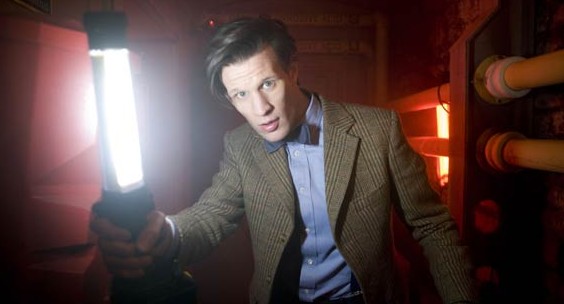
The Low-Down: Showing that the deeply traditional base-under-siege Doctor Who story ain’t always as easy as it looks, The Rebel Flesh and The Almost People make up a potentially interesting two-parter that’s let down by some major pacing problems and misconceived villains, although is ultimately saved from total mediocrity by some interesting concepts, Matt Smith being brilliant, and one hell of an ending.
What’s it About?: Running into a solar tsunami, the TARDIS ends up making a sudden landing at an industrial station on a future Earth, where a dangerous acid is being mined with the aid of ‘Gangers’ – artificial duplicates of the mining crew, used in dangerous environments and casually disposed of when broken. However, when a second solar wave hits, the Flesh that makes the Gangers becomes self-aware, and it’s up to the Doctor to prevent the situation spiralling into bloodshed, especially when one Ganger starts preaching revolution…
The Story: (WARNING: As with most of my Doctor Who reviews, the following contains a hefty load of spoilers…)
It was never going to be easy following The Doctor’s Wife – which was not perfect, but did feature the kind of fast-paced inventiveness that Who does really well – and as I said in my last review, Matthew Graham wouldn’t have been my first choice to follow up Neil Gaiman, especially after the less-than-impressive S2 episode Fear Her. Well, the resulting two parter is definitely a much stronger story than that infamously weak episode, and also holds together better and more consistently than last year’s Silurian-themed two parter The Hungry Earth/Cold Blood… but it also shows that out of all the reactions Who should be aiming for, the very worst is a middling kind of ‘meh’.
This isn’t a story that thrives on the shock of the new – whether it’s a fresh take on an old Who enemy, or an odd, attention-grabbing twist we haven’t seen before – and in fact, up until the deeply surprising final two minutes, it’s engaginglyy played but very rarely surprising. We’ve seen this kind of story done plenty of times before, ever since S2’s The Satan Pit, but there isn’t enough pace or invention to distract us, while the plot also manages to echo S4’s Planet of the Ood (with the unfair exploitation of a race that yearns to be free) and especially the S5 Silurian two-parter, directly throwing humanity up against a dark mirror and showing what happens when we’re confronted with our own natures.
The central concept of the story – the Gangers themselves – is an interesting one, and the way the story deals with political subtexts is sometimes very effective (even if it’s also a little bit too subtle for its own good). Trouble is, we’ve seen Ganger-like duplicates before, and the fact is that they (and the twist of a Ganger version of the Doctor) aren’t quite strong enough a concept to hang a whole 90 minutes of television on.
While much of the character-based drama is well-played, it simply isn’t quite gripping enough, and it’s hard not to think how much stronger and focussed the story could have been if it had been a single episode. Added to this, you’ve got the slightly murky approach to the Gangers themselves – the potential was there for a ‘who’s the double?’ tension-fest in the manner of The Thing (which does seem to have been the initial intention), and in certain ways its good that they do try and explore the different levels of the Gangers, ultimately proving themselves to be just as worthy (and as flawed) as the humans.
The problem is that this doesn’t make for very dynamic bad guys – a necessity for Doctor Who to work – and it also undercuts the story’s tension. With large chunks of the plot involving various characters regularly switching sides (making it worryingly reminiscent of the 1970s Who story Colony in Space, much of which consists of miners and colonists capturing and recapturing each other ad nauseum), it’s like the story never quite catches fire. There are some excellent lines, and yet there are also some deeply clunky ones, and the lack of scale (with the perspective of the story completely confined to the Island monastery) meaning that the threat never quite feels big enough.
Given this, it’s a surprise how much of the story does motor along in an entertaining way. Despite the lax pacing, the direction pulls out plenty of atmosphere, the performances are largely strong (aside from a couple of exceptions, including an especially unconvincing child actor), and Matt Smith once again proves that he’s one of the most gleefully eccentric actors ever to get his hands on the role of the Doctor. Emerging from the TARDIS and exclaiming “Behold, a cockerel!”, he’s a delightfully kooky presence who brightens up even the less exciting scenes, while there’s also some nice nuances and depth given to Amy and Rory’s relationship (although I suspect some dialogue about Rory’s reasons for being able to sympathise with the Ganger Jen – thanks to his 2000-year-old experience as an Auton duplicate – may have been cut, and would have helped a lot).
Both episodes, despite their flaws (and a couple of especially weak CG shots), have more genuine invention and cleverness than The Curse of the Black Spot, although they’ve also got their fair share of logic errors as well (like exactly why it was necessary for the Ganger Doctor to sacrifice himself (other than to tie up a plot end), and where exactly did the second sonic screwdriver come from?). Ultimately, it’s an episode that’s a little too busy exploring the human condition to deliver the kind of adventurous scariness that Who does so well (and which The Doctor’s Wife pulled off with aplomb). A medium episode of Doctor Who is still good fun – it just has the danger of possibly not sticking in the memory, which is something you can’t say about most RTD episodes (even if they were sometimes only memorable for being extremely bad…)
Some of these problems (especially the ones of scale) are obviously down to money. The cuts in the show’s production budget were relatively obvious last year, and the gap between the blockbusting episodes and the smaller-scale stories does seem to becoming a little more extreme in Season 6 (with this being the second story this year to revolve around a small number of characters trapped in a relatively confined environment – and from the looks of things, there’s at least a couple more to come).
The end result is that the storytelling needs to get sharper and more imaginative to compensate, and while the budget could only stretch to a handful of shots of the surprisingly nasty Japanese horror-style mutant Jen Ganger in the climax of the episode, I can’t help feeling that this two-parter would have been much more gripping – and a hell of a lot more fun – if they’d eased off on exploring the human condition and just given us a cracking ‘The Thing’-style monster story.
However, while there is a lot of online grumbling about this initial slate of episodes (One thing Doctor Who fans never run out of is things to complain about), it’s worth remembering that last year had its own fair share of middling or not hugely impressive episodes. S6’s strike rate isn’t as initially strong as S5 – but then, I just end up looking at the major quality wobbles in the first seven episodes of S2 (excepting The Girl in the Fireplace, of course), and remind myself that creative teams are allowed to stumble a bit from time to time, and can sometimes take a while to truly get to grips with how difficult Who can be to pull off.
Some of this grumbling is, of course, because of the intricate story arc (and, simply, that Moffat is comitting the cardinal Who sin of – shock, horror! – attempting something that’s new and ambitious and not like what’s gone before), but the arc elements actually play into The Rebel Flesh and The Almost People rather well. We have the fact that the Doctor now knows more detail about his death in The Impossible Astronaut, there’s the slightly over-fast line that states we possibly may not have seen the last of the Ganger version of the Doctor…
…and there’s the ending.
Curiously enough, the last-minute revelation that Amy has been a Ganger duplicate for months (potentially since the appearence of the Silence in the White House bathroom?) is another mirroring of the Silurian two-parter and its sudden execution of Rory, although at least this feels a lot less tacked on and a far more organic part of the plot. The slightly hazy morality of the scene in question – the fact that we’ve spent the whole story establishing that Gangers should be treated humanely, and the Doctor essentially kills Amy’s non-self-aware Ganger – only really hits once the episode is over and you’ve had a chance to think about it (rather like the pregnant dream-suicide in Amy’s Choice). It’s still a magnificent twist, though, as well as a fantastically disturbing one, and it does raise the stakes massively for next week’s mid-season finale.
It’s also a natural evolution of Who storytelling – going from simply having something like ‘Bad Wolf’ turn up (and jerry-rigging a slightly convoluted explanation at the end of the season), to experimenting with full-on arcs that demand a lot of attention. There are potential risks involved; I think some of the episodes in this half of the series could have been stronger, and I’m also hoping that enough explanations are coming next week for this to feel genuinely satisfying – but I’m not about to start bitching about Moffat daring to do his own thing and approach the show with some serious ambition. I just feel like sometimes his cerebral approach doesn’t always suit the material, and that tonally S6 should possibly have had a little bit more fun upfront, and a little less dark and spooky character-driven soul searching.
The Verdict: A two-parter that does entertain but mostly leaves the needle firmly stuck on ‘average’, The Rebel Flesh and The Almost People is really just the latest in a long line of trad-Who two parters that didn’t quite come off (from Rise of the Cybermen/The Age of Steel to Daleks in Manhattan/Evolution of the Daleks, and even The Sontaran Stratagem/The Poison Sky). It does, however, set the scene for next week’s mid-season cliffhanger, and certainly has me hoping Moffat is going to have something seriously big to deliver in ‘A Good Man Goes to War’…
Previous Doctor Who Season 6 Reviews:
-
Movie Trailer – The Girl with the Dragon Tattoo (Updated – now with HD Version…)

Okay – I don’t usually like posting shakycam Youtube recordings of footage – but when the red-band trailer for David Fincher’s upcoming remake of The Girl with the Dragon Tattoo hit the net, I couldn’t resist. I was already intrigued by the idea, especially after exactly how good The Social Network turned out to be (especially when I’d become a little unsure of Fincher – I hadn’t exactly been entranced by The Curious Case of Benjamin Button, and I still haven’t seen Zodiac…), and when I heard Trent Reznor and Atticus Ross were doing the soundtrack, I became genuinely excited. The Social Network soundtrack is something I’ve had on near-constant play since it came out last year, and while I’m not onboard with the critical love the original film version got (I thought it was an intriguing, well-acted but slightly overlong and pulpy thriller), I was definitely keen to see what Fincher did. And now we’ve got the first trailer – and even in shakycam Youtube format, this is something else. This won’t be up for long, and a full-quality version will be hitting at some point next week (and well done if you’ve got that level of patience), but if you’ve got the chance, click below, as this is a seriously well-crafted trailer…
(Update – 1/6/2011 – Well, Sony have finally yanked the redband from Youtube, but we’re still waiting for a proper, official release of the trailer. There’s a greenband, safe for work version floating around (which has no blood or nipples, I’m sure you’ll be delighted to hear) but that keeps getting taken down as well. Tomorrow should be the day for it turning up in full-on HD, and not before time…)
(Further Update – 2/6/2011 – The official teaser is now up at the Apple site in glorious shiny high-def, and I’ll be slapping an official Youtube embed up here as soon as possible (it’s an Apple exclusive at the moment). Of course, it’s the green-band, work-safe version (with none of that bloodletting or nudity, thank-you-very-much), and rather annoyingly they’ve also cut a few sections of the trailer that worked perfectly well before (there was a tracking shot close to the beginning that worked brilliantly with the music, and now isn’t there. And the previous end of the trailer, which went from the fantastically blaring titles to a quick shot of Rooney Mara and the brief caption “She’s Coming”, has now lost the “She’s” part. Que?). For those who’ve seen the redband, it’s still a strong trailer, but it is interesting how removing the slightly harder images does at certain points make this look like an extremely dramatic film about people walking through doorways. Cracking cover version, though (with vocals from Karen O, apparently), and I’m still definitely intrigued…)
-
Movie Trailer – The Adventures of Tintin
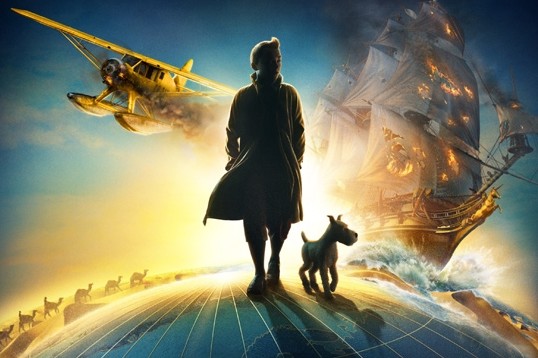
The Adventures of Tintin is something that’s intrigued me for a while – I grew up with Tintin, it formed part of my love of comic books, and stories like The Crab with the Golden Claws, Prisoners of the Sun and Explorers on the Moon are seared into my subconscious. Herge’s globe-trotting adventures have always had a massive appeal, and while a full-on live action adaptation would have just been wrong, the concept of a motion-capture CG adaptation that kept to Herge’s distinctive style was… interesting.
Then, there’s the creative team behind this. The first draft of the screenplay was done by Steven Moffat (before some sci-fi series started taking up all his time), with further work done by Edgar Wright and Joe Cornish. It’s being directed by Steven Spielberg, with the next in the series due to be helmed by Peter Jackson. The still images we’ve seen so far have been interesting – lurking in a halfway house between photo-realism and Herge’s original artwork.
Well, now we’ve got our first actual footage from the film. The teaser trailer for the film is now up in Hi-Def at the Apple trailers site, and it’s… interesting. It looks exactly as gorgeous as you’d expect (especially since, as far as I know, Weta Digital is handling all the animation), with many of the early shots not even looking computer-generated, and there’s a couple of moments which suggest that Spielberg handling 3-D could be an interesting experience. (There’s also the fact that despite this first instalment in the planned franchise being largely an adaptation of The Secret of the Unicorn, there’s a big chunk of The Crab with the Golden Claws in this teaser, suggesting we’re getting a brisk origin for Tintin and Captain Haddock’s friendship). The one thing it doesn’t do, of course, is show us much of the characters or much of the dialogue, giving us no chance to see if they’ve succesfully transferred the leaps in motion capture made by the Avatar crew into a film which doesn’t star giant blue pointy-eared space elves. The end shot of Tintin himself is gorgeously executed and amazingly photo-real, and the stylisation may prevent this from falling into the glassy-eyed creepiness that Robert Zemeckis’ mo-cap films have often ended up with. However, until we see some actual scenes, I’m going to reserve judgement, and The Adventures of Tintin: The Secret of the Unicorn will remain something I’m interested in, but not quite genuinely excited about yet…
-
TV Review: Doctor Who S4 E04 – ‘The Doctor’s Wife’
Cast: Matt Smith, Karen Gillen, Arthur Darvill, Suranne Jones, Elisabeth Berrington, Michael Sheen ~ Writer: Neil Gaiman ~ Director: Richard Clark ~ Year: 2011

[xrr rating=4.5/5]
The Low-Down: It’s ‘The One Written By That Bloke Who Wrote The Sandman’. It’s the episode with one of the most fan-baiting titles of recent years. And it’s also about the most inventive, fun and consistently excellent single episode of Doctor Who since S5’s The Eleventh Hour.
What’s it About?: An impossible message sends the Doctor to a junkyard asteroid outside the universe, where he encounters eccentric patchwork people and the parasitic House. But there’s also someone else – a woman named Idiris, who’s actually someone the Doctor knows extremely well…
The Story: (WARNING: As with most of my Doctor Who reviews, the following contains a hefty load of spoilers…)
I’ll be honest – I was a little worried about The Doctor’s Wife. Neil Gaiman writing Doctor Who did sound like a match made in heaven, but I’ve learned never to trust sure things where Doctor Who was concerned. Plus, there was that title – a fan-baiting proposition if there ever was one, especially in the wake of S4’s The Doctor’s Daughter (and its anti-climactic resolution in the story in question) along with the general speculation about exactly who River Song was going to turn out to be. Also, there was Suranne Jones – an actress whose first Who-related appearence was as a brassy, gun-slinging Northern version of the Mona Lisa in a not-exactly-astounding edition of The Sarah Jane Adventures. On top of this, the opening of S6 had been… well, not exactly shaky, but a little too arc-heavy, a long way from the confident energy of last year’s The Eleventh Hour, and backed up with an episode (The Curse of the Black Spot) that can only safely be described as ‘lacklustre’.
I needn’t have worried. Not only does The Doctor’s Wife bring a serious level of inventive fun and energy back to the show, but it’s also a stone-cold classic that features a tremendous amount of continuity that’ll enchant long-term fans without talking over the head of new viewers. One of the advantages of Doctor Who having such a long history is that certain writers can play off this history in imaginative ways, and Gaiman does this in such a wonderful manner, giving a new slant on a relationship that’s been there since the show’s beginning and yet has never quite been expressed like this.
The identity of Idris – that she’s the Doctor’s TARDIS in human form – is a brilliant twist (one that I didn’t predict in the slightest), and not only does it set up a pulpy, ferociously enjoyable episode, but it also gives us a wonderfully oddball relationship of the kind you could only ever pull off in Doctor Who – someone the Doctor has known for 700 years, and yet never properly met. The interplay between the Doctor and Idris is energetic, fast-paced and brilliantly done (from her initial outbursts of “My Thief!” to his complaints about the TARDIS’s reliability, to the final, heartbreaking “Hello” line), and what could have been over-kooky or twee is pitched at exactly the right level, aided by simply brilliant performances from Matt Smith and Suranne Jones (whom I’d never have recognised from her Sarah Jane Adventures appearence).
It’s an episode that’s utterly Gaimanesque, with plenty of gothic flourishes (especially with Idris herself, who heavily echoes Delirium from Gaiman’s The Sandman), but which also is steeped in Who mythology, utilising the background of the show in a number of imaginative ways and even giving us a long-awaited look at the TARDIS interior beyond the control room (with the dim, slightly creepy hexagonal corridors giving the dingy, atmospheric feel that the story needed).
What’s most surprising about the story, however, is that while there’s a brilliant pace and a cerebral edge to it, it also doesn’t feel like it would have been completely out of place in the Russell T Davies era – there’s an expansive big-heartedness to much of the episode that’s tremendous fun, and it also doesn’t fall into the trap of overdone sentiment that Vincent and the Doctor arguably did at its climax. Overall, this is Gaiman getting the chance to play with as many elements from the Doctor Who toybox as he can get his hands on – and while there are areas where budget has obviously come into play (the TARDIS-set sequences are never able to cut loose with the kind of mayhem that House would have been technically able to unleash), this is still a tremendously inventive and creative episode, giving us a style that feels modern while still capturing the pulp weirdness of Doctor Who at its best.
Slickly directed and well-played by everyone involved, it’s the kind of story where the tiny flaws only really stand out because there are so few of them. The TARDIS-pursuit sections never quite feel as if they fully live up to their potential, and it is unfortunate we ended up with yet another ‘fake death’ for Rory (although the proximity with ‘Curse of the Black Spot’ wasn’t planned, as that was originally to be episode 9 of this season, and the sequence in question was genuinely unsettling, with the disturbing graffiti giving it a seriously dark edge for Who). Yes, there are certain moments when the pace is a tad too fast, or we’re getting important information shouted at us over some slightly deafening sound design, but they’re over so quickly that they barely seem to matter.
What’s more important is the sheer quality of the writing, and how much of a difference it makes after last week’s somewhat unimpressive effort – while Moffat’s era of Who is still somewhat uneven, at least the highs are still turning out to be magnificent ones. As always, Who lives or dies on the quality of its writing, and Gaiman has set a new benchmark, giving us another episode that leaves you thinking “My God, why can’t it be that good every week?” He’s also given us the most genuinely satisfying episode of S6 so far, and yet more proof that despite its inconsistency, Who is still capable of being one of the finest SF shows on TV when it really hits the mark.
The Verdict: An engaging, funny and magical episode, The Doctor’s Wife will make it impossible to look at the Doctor/TARDIS relationship in quite the same way again. A seriously classy act, it’s not going to be an easy one to follow – and now’s not the time to mention that next week’s episode (the first of a two-parter) is from Matthew Graham, the same writer who gave us the abysmal S2 episode Fear Her, is it?
-
TV News: Comics No More (Wonder Woman and Locke and Key bite the dust…)

So, the much-kicked, much-derided Wonder Woman pilot has, in the end, not been picked up by NBC. In certain ways, this isn’t surprising – the network initially passed on the script, and it’s fairly clear that it only really got through to production because of the fact that it’s a well-known and recognised property, meaning NBC were dipping their toe in the water but with no commitment to diving all the way in. Naturally, there’s lots of victorious braying from certain areas of comics fandom, convinced that this project was a guaranteed disaster from the start, but I can’t quite work up the same enthusiasm and relief I did when Robert Zemeckis’ ill-advised motion-capture remake of Yellow Submarine got tanked. That’s mainly because Wonder Woman is a character where there’s so much manuevering room that you can do different takes on her (especially in a network TV show, which was highly unlikely to go the ‘Amazonian Goddess fights mythological beasts every week’ route). Now, I was never entirely convinced by what I heard about Kelly’s WW concept – it sounded like the kind of thing which could either work fairly well, or end up embarrassing – and some of the casting had me raising question marks (Liz Hurley as the main bad guy? Really?), but there was enough there to at least have me intrigued, and I was willing to give the project the benefit of the doubt until I’d actually seen it. And, from reports of people who’ve seen the pilot, the episode isn’t a disaster and has some strong elements (quotes used have been ‘ambitious’ and ‘well-crafted’), but the focus-groups and execs weren’t convinced.
Now, however good or bad lead actress Adrianne Palicki was as Wonder Woman, the series isn’t going to happen, and yet another version of Wonder Woman has failed to make it into becoming a genuine commercial spin-off. Fans may be breathing a sigh of relief, but this is likely to make another Wonder Woman project a lot less likely to happen for while, if only because producers may be slightly uneasy about a fandom that’s going to lash out with a borderline insane amount of venom unless they get a version of Wonder Woman that’s exactly like the comics in every conceivable way. And as we’ve seen plenty of times in recent years – sticking exactly with the comics isn’t always a good thing. Like I’ve said before, Wonder Woman is a tricky character to get right in a manner that will appeal outside comic-book fans – there’s a reason why so many WW film projects have failed to get off the drawing board – and it’ll be interesting to see if anyone can ever solve the Wonder Woman problem…
 The WW pilot misfire is, of course, the big TV news – but the one that’s made me a lot sadder is that Fox have passed on the pilot episode of Locke and Key, an adaptation of Joe Hill and Gabriel Rodriguez’s brilliant dark fantasy comic (which is slowly approaching the end of its run). With a brilliant cast and an absolutely corking director for the pilot (Never Let Me Go helmer and music video supremo Mark Romanek), it was top of the list of shows I wanted to see happen – although I was a little concerned that Locke and Key is pretty damn dark, a pitch-black twist on a traditional ‘kids adventure’ tale, and it felt like the kind of work that would fit much better somewhere like HBO or AMC than on a mainstream network (added to which, Fox have not exactly always been kind to genre shows). Added to which, word is that the pilot episode is really, really good – but it’s fallen victim to being viewed as ‘too complex’, and in a showdown between Locke and Key and new JJ Abrams-produced mystery Alcatraz, Abrams was the winner. There’s always the vague chance it might get shopped to another network, but I’d be surprised – five years ago, Locke and Key would have stood a much stronger chance as a TV show, but mainstream US TV seems to be largely moving away from long-form mysteries and complex arcs (leaving it more for the pay-on-demand HBO crowd). Seems very likely that Locke and Key is going to be left as yet another fascinatingly incomplete footnote in SF/Fantasy TV History, worse luck…
 -
TV Review: Doctor Who S6 E03 – ‘The Curse of the Black Spot’
Cast: Matt Smith, Karen Gillen, Arthur Darvill, Hugh Bonneville, Lily Cole, Lee Ross~ Writer: Steve Thompson ~ Director: Jeremy Webb ~ Year: 2011
[xrr rating=2.5/5]
The Low-Down: A lacklustre excursion into Pirate-infested waters, The Curse of the Black Spot isn’t the worst New Who episode by a long shot, but it’s certainly never in any danger of being the best.
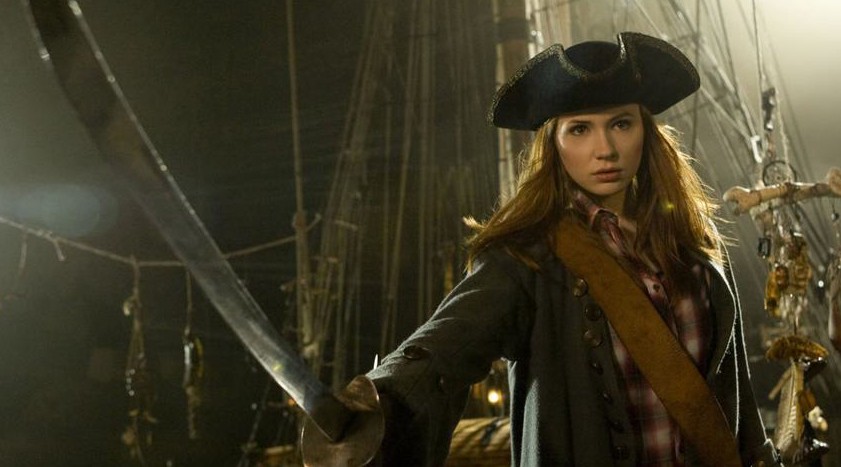
What’s it About?: Following a distress signal, the TARDIS lands onboard a becalmed Pirate ship, but the crew are in fear of something out there in the water – a Siren (Lily Cole), who’s already killed most of their number. But, with Rory falling under the Siren’s spell, can the Doctor figure out what’s really behind this mysterious curse?
The Story: It isn’t always good to be prejudiced against certain writers – especially since expectations can often prove to be wrong – but unfortunately, there are also times when I’m proved completely right. When I initially heard that this episode was going to be written by Steve Thompson, the man responsible for the deeply lacklustre middle episode of last year’s Sherlock (The Blind Banker, aka The One With The Chinese People That Felt Like A Filler Episode), the chances of a brilliant standalone episode seemed pretty remote, and what we get is a long way from being brilliant; an episode that’s fun enough to be distracting, but never quite good enough to be truly memorable, and lacking the kind of insane invention that Doctor Who thrives on.
In fact, most of the problems with the episode can be laid at the script’s door, because after a relatively hearty start, the story soon runs out of interesting things to do with pirates (and it certainly doesn’t help that the story essentially gets smaller as it goes along – it only really feels in any way like the ‘spooky romp’ the trailers promised in the first ten minutes). The episode also runs into the problem that we’ve seen this story a few too many times now in New Who – the ‘supernatural threat turns out to have an SF explanation’ tale is almost as much of a staple as the Celebrity Historical, and while Impossible Astronaut/Day of the Moon subverted that kind of episode (giving us a very atypical adventure featuring Nixon), there’s no real subversion here at all. Even the leap from the boat to the space-ship (which is very reminiscent of 1978 Classic Who adventure The Stones of Blood) doesn’t carry any real sense of frisson or drama, and ultimately we spend far too long in the episode waiting to get past the ‘supernatural shenanigans’ and onto the meat of the story.
Another issue that’s rather more in evidence is that of budget. Who has, over the last couple of years, undergone some relatively strong budget cuts, and certainly isn’t quite functioning on the same scale as it was in S4, for example, but still has to somehow pull off epic adventures every week. Certain episodes are managing it, but others aren’t quite so able, and with its restricted scale The Curse of the Black Spot does feel distinctly like a ‘bottle’ show, with the regulars spending most of the story trapped in one location, while the spaceship has the same slightly threadbare feel that the Dalek craft (aka the redressed factory) had in S5’s Victory of the Daleks.
Of course, budget isn’t everything – but it does mean that you need really good writing to distract from the flaws. Robert Holmes, back in the classic run of the series, was a master at writing so well that the audience didn’t really notice that not much had actually happened in his stories, but Thompson isn’t anywhere close to his league. The script is pretty low on invention (and arguably throws in the ‘Amy in tricorn-hat-wearing swordfight’ scene a bit too quickly), and also seems unsure as to whether it’s playing it for laughs, being historically accurate, or going for all-out spookiness, ending up stuck somewhere in the rather unsatisfying middle-ground.
Indeed, it’s the kind of story where you almost wish RTD would rush back in and inject it with a bit of energy and some OTT pirate gags. Especially as it’s essentially going for the Pirates of the Caribbean route (in the same way that the Phillip Hinchcliffe era in the 1970s hi-jacked classic horror films), a little bit of exaggeration and luridness would have done this episode the world of good. Instead, there’s a deliberate ploy for historical texture rather than all-out pirate fantasy, and the results are… middling. A mildly distracting adventure that has a couple of nicely handled moments, but rarely gets the needle above ‘average’, shown by the fact that even Matt Smith can’t make the material he’s given work, sliding a bit too much into eccentric hand-waving mode here.
There is at least a fine performance from Hugh Bonneville as the Captain, giving the story more gravitas than it deserves, and while the ending is manipulative, nonsensical (exactly how is Rory suddenly drowning again?) and another example of Rory almost dying (which they could have gotten away with if they’d actually acknowledged it onscreen), I was actually surprised by how well the Amy and Rory relationship played in the latter half of this episode. It’s especially interesting to see Amy finally being unequivocally in love with Rory and letting down some of that rather brusque, inscrutable front of hers – the scene in the medical bay is surprising simply because it’s one of the first times it actually feels like Amy is Rory’s wife, and that the writers are succeeding in moving the relationship on.
Of course, there are the massive gaps in logic, the bizarre slip-ups, the strange decision to have the Siren catapult into the air every time she appears, and the frankly unforgivable error of cutting out the final fate of the Boatswain (Lee Ross), who gets deliberately injured and ‘marked’ by the Siren, and then isn’t seen again until appearing in the episode’s final scene. But these aren’t the largest problems to ever have appeared in a Doctor Who episode – plenty of RTD stories got away with a hell of a lot more, and The Curse of the Black Spot would be easier to forgive if it wasn’t quite so average.
However, for those taking this as a sign that Who’s in trouble – with a slightly overcomplex two-part season opener and a middling third episode – I’d just say, go back and look at Season 2. There, the season didn’t properly start firing on all cylinders until episode 4, The Girl in the Fireplace (and there wasn’t a huge number of highlights after that) – Season 6 has gone for the longer game, setting up stuff that will pay off later on, and while it hasn’t delivered an absolute slam-dunk classic yet, the quality is still pretty high, and if Curse of the Black Spot is the weakest episode of the season, that’s something I could definitely live with.
The Verdict: Light on the arc, The Curse of the Black Spot pulls off a few effective moments, but won’t be troubling anyone’s ‘Top Five S6 episodes’ lists. Here’s hoping that Moffat has some stronger standalone adventures coming, and that the next episode – the long-awaited Neil Gaiman-written episode ‘The Doctor’s Wife’ – sees S6 finally kicking into top gear…
Previous Doctor Who Season 6 Reviews:


-
Subscribe
Subscribed
Have a WordPress.com account? Log in now.

