Movie Review: Green Lantern (2011)

Cast: Ryan Reynolds, Blake Lively, Peter Sarsgaard, Mark Strong, Tim Robbins ~ Writers: Greg Berlanti, Michael Green, Marc Guggenheim, Michael Goldenberg ~ Director: Martin Campbell 
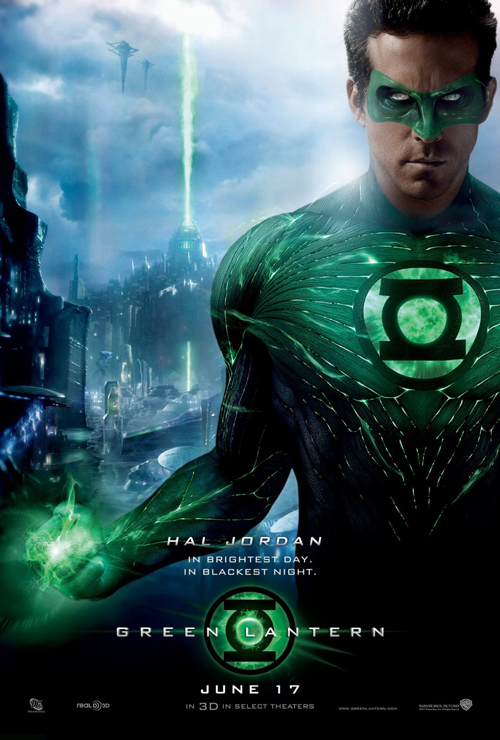
Green Lantern Movie Poster 2011 Ryan Reynolds[xrr rating=2/5]

The Low-Down: DC’s latest attempt at a superhero blockbuster, Green Lantern should have been a giddy mix of colourful action and space adventure. Trouble is, nobody seems to have told that to the filmmakers – what we end up with is a deeply mediocre, flatly executed comic-book romp with only a few brief flickers of the lurid saga it should have been.

What’s it About?: Hotshot test-pilot pilot Hal Jordan may be talented, but he’s also an irresponsible risk-taker who ends up derailing a potential big contract for his employers, Ferris Air. But, just as his life seems to be going wrong, an encounter with a dying alien results in him being inducted into the Green Lantern Corps, a group of interstellar policemen who battle against unimaginable forces of evil – one of which is now on its way to Earth…

The Story: Oh dear. Poor DC can’t seem to get a break outside the Christopher Nolan-directed Batman movies. They’ve been stuck way behind Marvel for years, and even now that Warners is finally getting their act together with some serious franchise-starting action… it’s still not quite happening. They’ve bet a fair old whack of money on Green Lantern (with an estimated price tag of around $200 million, plus the marketing costs on top of that), and I’m sure they can’t be happy to have the first of 2011’s batch of superhero blockbusters that really does appear to have a “Kick Me” sign attached to its back. The $50 million opening weekend (plus a 69% drop-off in its second week) means it’s a long way from being the ideal franchise opener that DC and Warner Bros obviously wanted – and while it’d be lovely to report that this is all terribly unfair, and that Green Lantern is actually a fun adventure that’s catching a small superhero backlash almost purely by accident… I’d be lying through my teeth if I did.

It doesn’t quite deserve some of the vitriol that’s been thrown at it (and is certainly a long way from being as dreadful as the Fantastic Four movies), while there’s also the fact that not every superhero movie has to be The Dark Knight, meaning that there’s room in the multiplexes for a lighter, more colourful piece of superhero action. However, it’s hard to recall the last time I saw a movie quite so flat  – a blockbuster that simply seems to go through the motions, giving us a sketchy version of the Hero’s Journey and a handful of nicely executed effects shots without ever cohering together into a genuinely thrilling ride.

Green Lantern Ryan Reynolds Publicity Still 2011There’s a pervasive sense of ‘that’ll do’ to much of the picture, alongside the feeling that they’re not doing a fantastic job of getting the reported $200 million budget all up onscreen (with the film looking a little creaky outside the big CG setpieces). One of the original comic book’s strengths is the extensive mythology (which has been upgraded a lot in the last few years by main GL writer Geoff Johns), but the film doesn’t approach this with anything approaching the confidence of Thor. Instead, this is a film that’s desperate to be taken seriously but simply slaps chunks of the mythology onscreen in the hope that it’ll wow us, sandwiching them together with lots of dreary expository dialogue (“I believe you have the power to overcome fear!”). There’s precious little sense of us learning about the universe with Hal Jordan or getting more involved with his character that way – instead, the piecemeal screenplay is just a collection of things that happen, leading up to Hal discovering his inner awesomeness (and, as a footnote, that it’s better to be nice than an arrogant asshat).

Green Lantern 2011 Oa Ryan Reynolds Movie WallpaperThere’s a whole heap of exciting stories to be told in the Green Lantern universe, but the film seems to be terrified to tell any of them for fear of busting the budget. It doesn’t help that by cranking up audience expectations of the footage depicting the Green Lantern Corps’ home planet of Oa (which has basically been the highlight of the publicity campaign, while the far more integral central relationship between Hal and ex-girlfriend Carol Ferris is barely featured in the trailers at all) the film ended up shooting itself in the foot. Yes, the Oa scenes do feature some spectacular moments and memorable characters (most notably the Geoffrey Rush-voiced Tomar-Re, who’s the highlight of the entire movie), and it is the point where the film does finally hit the right note of lurid SF action – but it’s all over within ten minutes, and the rest of the film feels like a let-down. After the colour and variety of the Green Lantern Corp’s home planet, the last thing we want is to be chucked back onto Earth for lots of scenes of Hal Jordan experiencing Olympian levels of angst and more lumpen villainy from the deeply unimpressive adversary Hector Hammond (Peter Sarsgaard), who comes over as more of a slightly annoying distraction than an intimidating threat in his own right (while the film’s ‘main’ villain – a floating CGI head with massive cloud tentacles – barely even registers as a convincing threat until virtually the end of the film).

Green Lantern Ryan Reynolds 2011In terms of balancing spectacle, it’s the same problem that the original Michael Bay Transformers movie faced – how to cope with the fact that the budget won’t stretch to setting the entire film on Oa (or with the fact that, thanks to the CGI approach to the costume, every single shot of Reynolds in costume is an effects shot) – and while Bay’s solution was hardly brilliant (filling the film with clumsy racial stereotypes and John Turturro overacting), Green Lantern’s earthbound scenes aren’t exactly much better, frequently feeling like a rather limp and gag-free version of Nineties CG-fest The Mask – or, in one slightly unwise balcony-set scene, Disney’s Aladdin (where it wouldn’t have surprised me if the costumed Hal had immediately taken Carol Ferris for a flight and a rousing chorus of ‘A Whole New World’). The Oa scenes simply crank up the spectacle to a level the rest of the film (bar the climax) can’t hope to match, and it’s hard not to think that maybe (especially in the wake of Avatar, which took audiences to an alien planet for the whole film) leaving Oa for a sequel might have been a wiser move.

Naturally, this won’t stand – Hal has to go to Oa because ‘that’s how it happened in the comics’ – and while fidelity to the source material is usually used as a benchmark of quality for comic book adaptations, Green Lantern is another example to stand alongside Watchmen that sometimes throwing the comic onscreen note-for-note isn’t the best idea. While the film draws massively from the recent run overseen by comics writer Geoff Johns, Green Lantern itself has been around in one form or another since 1940 (with the Hal Jordan iteration of the mythos debuting in 1959), meaning that over the years it’s ended up as a rather odd mish-mash of different concepts from different decades, many of which sit rather weirdly together when thrown into live-action. Most notably, there’s the GL costume’s slightly ludicrous domino mask, which only really works in the scene where the film deliberately mocks it, along with the deeply silly Green Lantern Corps’ poetic oath (Would any modern screenwriter in their right mind attempt to pitch “Yeah! He’s a cop from space… and he also does poetry!”?), and the fact that one of the main characters (who also sports a not-in-any-way-villainous forties moustache and pointy eyebrows) is given the “Honest, there’s no chance of me turning evil” name of Sinestro.

Green Lantern Ryan Reynolds 2011The end result is an occasionally head-scratching pot-pourri of influences, and the film’s solution to this potential problem is to simply throw it all  onscreen and hope for the best. While it captures the general pacing and structure of a Geoff Johns comic well (even down to the exposition-heavy opening), all it proves is that the kind of pacing and storytelling that works in superhero comics often falls flat on the big screen. The film’s story simply consists of important character moments without any of the connective tissue that actually makes it feel like a movie. Things seem to just happen, characters are moved around with little to no logic (especially when Hal heroically bursts into a room at one point for absolutely no reason), plot arcs are introduced and then abandoned (such as Hal’s family, who are given a fairly major introduction in the first fifteen minutes and then never seen again), while even the mid-credits Marvel-style ‘teaser’ scene, obviously inserted to whet the appetite for a potential sequel, instead blows the film’s most interesting character arc out of the water and simply seems to happen because, well, that’s what happened in the comics.

Maybe with a different director, the film could have been sharper – after all, Martin Campbell is a really weird choice for a CGI-fest, with his background being in executing practical action on a grand scale in films like Goldeneye, The Mask of Zorro and Casino Royale. While he does pull off a couple of good-looking sequences, he simply can’t bring the film to life and fails to give it the sense of wonder and involvement it needs. But then, he’s saddled with a weak screenplay full of clunky and uninspired dialogue that any filmmaker probably would have struggled with. The cast largely do their best – after being apparently considered for every single superhero role going, Ryan Reynolds gives a confident lead performance, although he’s much better at the cocky arrogance than the mopey soul-searching, and Peter Sarsgaard makes a serious attempt to do something kooky with his villainous role, even though even he can’t make a low-rent telepath with gigantism into a convincing adversary.

There’s also excellent work from Mark Strong as Sinestro, although Blake Lively is rather flat and wooden as Carol Ferris, while both Angela Bassett and Tim Robbins are reduced to looking slightly embarrassed in extended cameos. Nobody’s exactly dreadful – Green Lantern isn’t interesting enough for that; it aims squarely in the middle of the road, and what we get is a perfunctory superhero origin, with all the character moments marked in triplicate for those not paying attention. There’s the potential for a good film here, but so much is lazily underdeveloped (like the conflict between Hal and Hector Hammond over Carol Ferris, which barely gets mentioned for half the movie before suddenly becoming a vital plot point) that once again, DC has been left in the dust by Marvel.

Ultimately, a live-action Green Lantern seems like a flawed prospect from the get-go – it’s a concept that would play much better in animation (reducing some of the budget problems, and enabling the ‘unlimited imagination’ of the ring constructs to really cut loose), and simply feels constrained by the limits of how much this kind of photo-real CG animation costs. An Incredibles-style CG cartoon could, in theory, be a brilliant idea, and the mix of tones in the GL mythos would play much better if it was slightly stylised, but of course, live-action is what the market demands, and that’s what it gets. Of course, a continuation of the franchise isn’t impossible, and it seems like Green Lantern will eventually turn a profit – but on the current form, it’ll have to do a hell of a lot better on its second movie if it isn’t simply going to be written off as yet another cinematic superhero misfire.

The Verdict: A superhero blockbuster that will leave fans of the comic delighted and everyone else wondering what the hell just happened, Green Lantern is not the death knell of superhero movies, or an absolute celluloid disaster. It’s just a misconceived and poorly executed romp that falls a long way short of equalling any of the decent and entertaining superhero flicks in the last ten years.

[amtap book:isbn=0789322617]

[amtap amazon:asin=B004XK4OL4]

Movie Trailer: Mission Impossible – Ghost Protocol (2011)

Now, I’m not sure that anyone was actually saying to themselves “You know what I’m desperate to see? A fourth Mission Impossible film!” It’s not as if there are extra layers to find out about IMF Agent Ethan Hunt, other than him being a chance for Tom Cruise to do cool stuff, and the previous films have also been tonally all over the place to an extent that’s rarely seen in film series (from the overdone Le Carre action of Brian DePalma, to the ludicrous pomp of John Woo, and the fun but deeply forgettable JJ Abrams). However, throw Incredibles director Brad Bird into the mix – finally making his live action debut – and you’ve certainly got me interested. Now we’ve got the first trailer for Mission Impossible – Ghost Protocol, and it’s certainly one of the more weirdly constructed trailers I’ve seen in a while. There’s several deeply cool moments in here, and some shots that certainly hint at how Bird’s visual style is going to transfer (especially into the action sequences, considering that The Incredibles is dangerously close to being a flawless action movie), and yet there’s a lot of stuff that, to be honest, looks a bit daft – most of it involving Tom Cruise running REALLY FAST, or Tom Cruise doing that odd face he does when he’s fighting. There’s also the decision to slather an Eminem track over half the trailer (because when I think of sexy spies on the run and the title ‘Ghost Protocol’, I think ‘Eminem’), the way the trailer seems to reboot itself halfway through to be a completely different tone, and the unintentionally homo-erotic showdown between Tom Cruise and Jeremy Renner (Not that there’s anything wrong with that…). I’m still very interested in how Mission Impossible – Ghost Protocol is going to turn out – but here’s hoping any future trailers are a little more willing to blow me away…

Comics Review: Batwoman – Elegy

Writer: Greg Rucka ~ Art: J.H. Williams ~ Colours: Dave Stewart
Publisher: DC Comics ~ Year: 2010

Batwoman Elegy Trade Paperback Cover Art Greg Rucka J H Williams III Kathy Kane[xrr rating=5/5]

The Low-Down: One of the most well-crafted and gorgeous superhero comics produced in years, this collection acts as an excellent introduction to its intriguing central character, while also showcasing some truly astonishing artwork.

The Backstory: Socialite-turned-vigilante Katherine Kane is the latest costumed crimefighter to stalk the streets of Gotham City, taking her inspiration from the Dark Knight and battling injustice under the identity of Batwoman.

What’s it About?: Six months after nearly losing her life at the hands of the mysterious cult known as the Religion of Crime, Katherine is back on the streets and eager to hunt down the Religion’s new leader. But when she encounters this leader – a psychotic Lewis Carrol-obsessed young woman named Alice – Katherine is soon uncovering secrets she’ll wish were left unearthed…

The Story: “Lesbian Batwoman!” That was the main news story when this newly remixed and revamped version of an old-school Batman character was announced back in 2006. Yes, DC were introducing an openly Lesbian superhero into their shared universe, but when Katherine Kane made her first appearance in the year-long miniseries 52, not everyone was impressed. Touches like the rather impractical high-heel boots on the costume didn’t exactly help, and while there was some good writing, the general impression was that DC had ended up with a showy ‘Lipstick Lesbian’ character and not much else.

As a result, this first proper starring role for the character (in the pages of Detective Comics, where Batman first appeared back in May 1939) had its work cut out for it to prove Kathy Kane could work as a genuine protagonist. Getting a successful and engaging bit of superhero action would have been enough – but instead, the two resulting stories collected here (‘Elegy’ and ‘Go’) showcased razor-sharp storytelling combined with mind-blowing artistry.

Batwoman (Double-page Spread) JH Williams IIIWritten by Greg Rucka, the novelist and comics writer behind series like the police-centric Batman title Gotham Central, this is an incredibly strong piece of superhero writing that gets to the heart of an intriguing and well-crafted character. It was certainly easy to wonder if we really needed another Bat-costumed vigilante, but Rucka gives Katherine’s journey through the story a whole series of levels, making her a compelling and interesting character while not turning her sexuality into a cheap bit of titilation. Thanks to her backstory, it’s key to who she is (we find out in ‘Go’ that she was originally training to be a marine, but was drummed out of the service thanks to the ‘Dont Ask, Don’t Tell’ rules that forbid gays from serving in the US Armed forces), and Rucka manages plenty of nicely played character twists, while building a fascinating relationship between Katherine and her father.

Sadly, this isn’t completely self-contained. As with so many superhero stories, there’s past history this links in with (in this case, the lengthy story of ’52’), meaning certain plot twists come as a severe culture shock (especially when a group of shape-changers seem to just turn up out of nowhere). However, unlike many superhero comics that flirt with being adult but only really manage adolescent violence and melodrama, this is a superhero action adventure that feels genuinely grown-up, and will leave you hungry for more – and, after many delays, we’ll finally be getting more in the ongoing Batwoman series finally starts in September 2011 (although sadly without the writing talents of Rucka).

Batwoman - JH Williams IIIThe Art: Some comics look good. Some comics look beautiful. And then, there are the comics that blast your head off with exactly how lush, artful and downright gorgeous they look. J.H. Williams III has been building a reputation over the last decade for being one of the most impressive and experimental artists in the business (especially with his work on Alan Moore’s Promethea and the opening/closing chapters of Grant Morrison’s Seven Soldiers of Victory), and he really pushes the boat out here, delivering some deeply eyeball-frazzling visuals.

There’s barely a page in the whole collection that isn’t breathtaking, from the lush painted style and angular panel structures of the Batwoman-in-costume sequences to the cleaner lines of Kathy Kane’s everyday life. Double-page spreads explode in colour, fight sequences are rendered as lightning-bolt-shaped panels raining down around the central character, and the whole thing is simply a jaw-dropping showcase of the kind of places comics can go when a writer and an artist are prepared to push into new territory. Of course, there’ll be some who’ll look at this sniffily and say “It’s all a bit flashy and hard to read”, but this is the kind of storytelling that only comics can do (and which still works best on the printed page), making the design and structure of the page an integral part of the story. Far more than just eye-candy, Batwoman: Elegy sets a new standard for art and storytelling craft in mainstream comics – and if only there were a few more mainstream titles out there even capable of trying to keep up…

The Verdict: An expertly crafted and characterful introduction to a new superhero gets pushed into must-read territory by some gob-smacking artwork. One of the best mainstream superhero comic books published in a long time – buy it, and give your eyes a feast.

[amtap book:isbn=0857684299]

Movie Trailer: Captain America – The First Avenger (2011)

Well, those Team America comparisons certainly aren’t going anywhere. The latest Captain America – The First Avenger trailer has hit, and it still looks like (a) Marvel have done a pretty good job of making a pulpy action blockbuster, and (b) Chris Evans was absolutely the right man for the Captain America role. It’s been a relatively crowded superhero summer so far, and while Thor and X-Men: First Class have done good business, Green Lantern has certainly not been a critical success (for reasons I’ll go into once I do my upcoming review) while not quite performing to the level DC and Warners would have liked. However, I have a sneaky feeling that superhero fatigue hasn’t set in yet, and while this particular Captain America trailer features way too many cock-rock guitar chords for my liking, it’s also got enough engaging banter, action and Hugo Weaving being evil for me to have my fingers crossed. Plus, the fact that the 1940s Brooklyn scenes were filmed on location (with plenty of set dressing) in Manchester about a minute’s walk from my local comic shop is just the icing on the cake…

Movie Trailer: The Muppets (2011)

It’s difficult to have grown up in the late Seventies/early Eighties and not have the Muppets imprinted somewhere on your pop culture consciousness. Jim Henson’s joyously anarchic cast of felt-and-fuzz puppets were a genuine sensation in their time, but they haven’t always maintained a fantastic profile or quality ratio since – meaning that when ‘The Greatest Muppet Movie Ever’ was first announced, I was genuinely intrigued. There’ve been lots of rights issues on the Muppets (with the characters now being owned by Disney) that had delayed any new Muppet projects for a while, and there was a serious move happening to try and do a movie and relaunch the Muppets in the public eye, but what really impressed me was when Knocked Up/Forgetting Sarah Marshall star Jason Segel got involved simply because he really, really wanted to see a Muppet movie done right, and ended up both starring in and co-writing the movie.

After the initial teaser trailer (the fantastic spoof ad for terrible-looking romantic comedy “Green With Envy”), the Hangover 2-themed teaser and the Green Lantern-themed teaser, we’ve finally got a full trailer for the movie (which has been retitled with the less distinctive (but understandable under the circumstances) “The Muppets“) – and it looks like Segel, along with Forgetting Sarah Marshall co-writer Nick Stoller, has done a really good job in capturing the Muppets’ uniquely oddball mix of fun, sentiment and nonsensical mayhem. Now, if only the distributors could get themselves sorted out so that the UK doesn’t have to wait an extra two months (until February 2012) before we actually get to see it…

Comic News: Bats and Oracles – More News and Thoughts on the DC Relaunch

Batman Detective Comics Issue 1 Cover Art Tony Daniel DC Reboot The Joker

The major news of the DC Comics September relaunch from last week has been bouncing around the comic-obsessed areas of the internet like wildfire, and we’ve now got a much clearer idea of what we’re dealing with. A dizzying amount of information has been released – creative teams have been announced for plenty of titles, we now know what a fair number of the 52 issue 1s that are hitting in September will be (from various Green Lantern, Batman and Superman titles to Wonder Woman (who’s staying in her most recent costume change), Animal Man, The Demon, The Fury of Firestorm, Aquaman, Green Arrow, Swamp Thing, Justice League Dark, and many, many more – a full list of the currently confirmed titles is up at BleedingCool.). Certainly, DC are going out of their way to make this an accessible jumping-on point for new readers, but contrary to early reports, they’re not going for quite the complete ground-up reboot we thought…

Wonder Woman Issue 1 Cover DC RebootThe fact that this is all happening after the alternate timeline shenanigans of Flashpoint meant it would have been possible to basically press a big button and reboot the whole DC superhero mythology, but what DC are aiming for does seem to be a mix of major changes and careful tweaking. After all, while they’re keen to get new people reading comics, they don’t want to completely annoy the long-time readers by telling them all those comics they’ve been following don’t count any more. Well… strictly speaking, superhero comics do this kind of thing all the time (It’s the nature of continuity reboots in long-running titles), but this would have been doing that kind of thing to the entire line of DC comics, an extreme move in anyone’s book.

Thankfully, it seems like DC are being sensible and saying in certain cases that if it ain’t broke, there’s no point in fixing it. Some characters do seem to be getting ground-up reboots in the DC Relaunch (like minor Justice League player and Brightest Day cast-member Firestorm, whose upcoming new comic definitely doesn’t sound like it follows current Firestorm continuity), and it looks like Superman is getting some major changes – one of which is strongly rumoured to be that his long-running marriage to Lois Lane may be history (meaning he’s ended up in the same boat as Spiderman and Mary Jane Parker in recent Spiderman comics, although at least we’re talking parallel universes and not incredibly unconvincing deals with the devil…), along with a worryingly revamped costume that brings back vague and scary memories of the fashion disaster that was the Nineties ‘Electric’ Superman

Batman Greg Capullo Art Cover DC Reboot Issue 1However, not every single bit of the DC Universe is being fiddled with – the Green Lantern franchise (which I’m not a huge fan of – I can understand the appeal of colourful space opera action, I just find multi-coloured spandex-clad space police with their own personal rhyming oaths a bit difficult to take seriously) isn’t being touched, simply rebooting its number and starting up a new story (with the aftermath of current event War of the Green Lanterns presumably being finally wrapped up in August). The only one I was really concerned about was Batman – or, more particularly, Grant Morrison’s run on Batman, which was absent from a number of the recent press releases (one of which announced the fact that ex-Robin Dick Grayson, who stepped into the role of Batman a couple of years back while Bruce Wayne was lost in time, would be returning to the role of Nightwing, while Bruce Wayne would be back as the only person in the Batman cowl).

Batman 683 Alex Ross Cover Grant MorrisonI’ve been enjoying the hell out of Morrison’s run on Batman – it’s had its fair share of ups and downs, but he’s done some seriously adventurous things with the character, and it’s the kind of wild storytelling that you can get away with in comics and which simply wouldn’t work elsewhere. (There have been moments where I liked to imagine Christopher Nolan going completely insane and saying “Oh, the third Batman film? We’ll be referencing Batman R.I.P., Final Crisis and The Return of Bruce Wayne, complete with the Batman of Zurr En Arrh, Bat-Mite and time travel.”) Of course, it’s had its fair share of detractors and critics, especially from trad-Batman fans who don’t hold with the comic being anything other than dark gritty action on the streets of Gotham (when there are multiple Batman titles, and most of them deliver exactly that) – and the one thing that Morrison’s run isn’t, especially now that it’s in its final phase in Batman Incorporated, is new reader friendly. Instead, it uses massive amounts of continuity in a really interesting way, finding a way of treating the entirety of Batman’s seventy-year history as the life of one man (most memorably in the brilliantly surreal post-R.I.P. two parter ‘The Butler Did It/What The Butler Saw’), while also utilising a large cast of characters and exploring different areas of the DC Universe (especially thanks to Bruce Wayne’s current globe-trotting adventures).

Not the kind of thing that’s easy to boil down into an accessible issue 1, of course, and while simply saying “Well, let’s cancel it and bring the Batman stories in line with the relaunch” would have been a dumb corporate idea, it would hardly be the first time storytelling in comics has been dictated by dumb corporate ideas. However, they’ve ultimately been sensible – Batman Incorporated is being split into two ‘seasons’, with the first concluding in August with issue 10. Then it goes on hiatus for a while (with Morrison working on a ‘yet to be announced’ project), and returns in early 2012 with season 2 of Batman Inc, which’ll be a 12 issue epic and will wrap up the whole Morrison run. And presumably mean I can start saving for the absurdly expensive omnibuses that DC will undoubtedly be doing of the run at some point in the future…

DC Reboot - Nightwing Issue 1 Cover Batman Dick GraysonThat’s got me relieved, and it’s nice to see it’s been handled well. Certain aspects are a bit disappointing – unlike some, I actually enjoyed the whole ‘two Batmen’ concept, and having Dick Grayson in the role opened up plenty of storytelling possibilities that hadn’t been there before (especially with his relationship with the fabulously grumpy Damian Wayne, Bruce Wayne’s 10-year-old son and the new Robin), but of course superhero comics are all about the illusion of change, and it also makes sense for an accessible relaunch to get the comic back to a general perception of Batman that doesn’t have to start with the sentence “Well, you see, it was all because Batman got hit by Darkseid with the Omega Sanction back in Final Crisis and everyone thought he was dead…” I’d have been happy for those stories to continue for longer, but I’m impressed we got as many as we did. Not sure if ‘demoting’ Dick back to his role as Nightwing will create many interesting stories, but I guess we’ll have to see.

DC Reboot - Batgirl Barbara Gordon Issue 1 CoverThen, though, there’s the one decision I’m less than comfortable with – the fact that they’re bringing Barbara Gordon back as Batgirl. To non-comic readers, that’s probably not going to sound like a problem, after all Batgirl (the BG version) is pretty iconic after all these years thanks to her countless animated appearences, the Sixties show, and she even survived the terrible, terrible ignominy of being played by Alicia Silverstone in Batman and Robin. Trouble is, back in the mid-Eighties, in Alan Moore’s legendary Batman graphic novel The Killing Joke, Barbara was shot in the spine by the Joker, paralysing her from the waist down (an event which was, like the rest of The Killing Joke, supposed to be outside of continuity, but has since been adopted as part of the DCU history). Since then, for over twenty years, she’s been in a wheelchair, but has still played a significant role in the DC Universe as Oracle, the all-round JLA information source and master computer expert, as well as acting as the head of the Birds of Prey, a female group of superheroes.

Oracle Barbara Gordon DC Reboot - Ryan Sook ArtShe’s essentially ended up as a much stronger and a far more interesting character as a result of this – especially since she’s held her own in a very major way in a universe full of incredible dangers without having any superpowers. There aren’t exactly many disabled characters in superhero comics, and it’s hard to think of one that’s been as long-lasting or been presented as well as Oracle – a tough, intelligent woman who doesn’t let a crippling injury stop her from helping people in any way she can. Of course, there is the fact that in an anything-can-happen universe like the one presented by DC, where people rise from the dead and do the impossible every other week, it shouldn’t be beyond likelihood for Barbara’s injuries to be eventually healed, but DC have kept to presenting that reality for a long time, with the result that Barbara Gordon has now having spent longer as Oracle than she ever did as Batgirl (and has actually acted as ‘advisor’ to the two subsequent versions of Batgirl who’ve turned up in Batman continuity over the last decade-or-so – Cassandra Cain, and Stephanie Brown).

Come September, however, and that’s all over. In the post-Flashpoint DCU, Barbara Gordon will officially be back as Batgirl – I’m guessing that she may be one of the characters who’s being aged down slightly, as Barbara has been allowed to get a little older over the years (comic book ageing in superhero comics is always odd and rather elastic, but it does happen – in the same way that Dick Grayson has distinctly aged since his first appearence as Robin). I’m hoping that possibly they may keep aspects of the Oracle storyline as part of her background – that maybe in this rewritten version of history, the injury from the Joker’s bullet wasn’t quite as bad. It’d give a nice ‘overcoming adversity’ edge to the character, as well as allowing at least certain aspects of her life as Oracle to still be around, but I fear it’s more likely that it’ll get wiped from history – which is a shame, and I don’t think DC realise exactly what they’re throwing away with this. I understand exactly why it’s happening; the Barbara Gordon version of Batgirl is well-known, and if you’re trying to make the DC Universe as accessible to new readers as possible, and you want a Batgirl title, you need the most recognisable version of the character there. I understand the reasoning completely, but the fact is that they’re throwing away the Oracle part of Batgirl’s history for the sake of brand recognition, and simultaneously upsetting the hell out of any wheelchair-bound comics readers who considered Barbara-as-Oracle as a hero and a character that they care about (And it’s ironic, considering that DC are attempting to make lots of noise about having a more diverse and representative superhero universe, that they’re hanging this reboot on casually writing out a character’s disability). There’s an opinion piece at Newsarama that talks about this much more powerfully and eloquently than I ever could – all I can say is that while I know reboots are a natural factor of comic book storytelling, I really think this one is happening for the wrong reasons, and the DC Universe will be less interesting without Oracle in it.

So, September is the month. I’m impressed DC are going ahead with this, although I’ll be honest – not many of the announced titles have really made me think “Wow! That sounds INCREDIBLE!!” Plus, no matter how big a marketing push and how much they try and stretch out onto the new digital frontier, it’s all going to come down to the stories. These are going to have to be really good comics – all eyes are going to be on DC come September, so they’d better not mess this up…


TV Review: Doctor Who S6 E07 – ‘A Good Man Goes to War’

Cast: Matt Smith, Karen Gillen, Arthur Darvill, Alex Kingston, Frances Barber ~ Writer: Steven Moffat ~ Director: Peter Hoar ~ Year: 2011

Doctor Who Season 6 Matt Smith Steven Moffat A Good Man Goes to War Frances Barber Madam Kovarian

[xrr rating=4/5]

The Low-Down: The finale to this first chunk of Doctor Who‘s season 6 is exactly the kind of big, broad and expansive adventure that we needed. A Good Man Goes to War may still leave us with plenty of questions and is arguably a little shapeless in places, but it also delivers satisfying adventure, well-timed twists and some truly brilliant dialogue, while finally casting some light on one of Who’s biggest current mysteries…

What’s it About?: Making the Doctor angry is not a good idea. With Amy Pond having been abducted, the Doctor and Rory are battling across time and space, calling in old debts in order to carry out a daring rescue on the asteroid known as Demon’s Run. What they don’t realise, however, is that they’re walking into a trap that’s been waiting for the Doctor for a long time – while it’s also finally time for River Song to reveal who she really is…

The Story: (WARNING: As with most of my Doctor Who reviews, the following contains a hefty load of spoilers…)

Yes, I saw it coming. It helped that I’d seen the idea bandied around as a theory online following the broadcast of Day of the Moon, but it was a concept that fitted all the facts, especially with the very obvious touch of both characters having water-based names (I can remember thinking “Pond? Why on earth is her surname Pond?” back when the companion was first announced. Now, of course, it all makes sense). Once Amy announced that her daughter’s name was Melody, it was pretty much on the wall – but all credit to Moffat for still managing to throw in a couple of moments of doubt, from the Doctor’s abrupt “It’s mine” line (when talking about the crib), to the point where we’re briefly left thinking “Wait a minute – ye gods, they’re not seriously going to have River turning out to be one of the Doctor’s family, are they?”, and all the serious Luke-and-Leia-style wrongness that might mean.

But, they weren’t. After a whole lot of waiting, we finally know that River Song is Amy and Rory’s daughter, and that her part-Time Lord DNA led to her being utilised as a weapon to kill the Doctor (which led eventually to her imprisonment in the Storm Cage facility). And while SF-savvy viewers will have unpicked Moffat’s complex web of plotting, the fact remains that this is still tremendously ambitious storytelling for a Saturday night family-aimed show, and that Doctor Who is still aiming high in terms of demanding storytelling and narrative twistiness.

(It’ll also be interesting to see exactly where the relationship between the Doctor and River goes from here, and what the ultimate resolution for him is (as we already know for her) – one of the quietest bits of characterisation is the nicely played sense of sadness from River Song when she realises the point in time that she’s reached, and that the period of the Doctor not knowing who she is has come to an end (and it also, in retrospect, makes the flirting between them that’s happened up until now a lot more poignant – River has always known exactly where this was going, and that her relationship with the Doctor was going to completely change once her identity was finally out in the open. Things will be different – but exactly how different?)

Naturally, of course, there are already people online moaning that the revelation of River’s identity was all rather predictable (simply because, as I’ve said before, moaning comes rather naturally to some Doctor Who fans), but while A Good Man Goes to War wasn’t perfect, it’s given S6 the injection of adrenaline it needed and ended this ‘pod’ of episodes on a serious high. It’s also possibly the most deliberately referential and continuity-crammed episode we’ve had yet (even managing to beat The Impossible Planet/Day of the Moon), and yet did succeed in getting most of the relevant information across in a way that’s still accessible, lively and fun.

It also leaves the weaker episodes of this run – especially Curse of the Black Spot – looking even weaker by comparison, simply because Moffat at his best is able to fire new concepts at the viewer at a rate that’s almost dizzying. Not only does he take the time-and-galaxy-spanning action of The Pandorica Opens and crank it up even further, but he also throws in a selection of new characters that do that wonderfully Doctor Who storytelling trick of hinting at a scope of adventures far beyond what we’ve seen. Top of that, of course, is the jaw-droppingly improbably yet hugely enjoyable Victorian duo of sword-wielding Silurian Madam Vastra (Neve McIntosh) and her maid Jenny (Catrin Stewart), who turned out to be one of the highlights of the episode. I’m still not sold on the Silurian make-up (less human-looking eyes would make such a difference) and initially thought “What the hell?!?” on Vastra’s first appearence, but was rapidly won over. McIntosh gets to have much more fun here than in last year’s tepid Silurian two-parter, and the banter between them combined with some choice innuendo pack a whole lot of life into the story (while once again showing that despite RTD’s departure, the so-called ‘Gay Agenda’ that a small minority of fans still complain about is alive and well.)

Even the deliberately comedic take on the Sontarans – played even more for laughs than they were in S4’s two parter The Sontaran Stratagem/The Poison Sky – managed to grow on me, with Commander Strax’s eventual fate turning out to be surprisingly touching, and Moffat keeps the tone shifting throughout, going from laugh-out-loud funny to emotionally intense. It’s how Doctor Who should always be – funny, fast-paced and deliriously inventive – and once again proves that Moffat is seriously good at delivering the goods when it comes to the big show-stopping episodes.

He also does the sensible thing in keeping it driven by emotion, while also being prepared to pull off some pretty dark moments – from the Doctor’s burst into all-out anger (brilliantly delivered by Matt Smith), to the horribly brilliant revelation that Baby Melody had been switched for a Flesh/Ganger duplicate. The baby disintegrating in Amy’s arms into a puddle of the Flesh is such a fantastically unpleasant image and packs a serious punch, and it’s good to see that Moffat still has a good sense of how far he can push things – that Who shouldn’t be too nasty, but that it also shouldn’t be too safe either.

There’s barely a weak link in the cast, and especially notable was Christina Chong as the mysterious Lorna, giving a really compelling performance despite the fact that you’re barely told anything about her. Both Karen Gillen and Arthur Darvill did great work, giving more nuances and levels to Amy and Rory’s relationship (and making the chemistry-free mess that was their initial relationship last year feel like a very long time ago), but the episode completely belongs to Matt Smith, who takes the Eleventh Doctor to some very dark and angry places and yet still manages to be kookier and more eccentric than ever (especially in the scene where he’s awkwardly discussing with Madam Vastra when Amy and Rory’s daughter “began”).

A Good Man Goes to War romps along at a fast pace and delivers the most enjoyable and genuinely satisfying ‘blockbuster’ episode since last year, along with some impressively mounted Star Wars-esque SF production design – but it still manages to notch up a few problems. A couple of Moffat’s narrative ticks are a little predictable (especially the reveal of the Doctor), and the Headless Monks themselves are initially intimidating yet ultimately end up as slightly unsatisfying villains, with the end action sequence not quite carrying the punch it needed. Frances Barber does a good job with her surprisingly short screen-time as the eye-patch-wearing Madam Kovarian, but I was expecting to learn a lot more about her than we got.

Naturally, this is the mid-season cliffhanger so there was no way Moffat was going to tie off every plot thread, but we’ve now got another set of bad guys whose motivations we don’t entirely understand – and, just to make things even more complicated, they’re bad guys we previously met (presumably in the future) as good guys (or at least guys who didn’t start their conversation in The Time of Angels/Flesh and Stone by saying “Oh, by the way, sorry about that time we mounted an incredibly complex plan to try and kill you…”).

Using the Clerics from S5’s two-parter is an interesting yet odd choice, and we really need a slightly clearer motivation for this astonishingly big-scale plan (which obviously involved the Silence) than River Song’s end speech where she makes it clear that the Doctor’s impact on the Universe is now coming back to bite him (Does Kovarian have other paymasters than the Clerics? Is there another big bad waiting in the wings?). There’s also the fact that we really need this to tie together with The Impossible Planet’s 2011-set scene of the Doctor’s death (Was the astronaut-suit-clad Melody brought back from 1969 specifically for this reason? How does this fit in with the rest of the story?)

In short, Who has a gigantic number of questions that still need to be answered – but at least, with River Song having finally unburdened her secret, there’s the chance for genuine answers (and hopefully we’ll get them, rather than more questions). A Good Man Goes to War does end up feeling a little shapeless thanks to this lack of meaty explanations for the story’s backdrop, but Moffat’s dialogue, energy and inventiveness means it’s still full-tilt SF entertainment – big, bold, confidant, and not afraid to be just a little insane.

The Verdict: A thoroughly enjoyable mid-season finale that shows Moffat hasn’t lost his touch when it comes to emotionally engaging SF adventure, this is an episode where the minor problems and the flapping plot-threads aren’t enough to spoil the rollicking entertainment. It’s certainly hard to work out what on earth Moffat will have in store for us in the next batch of episodes – all we can do is wait for September, the aftermath of all these revelations, and the hilariously titled next episode “Let’s Kill Hitler”…

Previous Doctor Who Season 6 Reviews:

S6 E05/E06 – ‘The Rebel Flesh’ / ‘The Almost People’

S6 E04 – ‘The Doctor’s Wife’

S6 E03 – ‘The Curse of the Black Spot’

S6 E02 – ‘Day of the Moon’

S6 E01 – ‘The Impossible Astronaut’

Video: Doctor Who Anime

Found via BoingBoing (and lots of other places), this is one of the more impressive fanfilms I’ve seen out there – mainly the work of one person, this is essentially a 12-minute ‘highlight reel’ that gives you an Anime-style look at what would have happened in the 1980s if a Japanese animation studio had got their hands on Doctor Who. And it’s rather astonishing – there are rough edges here and there (and the voicework that isn’t hi-jacked from the classic series is a bit on the rough side), but some of the design and animation work here is really good, especially the stylised anime take on the Third Doctor, and all in all it’s a gloriously fun mash-up of genres that has to be seen to be believed…

Comic News: Reboot In Your Face (Major restarts coming in the DC Universe…)

Justice League Issue 1 Cover Jim Lee Geoff Johns Relaunch Batman Wonder Woman Cyborg Green Lantern The Flash Aquaman Superman

There’s been a lot of rumours about what’s coming up in the DC Comics superhero universe, the home of heroes like Batman, Superman, Wonder Woman and Green Lantern. The current big DC event comic Flashpoint, where the whole DC universe is transformed into a dark alternative, is supposed to be leading to yet another one of those moments where ‘things will never be the same!’ On top of this, it was initially announced that in the last week of August, DC would be publishing exactly one comic – the fifth and final issue of Flashpoint. Considering DC normally has around a dozen titles coming out every week, this is a pretty major route to go for – and while it’s now been modified slightly (there are two comics coming out, rather than one), it’s clear that DC isn’t messing around.

Now, DC has started releasing official news of what they’re doing… and it’s pretty big. In a press release that’s turning up in lots of places, they’ve announced that they’re basically rebooting their whole line of superhero comics, and renumbering everything. In September, there’s going to be 52 issue ones, all of which are apparently designed to be accessible jumping-on points for new readers (and considering some of these titles are things like Action Comics, which recently crossed the 900-issue mark, this is quite a big move). Added to which, it does seem like there’s a certain amount of tweaking going on – artist and DC bigwig Jim Lee has apparently done redesigns on over 50 superhero costumes, the word ‘contemporary’ is being bandied around a lot, and it does seem like this is definitely going to be a different take on the DC Universe (with, for example, plenty of characters being aged-down into younger models). Considering that this is following Flashpoint, an event where the DC Universe is altered beyond recognition (meaning it might still be a bit different when it gets put back), it does seem like they’re going for permanent alterations to continuity, and the status quo. And, on top of all of this, every single one of these comics is going to be available day-and-date as a digital comic, through the Comixology platform that DC’s been using up until now.

The easiest bit of this to take on is the digital decision – it was obvious that at some point, one of the ‘big two’ was going to jump into the digital world with both feet (and considering DC are still running second to Marvel at the moment, it’s not a loopy idea). It’s big, and despite that they’re apparently going to run some incentives for comic shop retailers, there are going to be some unhappy people out there. Trouble is, digital isn’t going away, and this could be a very healthy move as well. The day-and-date comics will probably be exactly the same price as print (which is a tad steep for a digital comic), but it’s still a major step forward. For the first time, people who torrent comics because “Oh well, I want them on the day, and only a few titles are done day-and-date” aren’t going to have the excuse. Don’t know if it really will make piracy go down, but it’s a major step along the way to having a good legal digital alternative to piracy.

It’s the rest of it that is… interesting, if not completely convincing. Comic book continuity is a massive double-edged sword – it creates fascinating, intensely complex sagas, worlds that you can get lost in, interlocking stories that can be unlike anything else out there… but then, it can also make it impossible to keep up, especially if you’re not aware of all the tiny pieces of comic-book continuity that the story is tying into. Last week, I read the first two issues of Marvel’s The Mighty Thor, which is a relaunch of the Thor title done to tie in with the release of the Thor movie, and yet if I was a random cinemagoer who’d seen and enjoyed Thor, those two comics would have perplexed the hell out of me. (There’s a lot of reasons why comics have drifted away from being self-contained, and many of them actually only work now collected as trade paperbacks – it’s a complicated problem, and is slightly compounded by the fact that modern comic storytelling doesn’t let you easily put in narrative captions that bring everyone up to date.) And part of this problem is that the majority of the people who buy comics are the die-hard fans, who know the continuity and don’t want to read stuff that ‘doesn’t matter’ (which is one of the reasons why the brilliant out-of-continuity comic Thor: The Mighty Avenger got cancelled after eight issues, despite being a fun, all-ages and thoroughly charming adventure comic).

So, there’s a certain logic in DC’s move… but the fact that they’re going for such a drastic reboot leaves me slightly perplexed. What I’ve seen of the new costumes (shown above in the cover for Justice League issue 1, by Jim Lee) doesn’t exactly fill me with confidence (especially that ‘styled up’ version of the Superman logo, which brings back worrying memories of the Nineties ‘Electric’ Superman redesign), and the statement that they’re doing “younger, cosmetically changed versions” of these characters immediately opens up questions as to what’s in and what’s out continuity-wise. The various dark events in the Justice League’s history in Identity Crisis? Batman being presumed dead in Final Crisis (leading to the current activity in Batman Incorporated)? There’s all sorts of knots they could tie themselves in, especially with ongoing series like Grant Morrison’s Batman Inc, which certainly doesn’t feel like it’s going to end in about three months. (And what about the notoriously delayed David Finch-drawn Batman series The Dark Knight? We’re barely onto issue 3 (after it being launched in November) and now they’re bringing in filler artists – is that going to get a relaunch, or will it just stagger to issue 6 and then get quietly cancelled?)

Another question – violence. DC Comics have been getting ridiculous in terms of violence and pretty damn unpleasant adult content recently (the biggest and most ridiculous of the lot being issue 3 of Rise of Arsenal, which plays like somebody read Alan Moore’s Watchmen and took every wrong lesson from that book that it’s possible to take). Is this going to continue? If DC are looking to bring new readers in, are we still going to get showers of gore, brutal violence, and incidents like the infamous rape of character Sue Dibney?

Also, there’s the Justice League. At the same time as Flashpoint issue 5, we get issue 1 of Justice League – a relaunched version of the comic that’s often been one of DC’s biggest titles, with DC bigwigs Geoff Johns and Jim Lee at the helm (although considering how notoriously late Jim Lee can sometimes get with his art, it remains to be seen how long he’ll be staying on it – this is one comic that can’t afford to ship late). And a new line-up, taking us mostly back to the Grant Morrison era JLA, where he took the then-pretty-ballsy move of actually putting DC’s biggest guns together – we get Superman, Batman, Green Lantern, The Flash and Wonder Woman. Oh, and Aquaman. And… er… Cyborg. (I mean, really? Cyborg? They seem to be making a lot of finally trying to make the DC Universe look a little more multi-cultural, after some very unfortunate examples of ethnic ‘legacy’ superhero characters meeting horrible ends and being replaced by their previous white alter-egos, but that’s the guy you promote to DC’s A-list? That’s the guy at the forefront of DC’s new ‘contemporary’ style – a character who fit in with the Teen Titans back in the Eighties and Nineties, but doesn’t exactly look tremendously sensible now?)

It’s possible, of course, that Flashpoint might act a little like the Time War in current Doctor Who continuity – a way of buffering the new continuity from the old. Old Who continuity is still there, and while there have been tweaks and rewrites (hello, new Cybermen) it hasn’t been completely up-ended in the way a new version of Who could have relaunched everything. There’s any number of ways they could be doing things – the fact that DC are potentially transforming their core universe into a version of the Marvel Ultimate universe (which was originally created as a jumping-on point for new readers, and a more ‘contemporary’ take on the characters) is certainly brave. The potential for messing this up is pretty big, of course, but modern-day mainstream comics certainly need new approaches, and anything which might free them up from the constraints of selling to the direct market (to fans who regularly bitch about event comics and getting more of the same, and yet only ever seem to buy big event comics and ignore the new, riskier titles) has got to be a good thing…

TV Review: Doctor Who S6 E05/06 – ‘The Rebel Flesh’ / ‘The Almost People’

Cast: Matt Smith, Karen Gillen, Arthur Darvill, Raquel Cassidy, Marshall Lancaster, Mark Bonnar ~ Writer: Matthew Graham ~ Director:Julian Simpson ~ Year: 2011

Doctor Who Season 6 The Rebel Flesh The Almost People Matt Smith The Doctor Publicity Shot

[xrr rating=3/5]

The Low-Down: Showing that the deeply traditional base-under-siege Doctor Who story ain’t always as easy as it looks, The Rebel Flesh and The Almost People make up a potentially interesting two-parter that’s let down by some major pacing problems and misconceived villains, although is ultimately saved from total mediocrity by some interesting concepts, Matt Smith being brilliant, and one hell of an ending.

What’s it About?: Running into a solar tsunami, the TARDIS ends up making a sudden landing at an industrial station on a future Earth, where a dangerous acid is being mined with the aid of ‘Gangers’ – artificial duplicates of the mining crew, used in dangerous environments and casually disposed of when broken. However, when a second solar wave hits, the Flesh that makes the Gangers becomes self-aware, and it’s up to the Doctor to prevent the situation spiralling into bloodshed, especially when one Ganger starts preaching revolution…

The Story: (WARNING: As with most of my Doctor Who reviews, the following contains a hefty load of spoilers…)

It was never going to be easy following The Doctor’s Wife – which was not perfect, but did feature the kind of fast-paced inventiveness that Who does really well – and as I said in my last review, Matthew Graham wouldn’t have been my first choice to follow up Neil Gaiman, especially after the less-than-impressive S2 episode Fear Her. Well, the resulting two parter is definitely a much stronger story than that infamously weak episode, and also holds together better and more consistently than last year’s Silurian-themed two parter The Hungry Earth/Cold Blood… but it also shows that out of all the reactions Who should be aiming for, the very worst is a middling kind of ‘meh’.

This isn’t a story that thrives on the shock of the new – whether it’s a fresh take on an old Who enemy, or an odd, attention-grabbing twist we haven’t seen before – and in fact, up until the deeply surprising final two minutes, it’s engaginglyy played but very rarely surprising. We’ve seen this kind of story done plenty of times before, ever since S2’s The Satan Pit, but there isn’t enough pace or invention to distract us, while the plot also manages to echo S4’s Planet of the Ood (with the unfair exploitation of a race that yearns to be free) and especially the S5 Silurian two-parter, directly throwing humanity up against a dark mirror and showing what happens when we’re confronted with our own natures.

The central concept of the story – the Gangers themselves – is an interesting one, and the way the story deals with political subtexts is sometimes very effective (even if it’s also a little bit too subtle for its own good). Trouble is, we’ve seen Ganger-like duplicates before, and the fact is that they (and the twist of a Ganger version of the Doctor) aren’t quite strong enough a concept to hang a whole 90 minutes of television on.

While much of the character-based drama is well-played, it simply isn’t quite gripping enough, and it’s hard not to think how much stronger and focussed the story could have been if it had been a single episode. Added to this, you’ve got the slightly murky approach to the Gangers themselves – the potential was there for a ‘who’s the double?’ tension-fest in the manner of The Thing (which does seem to have been the initial intention), and in certain ways its good that they do try and explore the different levels of the Gangers, ultimately proving themselves to be just as worthy (and as flawed) as the humans.

The problem is that this doesn’t make for very dynamic bad guys – a necessity for Doctor Who to work – and it also undercuts the story’s tension. With large chunks of the plot involving various characters regularly switching sides (making it worryingly reminiscent of the 1970s Who story Colony in Space, much of which consists of miners and colonists capturing and recapturing each other ad nauseum), it’s like the story never quite catches fire. There are some excellent lines, and yet there are also some deeply clunky ones, and the lack of scale (with the perspective of the story completely confined to the Island monastery) meaning that the threat never quite feels big enough.

Given this, it’s a surprise how much of the story does motor along in an entertaining way. Despite the lax pacing, the direction pulls out plenty of atmosphere, the performances are largely strong (aside from a couple of exceptions, including an especially unconvincing child actor), and Matt Smith once again proves that he’s one of the most gleefully eccentric actors ever to get his hands on the role of the Doctor. Emerging from the TARDIS and exclaiming “Behold, a cockerel!”, he’s a delightfully kooky presence who brightens up even the less exciting scenes, while there’s also some nice nuances and depth given to Amy and Rory’s relationship (although I suspect some dialogue about Rory’s reasons for being able to sympathise with the Ganger Jen – thanks to his 2000-year-old experience as an Auton duplicate – may have been cut, and would have helped a lot).

Both episodes, despite their flaws (and a couple of especially weak CG shots), have more genuine invention and cleverness than The Curse of the Black Spot, although they’ve also got their fair share of logic errors as well (like exactly why it was necessary for the Ganger Doctor to sacrifice himself (other than to tie up a plot end), and where exactly did the second sonic screwdriver come from?). Ultimately, it’s an episode that’s a little too busy exploring the human condition to deliver the kind of adventurous scariness that Who does so well (and which The Doctor’s Wife pulled off with aplomb). A medium episode of Doctor Who is still good fun – it just has the danger of possibly not sticking in the memory, which is something you can’t say about most RTD episodes (even if they were sometimes only memorable for being extremely bad…)

Some of these problems (especially the ones of scale) are obviously down to money. The cuts in the show’s production budget were relatively obvious last year, and the gap between the blockbusting episodes and the smaller-scale stories does seem to becoming a little more extreme in Season 6 (with this being the second story this year to revolve around a small number of characters trapped in a relatively confined environment – and from the looks of things, there’s at least a couple more to come).

The end result is that the storytelling needs to get sharper and more imaginative to compensate, and while the budget could only stretch to a handful of shots of the surprisingly nasty Japanese horror-style mutant Jen Ganger in the climax of the episode, I can’t help feeling that this two-parter would have been much more gripping – and a hell of a lot more fun – if they’d eased off on exploring the human condition and just given us a cracking ‘The Thing’-style monster story.

However, while there is a lot of online grumbling about this initial slate of episodes (One thing Doctor Who fans never run out of is things to complain about), it’s worth remembering that last year had its own fair share of middling or not hugely impressive episodes. S6’s strike rate isn’t as initially strong as S5 – but then, I just end up looking at the major quality wobbles in the first seven episodes of S2 (excepting The Girl in the Fireplace, of course), and remind myself that creative teams are allowed to stumble a bit from time to time, and can sometimes take a while to truly get to grips with how difficult Who can be to pull off.

Some of this grumbling is, of course, because of the intricate story arc (and, simply, that Moffat is comitting the cardinal Who sin of – shock, horror! – attempting something that’s new and ambitious and not like what’s gone before), but the arc elements actually play into The Rebel Flesh and The Almost People rather well. We have the fact that the Doctor now knows more detail about his death in The Impossible Astronaut, there’s the slightly over-fast line that states we possibly may not have seen the last of the Ganger version of the Doctor…

…and there’s the ending.

Curiously enough, the last-minute revelation that Amy has been a Ganger duplicate for months (potentially since the appearence of the Silence in the White House bathroom?) is another mirroring of the Silurian two-parter and its sudden execution of Rory, although at least this feels a lot less tacked on and a far more organic part of the plot. The slightly hazy morality of the scene in question – the fact that we’ve spent the whole story establishing that Gangers should be treated humanely, and the Doctor essentially kills Amy’s non-self-aware Ganger – only really hits once the episode is over and you’ve had a chance to think about it (rather like the pregnant dream-suicide in Amy’s Choice). It’s still a magnificent twist, though, as well as a fantastically disturbing one, and it does raise the stakes massively for next week’s mid-season finale.

It’s also a natural evolution of Who storytelling – going from simply having something like ‘Bad Wolf’ turn up (and jerry-rigging a slightly convoluted explanation at the end of the season), to experimenting with full-on arcs that demand a lot of attention. There are potential risks involved; I think some of the episodes in this half of the series could have been stronger, and I’m also hoping that enough explanations are coming next week for this to feel genuinely satisfying – but I’m not about to start bitching about Moffat daring to do his own thing and approach the show with some serious ambition. I just feel like sometimes his cerebral approach doesn’t always suit the material, and that tonally S6 should possibly have had a little bit more fun upfront, and a little less dark and spooky character-driven soul searching.

The Verdict: A two-parter that does entertain but mostly leaves the needle firmly stuck on ‘average’, The Rebel Flesh and The Almost People is really just the latest in a long line of trad-Who two parters that didn’t quite come off (from Rise of the Cybermen/The Age of Steel to Daleks in Manhattan/Evolution of the Daleks, and even The Sontaran Stratagem/The Poison Sky). It does, however, set the scene for next week’s mid-season cliffhanger, and certainly has me hoping Moffat is going to have something seriously big to deliver in ‘A Good Man Goes to War’…

Previous Doctor Who Season 6 Reviews:

S6 E04 – ‘The Doctor’s Wife’

S6 E03 – ‘The Curse of the Black Spot’

S6 E02 – ‘Day of the Moon’

S6 E01 – ‘The Impossible Astronaut’