Comic Review – Morning Glories : Volume One

Writer: Nick Spencer ~ Artist: Joe Eisma ~ Colours: Alex Sollazzo ~ Publisher: Image Comics ~ Year: 2010

[xrr rating=4/5]

Morning Glories Volume 1 For A Better Future coverThe Low-Down: A sharp and witty cross between Buffy the Vampire Slayer and The Prisoner (with a running mystery that equals Lost for sheer pulp unfathomability), this high school saga is overcoming a few art-related issues and shaping up to be a compulsively entertaining read.

What’s it About?: Six accomplished teenage students are offered the chance of a lifetime – a scholarship at the prestigious Morning Glory Academy. It’s an institution that’s searching for excellence, but its location is a secret, escape is impossible, and its methods include torture, mind-games and murder. Secrets are waiting to be discovered in the depths of the Academy, as the six newcomers find themselves locked in a lethal game of cat-and-mouse with their teachers. But what does the phrase “The hour of our release draws near” have to do with all this?

The Story: It’s always easy to be suspicious of hype, especially in the world of comics. When a title becomes a sell-out smash hit, it often has more to do with marketing and how ‘important’ or how much of an ‘event’ the relevant comic is than whether or not it’s any good. So, when new series Morning Glories sold out two separate printings of its first issue, it’d be easy to be cynical –if it wasn’t for the fact that it’s also a well-crafted, entertaining and intriguing story that’s heading in some extremely promising directions.

Morning Glories Page Art Joe EismaWe’re unashamedly in Teen Drama territory here, with a group of disparate characters being brought together to face an as-yet-unspecified threat (and also overcome various issues in their past). While there are plenty of echoes of early Buffy the Vampire Slayer episodes here (especially with the ‘High School that hides dark secrets’ setup) what’s more interesting is the way that up-and-coming writer Nick Spencer has structured this as a battle of wills between our teenage heroes and the teachers who are trying to manipulate, interrogate and control them. In short, it’s Buffy meets Sixties cult classic TV series The Prisoner, with an accompanying dose of the characterisation, structure and mad pulp stylings of Lost.

The overarching mystery is certainly going in directions that could be described as ‘unexpected’ (especially when it becomes clear that fifteenth century Spain is somehow connected), and Spencer delivers a number of effective shocks that build up the sense of intrigue, while also pulling off some very nicely played and engaging character moments. In the first chapter, there’s one of the best examples of the ‘meet-cute’ scene, between lead characters Casey and Hunter, that I’ve seen in a long time, and Spencer keeps the pace up while giving the characters depth and believability. He also isn’t afraid to throw violence into the equation – the stakes are high, and certain sequences feature major levels of blood, but the story binds all the mysteries together, pacing the whole saga as a compulsive teen thriller.

Morning Glories Art Joe EismaThere’s a long game at work here – seeds are being laid for a long-running mystery, especially in the sixth chapter collected here, which plays as a Lost-style ‘inbetweener’ episode that shows us a very different perspective on events and throws in some major surprises. Aside from a couple of creaky lines, Spencer’s dialogue is top-notch, the characters are engaging, and the mystery is absorbing. In short, it’s the kind of comic project that has “Soon to be optioned as a Movie or TV Series” written all over it, and given its already impressive success, Morning Glories looks likely to continue being an intriguing and engaging comic book read.

Morning Glories Page Art Joe Eisma 2The Art: Unfortunately, if there’s one area where Morning Glories hasn’t completely won me over, it’s the art. Joe Eisma’s work is sometimes very impressive, but his very line-heavy, sometimes angular approach to character’s faces means that certain panels work better than others, and doesn’t always seem to blend well with Alex Sollazo’s colour work. At times, Eisma’s able to make the dialogue scenes incredibly expressive, but he also has occasional difficulties making his female characters look different from each other, while his habit of drawing people with slightly toothy grins and staring eyes gets a little off-putting at times. It’s a shame, because he’s also extremely good at creating atmosphere, pulling off some effective compositions and grisly moments of violence (especially the sequences featuring the mysterious ‘cylinder’ in the basement of the school). It’s one of those frustrating comics where the cover art (from Rodin Esquejo) is sometimes more eyecatching than the interior work, but it’s very likely that Eisma’s style and approach will evolve as the story goes on, so hopefully these are just initial teething troubles that’ll sort themselves out soon.

The Verdict: There are a few moments where the series is still finding its feet, but the central mysteries of Morning Glories will pull you in, and the strong characterisation makes this a ride that’s well worth taking.

[amtap book:isbn=1607063611]

TV News: How Do You Solve a Problem like Wonder Woman? (Pilot Episode Details…)

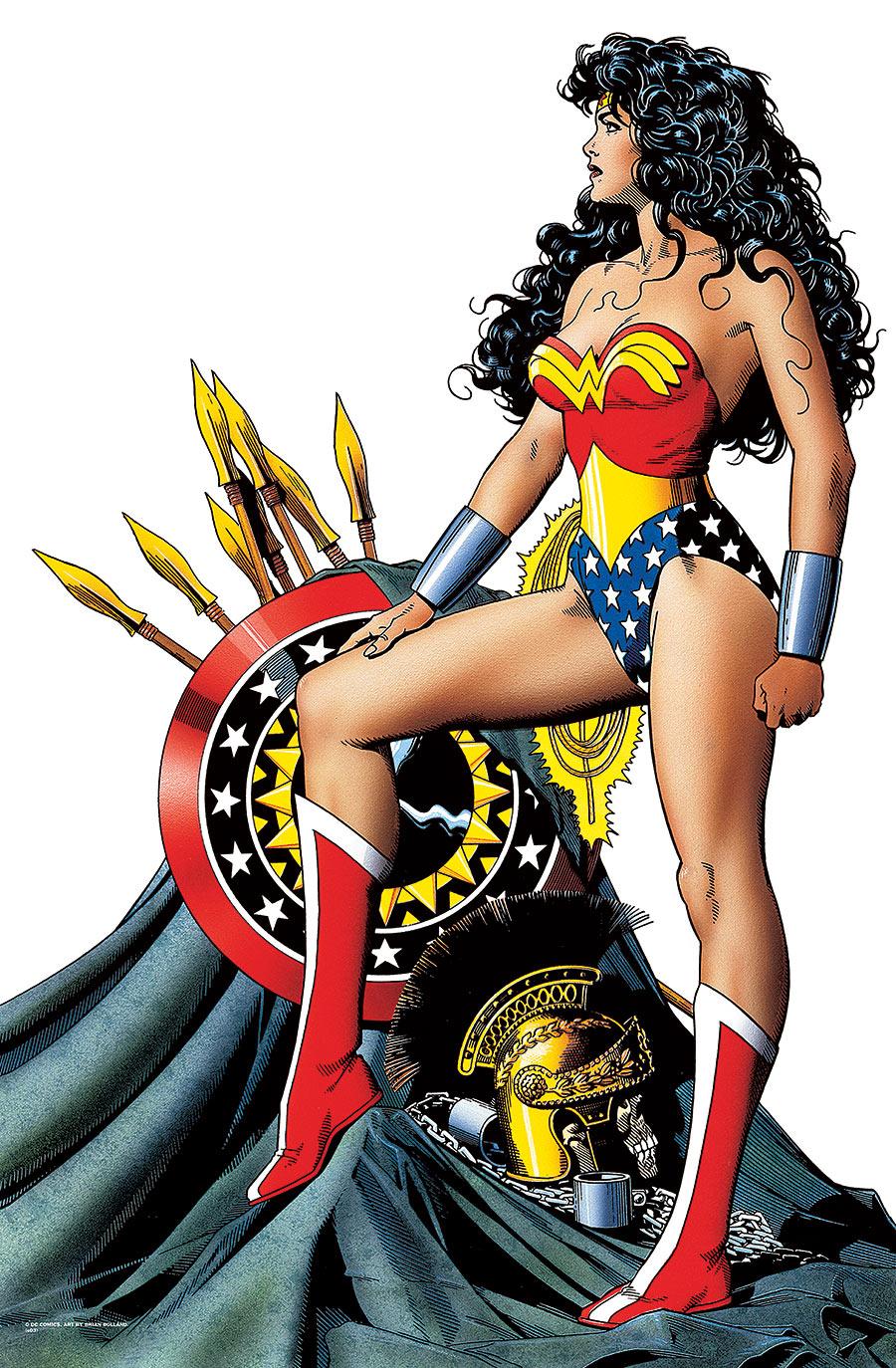
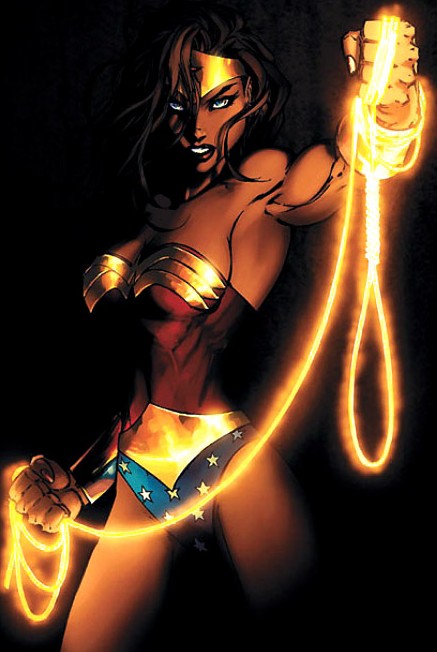
Wonder Woman Terry Dodson

Wonder Woman Lynda CarterAh, Wonder Woman – the Amazon princess of Themyscira who’s sent to Man’s world as an emissary of Peace, a job that seems to involve a remarkable amount of beating people up, battling evil and repelling bullets with her magical arm gauntlets. She’s massively recognisable. She’s one of the most long-running superheroes around. She’s a female icon, a wish-fulfilment figure and a role model… and yet she hasn’t managed a non-animated onscreen appearance since the fabulously campy Seventies TV series starring Lynda Carter. It’s not for want of trying – there’s been a whole series of attempts to bring Wonder Woman back to the screen (most notably in 2005, when Buffy creator Joss Whedon was hired to do a reboot) but all of them have either failed or stalled.

Now, however, Wonder Woman may be on her way back to TV screens, thanks to a rather unlikely benefactor. If you were going to make a list of potential producers for a TV version of Wonder Woman, it’s very unlikely that David E. Kelly – the king of kooky courtroom drama and creator of shows like Ally McBeal and Boston Legal – would have made the cut. However, proving that you can never predict exactly how weird Hollywood can get, a Wonder Woman TV project is looking very likely, a pilot episode is being put together at US network NBC, and David E. Kelly is the man in charge. Details of the pilot script have filtered out via film/tv/comics site Bleeding Cool, and it’s certainly sounding a very David E. Kelly show – by the sounds of it, it’ll be a frothy relationship-driven superhero comedy drama with a fair selection of continuity from the original comics, but aiming more at the mainstream network audience, and certainly in no way trying to do the straight, mythic and serious take that plenty of fans seem to want.

(A quick summary of most of the details we’ve got – essentially, the setup is that Wonder Woman is Diana Themyscira, head of the Themyscira Corporation, and publicly moonlights as a superhero (think Tony Stark and Iron Man), but also uses the mild-mannered alter ego of Diana Prince from time to time. The general mood seems to be goofy female-oriented superhero drama, with a slightly worrying number of pop songs listed in the script (there’s apparently going to be a fight scene scored by ‘Single Ladies’ by Beyonce, which doesn’t exactly fill me with hope), and from most of what I’ve read in the Bleeding Cool article, it does feel like the closest reference point is going to be that fabulously Nineties TV take on Superman, Lois and Clark (also known over here as The New Adventures of Superman) – or, at least, the earlier episodes of Lois and Clark where the relationship-driven comedy worked, and the whole concept hadn’t been run into the ground yet).

Wonder Woman Brian BollandAt this stage, I’m neither loving nor hating what I’m hearing. A lot will depend on execution, and Wonder Woman isn’t a character I’m especially invested in – it does read like the kind of thing that’s more likely to fail than succeed, but pilot episodes can be notoriously clunky anyway, and I’m willing to at least give it a little benefit of the doubt (until I’ve actually seen the episode in question) as this could go either way. Kelly’s take might be a smash success or a blink-and-you’ll-miss-it failure (like the TV adaptation of female-centric Batman universe comic Birds of Prey, which was cancelled so quickly, hardly anyone even noticed that it existed), but it’s interesting in that it shows exactly how much uncertainty there is over how to do Wonder Woman onscreen, a lot more than there ever was with a character like Batman and Superman.

A little of it is simply to do with the fact that superhero tales tend to be pretty big budget (especially if we’re talking movies), and female-driven superhero movies don’t exactly have a fantastic strike rate of success (evidence for the prosecution: Supergirl, Elektra, and the stunningly awful Catwoman). Much of this is down to bad luck and rotten creative decisions, but there’s also the problem that big budget superhero films need to be pitched as wide as possible, and I don’t think anyone has yet to crack how to sell the kind of major-league, female-oriented superhero blockbuster that they’d need if they were going to give Wonder Woman the cinematic outing her following and history deserves.

Wonder WomanOn top of that, Wonder Woman is a tricky character whose origin story has been tweaked, rebooted and remixed a surprising number of times over the years. For example, while there have been wildly different interpretations of Batman, it’s hard to imagine anyone ever suggesting “Hey, you know what? What if Bruce Wayne gave up all the dressing up as a bat, and instead we had him travelling the world as a daring spy who poses as an international playboy? Maybe his codename could still be ‘The Bat’!” And yet, that’s exactly what happened to Wonder Woman for several years, from the late sixties to the mid seventies, when she was de-powered and transformed into a fab and groovy secret agent. There have been other massive changes over the years, and Wonder Woman’s origin isn’t the kind of clear-cut tale that you can sum up as easily and succinctly as Grant Morrison and Frank Quitely managed in the first page of their magnum opus, All-Star Superman:

all-star_superman_origin

Even now, DC are struggling with the character – she’s in the middle of an ‘alternate history’ revamp, a ‘bold new direction’ that was thought up by writer J. Michael Straczynski before he jumped ship from writing monthly comics, and which seems to have turned her into a cross between Xena: Warrior Princess and the DC Comics beserker warrior equivalent of Wolverine. It’s not as much of a car-crash as Straczynski’s god-awful “Superman walks across America” tale Grounded, but after about six issues, it really doesn’t feel like it’s working (even with a mild upswing in quality thanks to Chris Roberson taking over scripting duties). They’ve also, as part of the remix, given her a much-heralded new costume:

wonder woman new costume jim lee

I’m going to go out on a limb here and say that I don’t actually have a problem with this, and as superhero costumes go, it’s pretty good. The jacket is still ridiculously Nineties, but the ensemble works, and it doesn’t say “armoured swimming costume” in the same way that the classic WW costume does. Yes, it does take away a certain degree of Wonder Woman’s mythic nature but it also, frankly, is a more practical costume that would very probably be much easier to realise onscreen without drifting into the kind of campness that Xena or, to be honest, the Seventies TV show survived on.

wonder woman alex rossAnother problem with Wonder Woman is her mythic nature. She was created in the Nineteen Forties as a female adventurer to battle the Nazis, a long time before the Sixties Marvel revolution made street-level, ordinary-joe superheroes the done thing. As a result, she’s a character of pure myth (plenty of versions of the origin have her actually sculpted from clay by the Gods), and there’s a sense of distance from all the DC ‘Big Three’ – the feeling that they’re Olympian ideals to aspire to. That’s a tricky thing to pull off, especially in the post-Eighties/Nineties era when superhero comics are at least attempting a bit more psychological depth (even if they don’t always manage it), and I really don’t feel like anyone’s ever entirely cracked how to handle this.

There’s also the lack of a single definitive Wonder Woman story. As I’ve said, I haven’t read a heap of Wonder Woman comics, so I’m coming at this as an outsider, but especially in the last twenty five years, in the post Dark Knight and Watchmen comics landscape, there hasn’t been a comic that has truly defined Wonder Woman as a character in the same way that, say, The Dark Knight Returns or The Killing Joke have for Batman. I’m sure there have been some great runs of stories and some impressive creators have worked on the title (including writers like Greg Rucka and Gail Simone), but it feels like what’s needed is someone to take Wonder Woman and do something attention-grabbing and truly different with her (which I suspect was what Straczynski was trying to do with his rather ill-fated concept, unfortunately).

Wonder Woman Lasso of TruthOn top of all that, there’s the question of how close a screen version should stick to the comic, especially when there are aspects of the comic which (to put it mildly) might be tricky to transfer? The 2009 animated Wonder Woman direct-to-DVD film is a good example of this – it’s fine when it’s sticking to pure myth (featuring a 300-style flashback opening sequence), but comes unstuck when it has to do tackle some of the trickier aspects – and yes, we’re talking about the Lasso of Truth. Back in the Forties, there was a deliberate layer of kink to many Wonder Woman stories (with the mighty Amazon coming up against a wide variety of villains who seemed very fond of tying her up time after time), and the Lasso of Truth – the magical rope which, when tied around someone’s neck, compels them to tell the truth – is a direct descendant of this kind of storytelling.

It’s the kind of thing that’s much easier to play in a comic book than in reality, and that’s the main problem with Wonder Woman – you’ve got a character who’s a mass of challenging aspects, many of which could be breathtakingly silly if done wrong, and which doesn’t even have a clear, definitive set of stories which you can look to as an obvious blueprint for a screen adaptation. If anyone wants to set me straight and say “Well, of course there’s issues XXX to XXX”, then I’ll be extremely grateful, but considering these inherent problems, I’m really not surprised that nobody’s been able to get a full-on live action version of Wonder Woman out of development. In pop culture terms, she’s kind of where Batman was before the Tim Burton-directed 1989 blockbuster – the Seventies Lynda Carter show is still, despite its nuclear levels of camp, the main touchstone for what people (at least of a certain age) think when they think ‘Wonder Woman’. What she really needs is someone like Burton to come along and do something incredibly distinctive with her – knock the origin into a coherent shape, choose what they want and leave the rest on the comic page, and craft something which will be distinctive and attention-grabbing.

Now, for the record – I don’t think from what I’ve heard that Kelly’s TV adaptation is going to be that. It’s definitely going to earn a lot of fan hatred even before a second of it has been broadcast, and I don’t know that if my favourite comic book character was going to be changed that radically, I’d be particularly happy. But, I suspect that if Wonder Woman is ever going to succeed onscreen, she’s going to have to be changed – she’s going to have to be a specific interpretation. Until then, she’s going to remain an icon that everybody knows, but which remains frustratingly difficult to adapt…

Comic Review – Batman : The Return of Bruce Wayne (Deluxe Edition)

Writer: Grant Morrison ~ Artists: Chris Sprouse, Frazer Irving, Yannette Paquette, Georges Jeanty, Ryan Sook, Lee Garbett ~ Publisher: DC Comics ~ Year: 2011

Return of Bruce Wayne Deluxe - cover[xrr rating=3.5/5]

The Low-Down: The return through time of the original Batman is as mindbending as you’d expect from the pen of controversial comics creator Grant Morrison. A wild, colourful and inventive journey through pulp storytelling, The Return of Bruce Wayne has some serious consistency problems and is in no way a ‘jumping on’ point, but the combination of adventure, mythmaking and experimental storytelling makes for a heady and entertaining brew.

The Backstory: He witnessed his parents’ murder when only eleven years old. Up until recently, multi-millionaire Bruce Wayne secretly used his resources, training and cunning to fight crime on the streets of Gotham under the costumed identity of the Batman – but after an apocalyptic confrontation with the god-like Darkseid, Wayne was apparently killed, and ex-sidekick Dick Grayson took over the mantle of the Caped Crusader.

What’s it About?: Bruce Wayne is far from dead. Displaced in time by the ‘Omega Effect’, he’s now lost in history, his memory in tatters, facing untold dangers in timezone after timezone, fighting to find his way back to the present day. Along the way, he’s also discovering dark secrets of the Wayne family, as well as clues to the identity of Dr. Hurt, the arch-criminal behind the organisation known as the Black Glove. Nothing is going to stop him from reaching his destination – but Darkseid already planned for this, and if Bruce Wayme arrives in the twenty-first century, it could mean destruction for everyone…

Return of Bruce Wayne #1 - Page 30The Story: There are some superhero stories where you can easily leap into the fray… and there are some where it’s a really bad idea. Grant Morrison’s comics have always been demanding and heavily interlinked, but his epic run on Batman has taken things to another level. Since 2006, he’s been telling a sprawling, ambitious novel-like story (which has also stretched into series like Final Crisis and Seven Soldiers of Victory), and just to make matters even more complicated, much of The Return of Bruce Wayne fits closely together with stories in his acclaimed run on Batman and Robin (especially ‘Batman vs Robin’ and ‘Batman and Robin Must Die!’ in volumes 2 and 3). So, if you’re looking for traditional, easily accessible superhero action – move along, there nothing for you here.

That’s not to say that The Return of Bruce Wayne doesn’t have plenty to offer, just that like ‘Batman R.I.P’, this is a smaller portion of a much larger work. Throughout his run on Batman, Morrison has been deliberately embracing the crazier elements of Batman’s lengthy history (most notably, working many of the overly camp 1950s-published sci-fi Batman stories into the fantastically twisted and disturbing ‘Batman R.I.P.’), and The Return of Bruce Wayne is the most extreme he’s gone yet. At first glimpse, there shouldn’t be anything further away from a traditional Batman tale than a crazy time-warp adventure that includes such memorable sights as Caveman Batman, Pilgrim Batman and Pirate Batman (although it has to be said, the story’s brief pirate persona for Bruce Wayne isn’t anywhere near as fun as Andy Kubert’s ludicrously brilliant cover illustration).

Batman Return of Bruce Wayne #3 - thebatrangerAnd yet, what Morrison has done is strip Batman down to barest essentials and rebuild him, while also putting Bruce Wayne in his proper context as a pulp hero. Each chapter of the story gives a new twist, exploring a different aspect of the character, pitching him against the ultimate enemy – History itself – and the end result is a deliriously barmy adventure that stretches a mystery across time, and raises the Batman to a truly mythic level.It also links back in surprising ways with ‘Batman: R.I.P’ and ‘Final Crisis’, layering in a massive amount of detail and pulling off some truly mind-expanding moments, especially in the Jack Kirby-esque science fictional final chapter.

It’s also true, though, that Morrison does throw a few too many ideas into the mix at times, and the book overall doesn’t always hit the fantastic highs of the brilliant Stone-Age-set opening chapter. There’s also the fact that we don’t really get the complete finale of Wayne’s time-travel adventures and Morrison’s uber-storyline here – the rest appears in the stories to be published in the upcoming Batman and Robin volume 3 – while DC’s decision not to reprint the key Batman issues 701 and 702 here (the atmospheric story ‘R.I.P.- The Missing Chapter’, which perfectly bridges the gap between ‘R.I.P’ and ‘Final Crisis’) means that it’s even harder to play catch-up than before. However, for those willing to try and keep up, what this collection lacks in consistency, it makes up for in adventurousness, creativity and sheer pulp pleasure.

Batman Return of Bruce Wayne Frazer IrvingThe Art: The plan was for each issue of this six-issue miniseries to be handled by a single artist, most of whom had worked with Morrison before (except for Chris Sprouse) – unfortunately, delays and production problems threw a spanner in the works, which means that the first half of The Return of Bruce Wayne is a very different visual proposition from the second. In the first three issues, we have Chris Sprouse’s clean and classical pulp stylings in the Caveman issue, the moody and lush digitally painted work of Frazer Irving on the Pilgrim issue, and the atmospheric pencils of Yannick Paquette on the Pirate story.

Sadly, Cameron Stewart dropped out of doing issue 4, the Western chapter, and while Georges Jeanty (best known for his work on the comic book ‘Season 8’ of Buffy the Vampire Slayer) pulls off some strong moments, his storytelling gets murky at times. The remaining two issues also see a major amount of work from fill-in artists, which is especially frustrating in the massively ambitious chapter 6. It often feels like Morrison is cursed to always see his most adventurous scripts plagued with production issues (similar problems affected the final volume of his Vertigo series The Invisibles), and The Return of Bruce Wayne is left halfway between being a major artistic showcase and a slightly rushed patch-up job. This Deluxe Format edition means the art looks as good as possible on over-size pages, and at its best, its an artistic jam to match the eclectic styles on show in Seven Soldiers of Victory – but there’s still a slight sense that not all the issues got the consistently great art that they deserved.

The Verdict: It’s not quite the rousing success it should have been – but even Morrison’s near-misses are fascinating, adventurous stuff, and The Return of Bruce Wayne is best read as simply one chapter of Morrison’s sweeping, genre-defying, experimental Bat-epic.

[amtap book:isbn=0857682148]

Movie News: Is it a Bird? Is it a Plane? No… it’s that bloke from ‘The Tudors’ (A Superman Casting Update)

Superman Logo Alex Ross

Zack Snyder’s new cinematic reboot of the Man of Steel just took a big step closer to actually happening, as he’s cast the title role. And who’s the actor stepping into the legendary blue-and-red spandex?

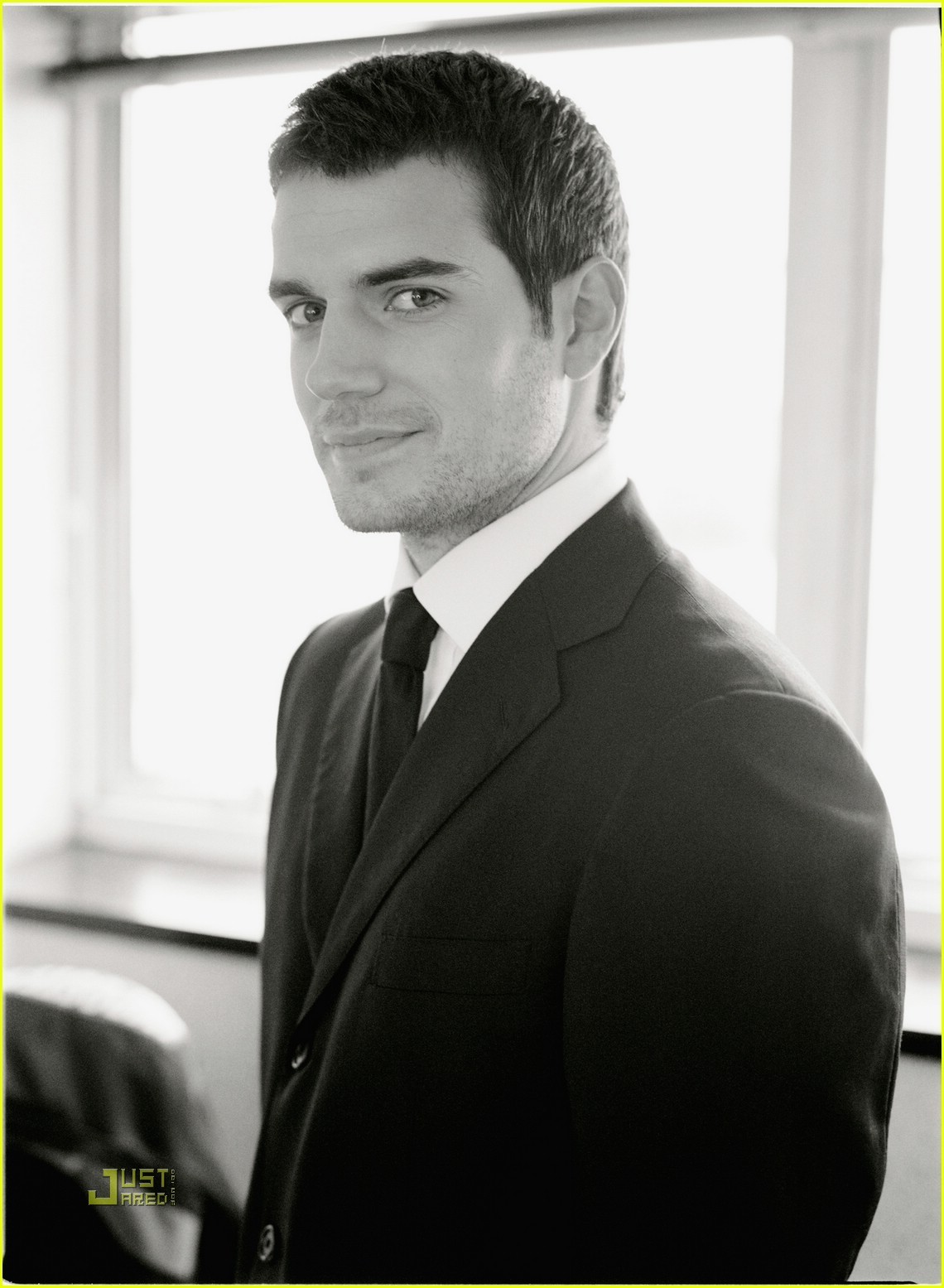
Henry Cavill portrait Superman News

It’s Henry Cavill. And if your first thought is “Who’s that?” then you’re not exactly alone. Yet again, and fairly sensibly, they’ve gone for another fairly unknown actor (although nowhere near as unknown as Brandon Routh was when he was cast in Superman Returns) – British actor Cavill certainly can’t be described as a star, although he’s actually worked pretty consistently for the past ten years, and is currently best known for regularly getting his kit off in the luridly OTT historical drama The Tudors as nobleman Charles Brandon.

And my first thoughts? Well, only having seen one episode of The Tudors (I have what could be described as a ‘problem’ with anything that involves giving Jonathan Rhys Meyers the chance to either yell or pout), I can’t say that Cavill made a massive impression, and certainly isn’t as interesting as casting Andrew Garfield as Spider-Man. From the photos, Cavill’s certainly got the chin for the role, and he’s got that handsome if slightly anonymous thing down pat. Despite my dislike of Superman Returns, I thought Brandon Routh was the best thing in it and it’s a shame he’ll never get the chance to play the part again, but it does rather feel as if they’ve gone here for a safe relative unknown, rather than a risky out-of-nowhere blind-sider, which isn’t that surprising as Warner Bros really, really, really need this to work. There’s always the chance that Cavill may turn out to be really good , but to be honest, getting excited about this casting would involve getting excited about this movie in general, and I’m finding it rather difficult. The moment Snyder was signed, my interest in a new Superman film (even one being ‘shepherded’ by Christopher Nolan) plummeted – he’s a director who’ll certainly make something flashy and eye-catching, and I’m sure that his Superman film will, whatever the flaws, be better than the deeply misconceived Superman Returns (I admire Bryan Singer for attempting it, but good golly, that film didn’t work in a whole variety of ways), but ever since 300, he’s shown no sign of doing anything other than eye candy and visual bluster (even in Watchmen, which managed some good sequences, but fell flat as a piece of cinema). The new Superman will be slick and good-looking, but if it manages to capture a tenth of the spirit that the original two Richard Donner (and part-Richard Lester) films managed, I will be seriously surprised…

(Of course, it doesn’t help that one of the main reasons Snyder got Superman in the first place is that he’s good at doing projects quickly – Warner Bros not only need this film to be succesful, they need it to go into production pretty damn soon, otherwise their legal battle with the family of Superman creators Jerry Siegel and Joe Shuster gets even more complicated than before, and they risk losing the rights to one of the best-known superheroes in the world. It’d be nice to be optimistic, but I can think of very few examples of films pushed into production to meet a precise release date that have actually turned out well. But – I guess we’ll have to wait and see…)

UPDATE: It’s just been pointed out (by someone else) on Twitter that we now have a situation where three of the biggest superheroes are all played by British actors (the others being Andrew Garfield in Spider-Man, and Christian Bale in Batman). Not sure exactly what that signifies, but felt it was worth sharing…

UPDATE: Via www.slashfilm.com, it’s been revealed that the other contenders on the shortlist were Matthew Goode (best known as Ozymandias in Watchmen), Matthew Bomer (from TV shows Chuck and Tru Calling), Arnie Hammer (who played the Winklevoss twins in The Social Network), Joe Manganiello (Alcide in S3 of True Blood) and Colin O’Donaghue (now in daft-looking religious horror The Rite). While Arnie Hammer might have been interesting after his work in The Social Network, I think Cavill is actually the most potentially interesting of the bunch, and it certainly says what they were looking for – a late twentysomething absurdly handsome actor with the right kind of chin. And while Matthew Goode can be a good actor, after his oddball turn as Ozymandias in Watchmen, I’d rather not see him near any superhero characters for a while…

Comics Review – Phonogram : Rue Britannia

Writer: Kieron Gillen ~ Art: Jamie McKelvie ~ Publisher: Image ~ Year: 2006

Phonogram - Rue Britannia Cover - Jamie McKelvie

[xrr rating=4/5]

The Low-Down: A low-key but surprisingly engaging urban fantasy that blends mythology with the NME, this characterful comics miniseries takes a wonderfully left-field look at pop music and what it does to us.

The Backstory: Everybody knows about Phonomancy, right? The way you can use music to do magic? One of the simplest tricks in the books. Used correctly, music can do anything, touch on any emotions and unlock all kinds of doors…

What’s it About?: It’s 2006 and David Kohl, Phonomancer and egotist, is having a bad day. A one-night stand has come back to haunt him, and now he’s got a mystery to unravel. Someone is interfering with Britannia – the spiritual godhead of Britpop, dead these past ten years – and both his memory and reality itself are starting to alter and unravel…

The Story: Comics can do anything. You want proof? Look at Phonogram, a brilliantly oddball exploration of music and myth that dances along the edge between fantasy and music journalism without ever quite toppling either way. It’s the kind of work that’d feel too slight or too laboured in any other medium, but sits perfectly in comics, taking you on a quiet and characterful fantasy journey through Britpop. One of the best things about it is simply the way it plays the magic and fantasy as completely matter-of-fact and ordinary – because of course it isn’t about the magic, it’s about pop music, memory, and the way nostalgia can be both a comfort and your worst enemy. The word ‘urban’ springs to mind, and Phonogram is a genuinely urban fantasy that, even four years after being first published, does something fresh and inventive with a sub-genre that’s still mired in werewolf-shagging and winsome vampires.

Phonogram - Internal Art - Jamie McKelviePhonogram is something else altogether – a world of memory kingdoms and rituals, where ghosts are still mourning the absence of Manic Street Preachers guitarist Richey Edwards and whole lives can be defined by the music people listen to. Comparisons have been made to the long-running Vertigo series Hellblazer (starring breathlessly cynical magician/bastard John Constantine), and there are definite echoes in the landscape and atmosphere of the comic – but Phonogram has a weirdness and a sense of playfulness all of its own. The whole thing was a labour of love for writer Kieron Gillen and Jamie McKelvie (Gillen has already said in interviews that thanks to making so little money on Phonogram, the chances of any return visits after the brilliant second volume The Singles Club is unlikely), and making a comic-book voyage through the mythic landscape of Britpop is certainly one of those endeavours that qualifies as heroic. Like all the best music journalism, Phonogram flirts occasionally with pretension and isn’t afraid of wearing its heart on its sleeve. It’s also not afraid of throwing in references or unexpectedly mythic cameos that its audience might not get (there’s a detailed four-page glossary in the back of the book for anyone who didn’t live through the Britpop years), and certainly doesn’t go for attention-grabbing tactics of action, sex or gore. This is a late-night wander of a graphic novel, the kind of story that’ll strike a chord with anyone who’s ever lost themselves in a song or experienced that one grand pop passion that somehow sums up a period of your life.

Phonogram art - Jamie McKelvieIt’s also wickedly funny, with the entertainingly cynical Kohl acting as a brilliantly engaging (and occasionally foul-mouthed) protagonist. Gillen’s characterisation here is top notch, creating a rich cast of characters, especially the ascerbic and spiky Phonomancer Emily Aster, and delivering a whole series of finely crafted one-liners. A comic series that knows it isn’t for everyone (and isn’t trying to be), Rue Britannia is a little rough around the edges, but like all good pop, it’s the flaws and imperfections that make the moments of brilliance worthwhile.

The Art: Printed in black-and-white, Jamie McKelvie’s art style here is deceptively simple – he’s got a very clean-lined approach that’s almost the exact opposite of modern-day superhero comic art. Take a single panel, and it might look a little too simple – but place it in context, and you get a gorgeously easy visual ride that guides you through the story. He’s also brilliant at capturing characters – not many artists can handle making lengthy conversations visually interesting – and gives the whole series an off-beat, expressive and unique atmosphere.

The Verdict: Weird. Wonderful. Verging on essential. An excellent example of the kind of strange and unusual territory comics can explore – and the follow-up, The Singles Club, is even better.

[amtap book:isbn=1582406944]

Comics Primer: Superhero Deaths

Fantastic Four - ThreeNo spoilers here. Move along. Nothing to see…

Yes, Superhero Deaths are in the air, thanks to the demise of one of the Fantastic Four (in issue 587, the climax of the story ‘Three’). But I’m not here to talk about that specific death (and it’s not like there’s any shortages of places to talk about that at the moment…)

No, what I want to talk about is Superhero Deaths. What they are, why they happen, and whether or not there’s any way of stopping them…

So – what exactly makes Superhero Deaths different from any other form of comic book character popping their clogs?

It’s because superheroes are, really, a genre unto themselves with their own rules. Like almost all escapist fantasies, they’re all about dicing with death, facing impossible odds and winning through in the end. Superhero stories are also different because, at least in comic book form, they’re long. Really, mind-bogglingly long. I mean, take the Fantastic Four – this week’s issue is number 587. That’s a comic that has been published on a pretty much monthly basis since 1962, and averaging at 22 pages per issue, that’s nearly 13,000 pages of adventures since Fantastic Four issue 1 (and that’s not counting the regular miniseries, relaunches or separate appearances elsewhere the characters have made). That’s a gigantic amount of story – and the writers have got to avoid treading new ground, they’ve got to keep the stakes high, with the world, the universe, REALITY ITSELF being under threat. Long-running superhero comic books have over the years (especially since the Sixties and Seventies) evolved to function in many ways like soap operas – but they’re soap operas where (except in rare cases) you’re not able to change the central characters. And sometimes, you want to do something new and different. Sometimes, as Guillermo Del Toro says about his horror movies, you’ve got to shoot one of the Hostages, just to show you’re not kidding around.

A nice big death is one way of doing this. It’s also a way of garnering attention, of hitting the audience where they don’t expect. Because, when it comes down to it, superhero comics are based on melodramatic pulp adventure. If there’s not a sense of threat, they’re not doing their job correctly. The most infamous example of this kind of attention-grabbing death is (SPOILER ALERT FOR ONE OF THE MOST SPOILED COMIC STORIES IN HISTORY) the death of Gwen Stacy in Spider-man. She was a supporting character, but she was a very long-running supporting character, and when she gets abducted by the Green Goblin and hurled off a bridge, the obvious end result is that the heroic Spidey will save the day. Not only does he not save the day, but it’s hinted fairly strongly that it’s thanks to Spidey’s webs that Gwen gets her neck broken. It’s a blisteringly unhappy ending, and a very Marvel twist on what had become a very traditional Villain-abducts-girl, hero-rescues-girl format.

So, what’s the problem?

The problem is that both Marvel and DC (especially DC) don’t seem to know where to stop. They’re both fictional universes where anything is possible, so when a writer or editor decides that it would be quite fun to bring Heroic Character A back from the dead, there isn’t quite as much standing in their way. Which also, of course, means that it’s easy to get rather devil-may-care with actually killing your characters, if you know that it’s really not too difficult to bring them back again later.

Dark Phoenix Cover - Uncanny X-MenA good example of this is Jean Grey from Uncanny X-Men. Her transformation into Dark Phoenix, where she destroyed an entire alien civilisation, and then her decision to finally kill herself to spare her friends life is one of the seminal moments of late Seventies comic books, and with the Claremont run becoming one of the most influential comic book runs of the times, the emotional shock of Jean Grey’s death worked it’s way into the DNA of superhero comics in general.

Of course, there were plenty of other deaths over the years – but for the first example of real, serious “Look, you won’t BELIEVE who we’ve killed this time!” sales-driving death, there’s Crisis on Infinite Earths – a 1985 miniseries whose sole purpose of existence was to tidy up DC’s cluttered history of multiple universes, and make things accessible to new readers. And naturally, considering there was only going to be one universe from hereon in, they had to show that the stakes were high, so they not only killed off the original Supergirl, but they also killed off Barry Allen, the ‘Silver Age’ version of the Flash (see a future Comics Primer post for a guide to the various ages of Superhero Comics…), a character who’d been published since the mid-Fifties. The reaction was huge. The sales were good. Clearly, attention-grabbing deaths were the way to go.

Superman - The Death of Superman coverThe grand-daddy of them all, however, was Superman. The Death of Superman in 1992 was one of the biggest comics ever, the poly-bagged ‘death issue’ of Superman 75 selling an absurd number of copies, fuelling the speculator frenzy that would eventually cause a gigantic crash in the comics market, and also meaning that one of the biggest selling comic books of all time is a deeply silly story of Superman being punched by a man with rocks sticking out of his face (the oh-so-Nineties villain Doomsday). But, above everything else, The Death of Superman gained the title a massive amount of mainstream media attention. It was talked about. It was discussed. It was everything an ‘event’ comic was meant to be (well, short of actually being particularly ‘good’).

Alright then – attention grabbing deaths. What’s the problem?

The problem is that they don’t stay dead. They can’t. Comic writers and editors do like to talk about superhero tales as modern myths for our world – the trouble is that myths come to an end. Superhero stories can’t, if they’re succesful. Mainstream superhero comics are properties that, for a company like Time Warner, the owner of DC Comics, or Disney, who now own Marvel, are potentially worth millions and millions of dollars in licences and merchandise and spin-offs. In much the same way that the BBC won’t stop making Doctor Who if the Doctor uses up his alotted twelve regenerations (according to something Robert Holmes wrote in 1976), DC and Marvel aren’t going to stop publishing characters simply because the story would be better that way. If the sales are down, the character may be for the chop – but if the sales are good, then they’ll stay around no matter what.

And even if a character does die, there’s no point attracting attention via their death and then going “Sorry folks! Nothing more to see!” Superman’s resurrection was inevitable, and came after about two years of admittedly fun and entertaining (if utterly ludicrous) stories, and a couple of deeply annoying red herrings and feints (especially when we were asked who out of the four Supermen now protecting Metropolis were the genuine article, and the answer turned out to be ‘None of them’). But since Superman’s death, it’s simply gotten insane. Death in superhero universes has become like a revolving door – at least, if you’re an important enough character – a passing malady that’ll clear up in about eighteen months to two years. The number of retcons and resurrections has gotten ludicrous, to the extent that one of DC’s recent events, Blackest Night, was in part a desperate attempt to come up with an explanation as to why so many of DC’s characters were bouncing between the land of the living and dead like tennis balls. And if you’re unfortunate to be a B or C list superhero character, it’s fairly likely you’ll be carved up in a completely throwaway manner just to give a story a bit of a shock twist.

And the main problem with this? It gets difficult to care. Modern superhero comics are addicted to events – to every single story being a genre-defying, epoch-changing tale you simply MUST not miss. As a reader, you want the stakes to be high, and superhero comics are also always trading off the past, dealing in nostalgia… but this trading off the past means that they’re always reminding you of how many times this has happened before. When anything is possible, things lose their meaning. For all the seriousness and ‘adult’ qualities superhero comics reach for, sometimes they’re defeated by what makes them what they are. Sometimes they’re best when they acknowledge their own ridiculousness, rather than trying to wear grim and gritty like a badge of honour.

The other side of it being difficult to care is that sometimes, these deaths are well written. I haven’t read the Fantastic Four issue in question, but I have heard online that it is actually a good story, and that the whole comic has been building towards this for some time – this isn’t just a quick grab for sales and attention. But, until superhero comics can learn to rely more on decent storytelling and a little less on shock tactics, the news that a character is scheduled to die (with the latest target in the next few months being the Ultimate Comics version of Spider-man – a character they already pretended to kill off two years ago!) will be greeted – no matter how good the eventual comic – with a weary sigh of “Oh no, not again…”

As a quick closer- what would you say is a good example of a superhero death?

To be honest – All-Star Superman. Grant Morrison and Frank Quitely’s magnum opus has been massively acclaimed, and one of the main reasons is that it flies in the face of much of what’s traditional about mainstream comics – most particularly in the fact that it’s all about death. The story begins with Lex Luthor once again setting in motion an elaborate plan to kill Superman… only this time he actually succeeds. Superman is flooded with solar radiation in issue 1, so much that his body can’t take it, and the rest of the story isn’t a race against time to see if he can cure himself – instead, it’s all about Superman calmly, and with dignity, facing the prospect of his approaching death, and preparing the world for life without him. It’s beautifully told, surprisingly moving, and at completely the opposite end of the artistic spectrum from the daft wham-bam action of The Death of Superman.

What about you out there? Anyone else want to nominate favourite, moving, shocking or downright embarrassing superhero deaths? The floor (and the comments section) is all yours…

[amtap book:isbn=140121102X]

Comics Primer: What is a Graphic Novel?

500 Essential Graphic Novels coverGraphic Novel. I’ve heard that phrase somewhere before, haven’t I?

It’s a phrase that says, very clearly, “These aren’t just comics. They’re for ADULTS too!” It’s a phrase that’s been used with increasing frequency over the last thirty years. But what the hell does it actually mean?

Good question. And aren’t we just talking about comic books, anyway?

If you believe your local bookshop section, then the answer is yes. After all, most Graphic Novel sections in bookstores are full of books that can safely be described as comic books – but there’s an insane variety. Unless the section has been shelved by someone who knows their stuff, it’ll probably be shelved in alphabetical order. Which is an understandable way of doing things… but is also completely and utterly crazy.

Why crazy?

Well, just imagine a bookstore where all the books are shelved alphabetically. All of them, regardless of subject matter, tone, whether they’re for younger readers or adults only. Manga will usually be shelved separately, but as far as divisions go, that’s usually it, and while the experienced comics reader will know where to look, for newcomers it can be downright bewildering. Added to that, not everything that’s in the Graphic Novel section is technically a graphic novel.

Alright then – stop beating about the bush. What is a Graphic Novel?

Okay – technically speaking, a Graphic Novel is a work of sequential art (i.e. comics) that’s self-contained (or which consists of several self-contained stories) and which is published all in one go. Technically speaking, anything which was originally published in a monthly/bi-monthly/quarterly issue format and was then collected together into a paperback/hardback edition should be referred to as a Trade Edition. (That’s where the now rather common phrase “Waiting for Trade” comes from, in comic circles – people who forgo the monthly wait, and want to get the story in the nicely bound collected edition).

So – my copies of Superman: They Saved Luthor’s Brain and Spider-Man: The Clone Saga V1 aren’t actually graphic novels?

Technically, no. If it was published first in issue format, then it technically doesn’t count. They’re trade editions all the way.

It’s really that simple?

Watchmen coverWell… actually, no it isn’t. If you make the distinction precise, then you know what isn’t a graphic novel? Watchmen. The most graphic novel of all graphic novels wouldn’t count, simply because it was originally published as twelve (semi-monthly) issues. Same with works like From Hell, and especially The Sandman – its status as a 75 issue story means it’s incredibly difficult to make strict definitions stick, especially when it’s very much a self-contained work that, for the most part, showcases the kind of structure, planning and execution you’d find in a Literary Novel.

‘Graphic Novel’ is, more than anything, a marketing tool. It’s been used since the mid seventies as a way of trying to prove that comics can stand on their own as a genuine art form, rather than simply being regarded as something rather juvenile. And, especially over the last fifteen years, there has finally arisen a market for genuine, artistic and risk-taking graphic novels that step outside the barriers set by mainstream perceptions (i.e. “All comics must feature men in spandex fighting”) and head in remarkable directions all of their own.

Care to name some titles?

Certainly. Alice in Sunderland. Jimmy Corrigan: The Smartest Boy on Earth. Asterios Polyp. Persepolis. Ghost World. Palestine. Parker: The Hunter. And many, many more.

So, where did the name ‘graphic novel’ come from?

A Contract with God coverThere are actually examples of graphic novel-like editions going back to the 1920s, but it wasn’t until the late 1960s that things really started happening, with both Marvel and DC experimenting with different formats, and adult comic books flourishing in mainland Europe alongside the collected editions of strips like Asterix and Tintin. Then there’s Blackmark, by Gil Kane and Archie Goodwin, which has been retro-actively called the first graphic novel, although it wasn’t referred to at the time. There’s a handful of other works which could technically fall under the banner (including Raymond Briggs’ The Snowman and Father Christmas), but the first genuine graphic novels are usually looked upon as three books published in 1976 – Bloodstar by Richard Corben,  Beyond Time and Again by George Metzger (even though it was a collection of serialized strips) and Chandler: Red Tide by Jim Steranko. However, the first self-proclaimed graphic novel, and the first work which truly defined what a graphic novel could be, was A Contract with God by the famed comics artist Will Eisner in 1978 (Eisner often gets described as the ‘inventor’ of the graphic novel, despite the fact that he never claimed to be, and simply didn’t realise the term hadn’t been used before). It wasn’t until the mid-Eighties, however, and the arrival of both Watchmen and Batman: The Dark Knight Returns that the term really caught on. But of course, not everyone likes using it…

Really? Doesn’t it mean that comics are all grown up and adult now?

Yes, but some writers feel that ‘graphic novel’ is trying too hard for prestige and seriousness, when there isn’t anything wrong with works being described as ‘comics’. The best quote to go to is probably from Neil Gaiman, who was once informed that he didn’t write comics, he wrote ‘graphic novels’ – according to Gaiman, “all of a sudden I felt like someone who’d been informed that she wasn’t actually a hooker; that in fact she was a lady of the evening.”

Anyhow, so how do you tell if something is or isn’t a graphic novel?

Length is a good guide to go with. If it’s a work of artistic intent and a story with a beginning, middle and end that can be bound in one edition, then you can pretty much view it as a graphic novel (the wonderful Bone by Jeff Smith, for example, is just over 1400 pages long in its one-volume-edition, and collects over ten years worth of comics, but is still one continuous and contained story). Once you get beyond one volume, it gets tricky (and once you get to manga, the whole thing gets really complicated), but honestly, the best guide is artistic intent. There are plenty of grey areas, but most of the time it’s pretty easy to tell. For example – the Jack the Ripper saga From Hell is a dark and disturbing tale of murder that also acts as a chillingly intelligent dissection of the Victorian era, while the superhero event comic Blackest Night is (no offence, DC fans) a bunch of people in spandex vs Space Zombies.

Could you recommend some places where I can learn more?

Certainly. There’s 500 Essential Graphic Novels: The Ultimate Guide by Gene Kannenberg Jr, Graphic Novels: Stories to Change Your Life by Paul Gravett, Reading Comics by Douglas Wolk, and the absolutely peerless Understanding Comics by Scott McCloud, all of which will give you a brilliant grounding in the kind of remarkable comics that are out there, and exactly how they do what they do.

[amtap book:isbn=1905814291]

[amtap book:isbn=1845130685]

[amtap book:isbn=0306816164]

[amtap book:isbn=006097625X]

News: X Marks The Spot (X-Men: First Class – The Photos…)

Following on from the Batman post, we’ve also recently gotten our first proper look at upcoming X-Men prequel X-Men: First Class, charting the beginnings of the rivalry between future baldy Charles Xavier (James McAvoy) and master of magnetism – and slightly daft helmets – Erik Lehnsherr, aka Magneto (Michael Fassbender). Things have been remarkably quiet on the X-Men: First Class front publicity wise, especially considering it’s out this Sunmer – it’s being directed by Matthew Vaughn, who does have a good eye as a filmmaker (although don’t get me started on Stardust), and does at least seem more promising than the frankly borderline diabolical X-Men Origins: Wolverine, but there’s lots to play for, and these first publicity shots… well, they’re not exactly instilling major confidence, but neither are they absolutely screaming “Disaster”.

x-men first class 1

I mean, let’s be honest – group shots of more than about five actors almost always end up looking cheesy. And it might have been nice if they’d gone for something a little more dynamic than “Let’s get them to put their hands on their hips on an empty black set!” Anyhow, here we have (from left to right) Fassbender as Magneto, Rose Byrne as Moira McTaggert, January Jones as Emma Frost (and yes, that costume is completely true to the comics), and Jason Flemyng as the terrifyingly coiffured Azazel, a character of whom I know nothing thanks to the mind-buggering complexity of X-Men chronology and mythology (outside the Chris Claremont and Grant Morrison runs, I’m basically lost).

X-Men First Class 2

And here we have Hank McCoy, aka Beast (Nicholas Hoult), Havok (Lucas Till), Angel Aslvadore (Zoe Kravitz), Mystique (Jennifer Lawrence, stepping into the skimpy prosthetics of Rebecca Romjin from the original films) and Charles Xavier himself (McAvoy). The one thing I am liking from these shots is the visual approach they’re going for – they’ve set the film in the Sixties (the original setting of the comics, although it doesn’t fit in with the first film’s chronology in the slightest, with X-Men, made in 2000, being set ‘A few years from now’), and they do seem to have embraced the groovy comics vibe (especially with Emma Frost’s costumes). The management at 20th Century Fox have an extremely bad reputation for micro-managing franchise films and ending up with bland messes (X-Men: The Last Stand being a case in point), and there are a lot of characters here to fit comfortably into one movie (with the sheer number of cast members being a constant problem that only Bryan Singer seemed able to handle). I am going to do my best to remain cautiously optimistic – something that even just got near the quality of X2 would make me extremely happy. Of course, whether I’m still feeling like this once the first trailer hits is a completely different story…

And – literally as I finished writing this post, more photos have just hit the net, via this set report online at Hero Complex:

X-Men First Class Emma Frost Sebastian Shaw

January Jones as Emma Frost looking very… well, very Emma Frost, with a sleazy-as-ever Kevin bacon as Sebastian Shaw. Nobody rocks the sideburns quite like the Bacon.

x-men first class xavier magneto

James McAvoy and Michael Fassbender as Xavier and Magneto in full “Yes, we are having a friendly chess match, but by the end of the movie we shall be BITTEREST ENEMIES!” mode. And is it wrong that I find the carpet in this shot fascinating?

x-men first class - group shot

And a “Let’s do the show right here!” group shot – I suspect that, at some point in this scene, someone will look at an old building and say “Hey- you know, this would make a brilliant school for the gifted with added underground lair and Thunderbirds-style hatches, don’t you think?”

Okay, moderately more impressed now. But we shall see how this all turns out… (*rubs hands together in suspicion*)

*UPDATE*

(And as a final addition to this post, here’s the first teaser poster. Because nothing says X-Men like… a whacking great Photoshopped ‘X’.)

X-Men First Class Teaser Poster

*UPDATE – AGAIN*

Okay – via http://www.slashfilm.com, it seems like Matthew Vaughn didn’t like those shots either. A couple of helpful quotes:

“I freaked out on them yesterday. I don’t know where the hell that came from. I don’t think it’s a Fox image. It’s not a pre-approved image. When I found out, I said, what the fuck is this shit, and Fox is running around trying to figure out what happened as well. I agree. It’s like a bad photoshop, which maybe it was by someone. It didn’t reflect the movie. I was shocked when I saw it. I was like ‘Jesus Christ’…

“I’m a fan of X-Men We’re not bastardizing X-Men, I’m trying to get them back to being whole again.”

“The costumes are blue and yellow as well, because fuck it, lets take it back it the original. Also, by the way, those costumes are hardly in the movie. The main costumes are like these cool 60’s James Bond…”

Plus, from there, a couple of new pictures:

Magneto X-Men First Class

HELMET!!!

Xavier X-Men First Class

CONCENTRATION!!!

News: The Bat, The Cat and the… Bane?

Dark Knight Poster Batman

No longer do we have to make completely random and ill-structured guesses about the third Batman film based on vague rumours and hints. Now we can make our random and ill-structured guesses with information that’s rock solid!

Of course, today’s the day that we’ve found out official casting on Christopher Nolan’s simmering third Batman film, now titled The Dark Knight Rises. Aside from Christian Bale (and the presumed presence of Michael Caine, who’s ended up even more of a Nolan fixture than Bale has), the only confirmed name we had was Inception and Bronson star Tom Hardy:

Tom Hardy Inception

(Yes, he also played Picard clone Shinzon in the diabolically awful Star Trek: Nemesis, but I’m willing to forgive and forget). I was happy when I heard about this – Hardy is continuing to impress, and was one of the best things about Inception (managing to make the fact that Eames the Forger really wasn’t much of a role seem completely irrelevant, and being hugely engaging as well). And we didn’t even know who he was playing.

Well, now we do. The guesses flying around the internet said ‘Hugo Strange’ (a psychological lesser-known Batman villain, obsessed with the Dark Knight to the extent of actually wanting to be him), but it turns out Strange is in the new Batman: Arkham City game that’s on its way soon. Instead, and rather surprisingly, he’s playing this character:

Bane - Batman art page

Bane – who didn’t feature in any guesses, simply because you don’t instinctively look at Tom Hardy and think “There lies a man who’ll look fantastic in spandex and a Luchadore mask”. He’s a Latin American criminal genius who used to be fuelled by a highly addictive super-strength inducing drug called Venom, and is probably best known for being responsible for crippling Batman during the epic ‘Knightfall’ comic saga back in the mid-Nineties. Since then, he’s had a fairly complex history, and now regularly appears in Gail Simone’s highly acclaimed comic title Secret Six. No, the costume isn’t ideal, and neither is the fact that Bane has actually appeared onscreen before, in the hypnotically awful Batman and Robin in 1997, when he looked like this:

Bane - Movie Costume

I don’t think we need to start worrying, though – Bane wasn’t the first potential villain that leapt to mind, but dodgy costume aside (and Nolan’s films have happily redesigned costumes and looks – just look at the Joker…) I can see a tweaked version of him fitting into Nolan’s universe. In fact, I’d lay bets that they may be using ‘Knightfall’ as one of their loose starting points (In the same way that Batman Begins played with some aspects of Batman: Year One, and The Dark Knight echoed both Batman: The Long Halloween and Batman: The Killing Joke without being actual adaptations). It’s a story I enjoyed the hell out of back in 1994 – not without its problems, but it was a damn sight more exciting than any Batman films we’d had recently (especially after the headache-inducing Batman Forever). The setup is that Bane, hungry to take control of Gotham, targets Batman as a ‘fitting adversary’, works out that he’s Bruce Wayne and then sets about systematically destroying his life, culminating in a brutal fight in the Batcave where he breaks Batman’s back. I don’t expect to see any of that directly in the film, but considering that the Nolan version of Batman is already an official fugitive from justice and being directly hunted by police, echoes of ‘Knightfall’ could potentially play very nicely.

Catwoman Adam Hughes

We also got the not-very-surprising revelation that Catwoman is in – considering she’s about one of the only remaining members of Batman’s gallery of villains who’d fit smoothly into Nolan’s steely take on the Dark Knight mythos, it really wasn’t a case of if they were going to announce it, but when. Again, it’ll fit the Batman-on-the-run vibe, probably throwing the two of them together on the wrong side of the law. And we’ve got an actress cast:

Anne Hathaway

Anne Hathaway, the one thing that prevented me from trying to claw my own eyes out while having to review the grotesquely horrible live action Shrek wannabe Ella Enchanted (for SFX, many moons ago…). Hathaway is a really good actress – she was one of only a couple of names on the ‘shortlist’ flying around on the internet a while back who I looked at and thought “Yes, that’ll work”. While she has appeared in her fair share of souffle-light chick flicks and she’s not exactly a physical chameleon (Let’s just say – her attempt to look plain in the early scenes of The Devil Wears Prada weren’t going to nab her any Oscars), she’s an extremely good actress, and I’d offer up Rachel Getting Married as proof.

She’s really, really good in the film, carrying off a chain-smoking ex-junkie in a note-perfect and brilliantly emotional turn, and I think there’s the potential for a really interesting take on Catwoman from her. It’s one of those roles that everybody has a view on, and there’ll be tons of debate on her suitability over the next eighteen months until the movie opens, but considering how different and daring and yet utterly true to the character The Dark Knight’s take on the Joker was, I think we can safely rely on Nolan throwing a few curveballs in and not giving us a replay of Michelle Pfieffer in Batman Returns (not that many would complain about that), or a safe, watered down version of Catwoman. And whatever happens, whether Nolan does manage to trump The Dark Knight or not – she’s going to make a much better Catwoman than Halle Berry…

Catwoman Halle Berry

(*shiver*)

Comic Review – Casanova : Luxuria

Year: 2010 ~ Writer: Matt Fraction ~ Artist: Gabriel Ba ~ Colours: Cris Peter ~ Publisher: Icon

Casanova Luxuria Matt Fraction Gabriel Ba cover

[xrr rating=5/5]

What’s it about?: Casanova Quinn – liar, bad seed and international scoundrel. He’s leading a life of crime, enjoying the hell out of disobeying his father Cornelius Quinn and the forces of E.M.P.I.R.E… but then, he’s abducted out of his own timeline and taken to another. Here, he’s enlisted by his sister Zephr and bandaged villain Newman Xeno to become his own evil twin and destroy E.M.P.I.R.E. from within…

The Story: “How can a bunch of stupid comic books compete with drugs and girls that let you take off their clothes?” It’s a damn good question (asked during the second story in this collection, ‘Pretty Little Policeman’), but if there’s one comic that stands a pretty good chance of competing, it’s the mad, brain-expanding and sinfully sexy Casanova. The brainchild of comics writer Matt Fraction, a man who’s carving out a selection of highly acclaimed stories in the mainstream Marvel universe (including an acclaimed run on The Invincible Iron Man), Casanova is the kind of full-tilt, love-it-or-hate-it, packed-to-the-brim-with-invention story that thumbs its nose at normality, convention and good taste. Instead, what we get is a gorgeously hyper-lurid blend of sci-fi, pop art spy thriller and twisted family saga, as if someone had taken cult sixties adventure Danger Diabolik and mashed it together with Michael Moorcock’s Jerry Cornelius novels and a heavy dollop of Grant Morrison-style insanity.

Casanova Luxuria Matt Fraction Gabriel Ba Panel issue 1Originally published back in 2006, Casanova was first issued in smaller-formatted 15 page instalments (and in a simply coloured green/black/white style), and Fraction made every page count by cramming a jaw-dropping level of invention into each one. In the first instalment alone, we get horny fembots, psychic combat, drugged-out sex and a helicopter-driven supercasino – and that’s only in the first twelve pages, shortly before our hero gets torn out of reality and things get really strange. It’s a demanding read, one that hurls concepts at the reader as fast as they can take it, and while the broad ‘Bond on Acid’ style is fun, energetic and wonderfully sexy, the world of Casanova is also a weird, disturbing and downright brutal one. If it isn’t the torture, it’s the nude male wrestling deathmatch. If it isn’t the robot orgies, it’s the worryingly flirtatious nature of the relationship between Casanova and his alternate, not-technicially-in-a-quantum-way-related twin sister Zephr.

Casanova Luxuria Matt Fraction Gabriel Ba Zephr QuinnFraction knows how to mess with our preconceptions, and spins a series of tales that up-end traditional pulp fiction assumptions (especially in ‘Coldheart’, where Casanova investigates a savage island of tribal warriors), twisting the narrative into interesting and mindbending shapes. It’s not just a romp, though – at the heart of Casanova, there’s a dark and troubling story of a tangled family, and what happens when reality collides with comic-book insanity. The sheer level of invention is boggling, and this isn’t a collection that’s easy to take in one sitting, but in today’s world of decompressed comics where whole fight sequences can stretch over multiple issues, a comic as packed full of goodness as Casanova is something to be applauded. Combine that with Fraction’s crackling dialogue and truly demented sense of humour, and you’ve got a turbo-charged dose of craziness that repays multiple re-reads.

Casanova Luxuria Matt Fraction Gabriel Ba panelThis Icon collection reprints the original series from 2006, but it’s been spruced up with new colouring (creatively done by Cris Peter, and still referencing the green look of the comic’s first outing) and new lettering, along with a selection of fresh extras at the back of the book, including the new 10-page story ‘I Think I Almost Loved Him’, which fills in some of the gaps in the story around the character of the Night Nurse. Also, Icon is currently reprinting in issue format the also-recoloured and never-before-collected second Casanova run Gula, with an all-new Casanova story coming later in the year. Don’t hesitate – get onboard now with one of the most entertaining, challenging and genuinely offbeat comics out there.

Casanova Luxuria Matt Fraction Gabriel Ba Zephr QuinnThe Art: Brazilian artist Gabriel Ba is better known for his work on offbeat fantasy comic The Umbrella Academy, but Casanova was the first work to get him serious mainstream attention, and it’s no surprise – this is stylish, distinctive and wonderfully sexy stuff. Dynamic and graphically interesting throughout, he’s brilliant at laying out pages and grabbing the reader’s attention. He also draws women like nobody else on Earth, managing a style that’s simultaneously over-the-top ludicrous, characterful, and utterly drenched in sultry sexiness (especially when it comes to Zephr Quinn in the ‘Pretty Little Policeman’ carnival sequence). There’s barely a crazed idea Fraction can come up with that Ba can’t pull off, and it all adds up to the kind of characterful and utterly unique comic art that’s easy to get lost in.

The Verdict: Like a particularly demented night out on the town, you may not remember everything that happens by the end of Casanova, but pretty soon you’ll be hungry to go through it all over again. It’s certainly not for everybody, but lovers of the cult, the strange and the sexy should buckle up for this ride as soon as they possibly can.

[amtap book:isbn=0785148620]