Of Dungeons and Dragons

The D+D Team, triumphant!

The Dungeons and Dragons team, in Lego form, triumphant! From L to R: Sunder (Rachel), Challa O’Fee (Saxon), animal familiar Harry Otter, skullhead Brook, Bluebell Sparklefluff (Emma) bearing the severed head of chief bad guy Logarr, pet horse Big Mac (wearing a fake unicorn horn provided by Bluebell Sparklefluff), Metalfist (Jehan), Kleeve (Jay), pet crab Citizen Snips, and Gayfist Fagballs (Tom)

(UPDATE: 1/1/13 –  I’ve now been able to include a whole selection of sketches done by my friend Jay (known as @uglynoodles on Twitter), all during the D+D games we played in 2012.  Described as ‘doodles’, they’ve never failed to amaze me, and they’ll also give a better insight into the craziness that has been our D+D campaign…)

It’s the end of 2012. Like everyone else, I could do a round-up of the year at this stage (The short version? A few more downs than up, and many lessons to take through into 2013). But frankly, there are enough ‘here’s my take on the year’ posts out at the moment to last a lifetime. Instead, I’m going to talk about one of the highlights of my year, something which rarely fails to raise a smile – my 2012 experiences with the roleplay game Dungeons and Dragons.

*   *   *

I’m not a roleplaying newbie, by any stretch of the imagination. I’d done a fair amount in my teens (although I had been put off D+D by one group of about ten people, where I’d essentially ended up spending most sessions waiting for the chance to do anything), and while some of it was fairly shambolic (especially a short Call of Cthulhu campaign which I ran and, for reasons I fail to remember, essentially played as a comedy), some of the games I did were exceptionally well planned – especially a DC Heroes campaign at University, where I ended up as a sunglasses-wearing amnesiac superhero in a version of Superman’s home city Metropolis that had been infested with vampires.

Once I left University, roleplaying was off the menu for a long time, and didn’t really return to my life until I moved to Manchester and fell in with the bunch of wonderful nutcases I met via my local independent comic store, Travelling Man. It had been ages, but I found myself tempted back into a little roleplaying – there were some Warhammer 40,000-related games, and a very brief bit of a fun post-apocalyptic game called Atomic Highway (where I played a truck-driving Gorilla who was also an ex-circus ringmaster). Then, when my girlfriend Emma moved to Manchester, we ended up experiencing a Warhammer 40,000 campaign involving plenty of mayhem, and more Al Jolson songs than you would have thought possible.

At the beginning of this year, Ollie – a wonderful shouty bear of a man, like Brian Blessed’s punkier, more aggressive little brother, and the Gamesmaster of our little group – was hankering to get a proper Dungeons and Dragons campaign going with our gang of players, but the venue was a problem – until Emma and I realised that as we’d recently sorted out our flat enough to make guests a possibility, there was no reason we couldn’t have a go at hosting it at our place. It’d make getting to games a hell of a lot easier. We figured we’d give it a go, and if it didn’t work out, we’d come up with something else. The longest of our previous games had lasted a couple of months, so it was probably going to be about that – especially as I’d found my previous experiences with D+D a bit finickity (especially when it came to combat).

The D+D gang (aside from Rachel, who hadn’t joined at this point) – Emma, Me, Tom, Ollie, Jay and Jehan.

So, we had our team: Ollie (aka @Hanbidge) as Dungeonmaster, ruling the game with an iron fist, always ready with an evil cackle when making dice-rolls that might do hideous damage to our characters. Tom (aka @ThermobaricTom), playing a fight-happy pixie with a love of yelling “ADVENTURE!” who started out called Tingle Treblebutt, but whose name eventually evolved into the slightly more worrying monicker of Gayfist Fagballs. Jay (aka @uglynoodles), who went through two separate characters before settling in as a seven-foot wolf-like Gnoll called Kleeve, with a chainsword and some truly terrifying personal habits. My girlfriend Emma (aka @emmajanedavies), playing a pixie named Bluebell Sparklefluff, who ended up developing Delusional Unicornosis (a mental disorder where she was convinced she was turning into a Unicorn) and varied between camp cries of “Darling!” and suggesting some of the most fantastically unspeakable things I’ve ever heard. Myself (aka @saxonb), playing a Dragonborn named Challa O’Fee whose usual response to anything going wrong was “Oh, COME ON!!” and who indulged in over-the-top acts of vengeance while still being convinced that worshipping a soul-stealing cult didn’t actually make him evil. There was Rachel (aka @Rachamuffin), who joined the game later on as a Revenant Palladin Dark Elf named Sunder, and who wasn’t having anything to do with any goddamn skeletons. And then there was Jehan (aka @Maustallica) – one of the most genuinely, wonderfully demented roleplayers I’ve ever encountered – who started out as a dwarf druid named Beardface Goldberg with a habit of nibbling on corpses, until he did something so jaw-droppingly horrifying that our party simply *had* to kill him – at which point his new character entered the scene, Metalfist the communist robot (actually a Warforged), who then spent the entire game failing to get any peasant masses to rise up against their oppressors (while regularly setting castles on fire).

Our gang of unhealthy reprobates: Challa O’Fee, Bluebell Sparklefluff, Gayfist Fagballs, Metalfist, and Kleeve!


Now, the plan was to play short-ish campaigns, because there was a selection of games people wanted to try (and some were possibly going to be GM’d by other people as well). It’d be a revolving cycle, and we’d start off with D+D, but the game probably wouldn’t take too long. Maybe 8-10 sessions, tops.

Initially, things went fairly smoothly. We were hired by a magistrate to take out a skeletal sorcerer. We fought swamp-dwelling frog-men called Bullywugs (whose menacing cries sounded worryingly similar to ‘The Frog Chorus’ by Paul McCartney). We even sorted out a whole issue with the weather in the region, thanks to a totem that had been hi-jacked by some fellow adventurers. Unfortunately, our method of sorting this out – ambushing the adventurers in a bar and killing them – resulted in us also getting banished from the city by the local magistrate, and even our newly liberated castle was taken away from us. Our response – and I have to admit, this was largely my idea – was to say “Bollocks to that!” and try and get revenge on the magistrate by killing him and taking over the country ourselves.

Now, this seemed to be where Ollie was aiming the end of the game – that we’d defeat the magistrate and then we’d shift on to play something else. But then, in a session that started off feeling like it’d probably be either the last or the next-to-last, everything exploded in a rather surprising way. Having been ‘escorted’ from the city by the magistrate, we had escaped and were heading back to the metropolis – and we were also extremely mad at Jehan’s character, Beardface Goldberg, whose decision to nibble on a decaying skull had ended up with us having to spend ridiculous amounts of money saving his life. So, we took the completely moderate strategy of sending him into prostitution (complete with a costume featuring assless chaps). It was the kind of decision that comes up a lot in our demented, anarchic gameplay, and we weren’t expecting anything to come of it.

Jay’s character Kleeve, in full action mode.

What *actually* happened was that within half an hour, we’d ended up running the city’s main brothel, and alongside our new duties as adventurer-pimps, we were also planning an assasination attempt that involved us being smuggled into the magistrate’s castle hidden inside giant dragon-sized books. I think everyone around the table knew that something kind of wonderful had happened – it’s unique to roleplay, a kind of fabulous synthesis where the game acquires its own energy and starts heading in its own direction.

Pretty soon, we weren’t just adventurer-pimps – we were running the country as puppet-dictators, although rather annoyed at the religious atrocities that had been pulled off by our ‘backers’, the Church of Tiamat, courtesy of their leader Logarr (who soon turned out to be a deeply frustrating thorn in our side). Pretty soon we were engaged in diplomatic tangles, trying to prevent a war with nearby country Shorwyn, and also attempting to figure out how to correct all the mildly horrible things that had happened courtesy of the Church of Tiamat. Ollie was now talking about taking our characters all the way to level 30 (and because of our gameplay style, that’s going to take a loooong time), and the end result was that a game we’d thought was going to end within a couple of weeks simply kept going. And going.

And going.
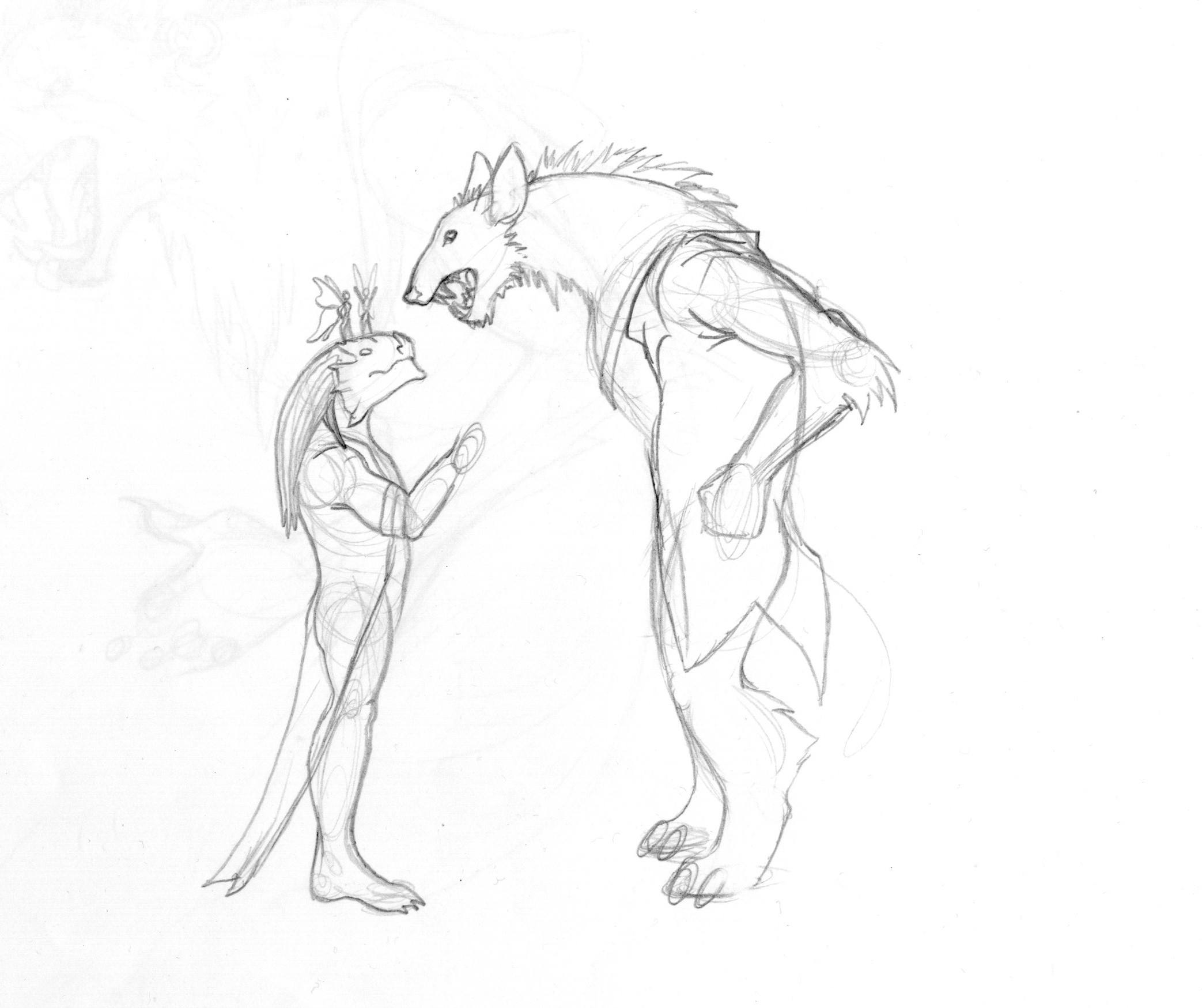
Challa O’Fee and Kleeve (along with Bluebell and Gayfist)

It hasn’t stopped yet. We’re taking a brief break for a couple of months in order to play a different game, but we’ll soon be back to D+D, and up until now we’ve played for virtually the whole of 2012. While there have been plenty of points where I’ve gotten a little frustrated (either with the story – especially on the very lengthy journey we ended up stuck on at one point – or with the epic combat sessions which, with D+D’s complex rules, could go on for a long time), and Monday nights haven’t always been the ideal time for me (thanks to regular deadlines that usually fall on a Monday morning), any downsides have been more than outweighed by the sheer amount of fun I’ve had. Roleplaying is an art that does sometimes get a bad reputation, but there’s nothing quite like embarking on a freeform adventure with nothing more than your imagination, and a gang of friends who are determined to have fun. It’s also helped that Ollie’s sense of humour has resulted in the year-long saga of our attempts to defeat Logarr being crammed full of unexpected homages to things like My Little Pony: Friendship is Magic and the Dolph Lundgren 1994 action movie ‘Men of War’. Combining this with Jehan’s lunatic gameplay has resulted in plenty of sessions where I’ve spent most of the time laughing my head off.

Tingle Treblebutt, aka Gayfist Fagballs – complete with his legendary tattoo of his own face on his arse. Because of ADVENTURE!

Highlights? Almost too many of them to count, and some of them involving humour so deeply wrong that it’s probably not the best idea to recount them… but there was our extended sea-voyage in the company of Captain Bulge-Eyes, a grizzled sea-dog with a crew of children and a romantic attachment to a flock of scat-hurling Harpies. There was the ‘rescue mission’ we were hired to perform, only to find out halfway through that instead of rescuing people we were actually kidnapping them (an act which then went on to cause a gigantic calamity in the war against Logar). There was the unexpected bout of turnip sculpture, as Metalfist tried to win over villagers with his artistic side (during which Kleeve also tried to sculpt a nearby tree with her chainsword, but ended up flattened beneath it). There were Shorwyn’s batallion of amphibious dwarf soldiers, known as the Iron Snorkels. There was the extended period during which we had to prevent Bluebell Sparklefluff from being forced into an arranged marriage, which was only solved (in an accidental way) by Metalfist deciding to burn down the castle we were staying in. There was Metalfist’s trip to a wizardly gay bar (and Bluebell’s unexpected debut as a drag artist). We also had the trip to the Island of the Sadness Monkeys, where I managed to nearly get killed by being pelted with coconuts (following a brief bout of illness thanks to being pelted with dung from the Harpies), and our epic journey to the Kord-Mania festival, a wrestling competition where we finally had to face off against the Muscle Pope himself, Randall Sauvage (who of course, bore no resemblance at all to WWE wrestler ‘Macho Man’ Randy Savage…). There was even the spirited argument I tried to put up in insisting that despite the whole vengeance-seeking and soul-stealing, my character wasn’t really evil, resulting in someone else saying the line: “Of course he’s evil, IT SAYS SO ON THE CHARACTER SHEET!”

My ultimate highlight, and the proudest moment of my gaming ‘career’, came late in the game – we’d defeated several major villains (including Keefer – taken from the aforementioned ‘Men of War’, an insanely macho bare-chested mockney with an overstyled goatee), and having snuck back into Logarr’s capital city, we were trying to figure out a way of disrupting Keefer’s state funeral (Keefer having been turned into the most improbable ‘hero of the people’ ever) which would stand any chance of messing up Logarr’s plans. Having gone through one of my brief bouts of feeling a bit frustrated with things in the game, I didn’t have any clue as to what we could do to make a real difference – until I came up with the idea of trying to fake Keefer’s ghost so that he could pull a Banquo, accuse Logarr of having killed him, and incite the people into a full uprising. Amazingly – everyone in the group went for it, we gave it a try – and it actually worked. We ended up with a ghostly version of Keefer stirring up rebellion and almost emptying the city before the final confrontation, and I couldn’t help feeling oddly proud of having pulled off such a wonderfully ridiculous result.

It’s had its ups and downs, but our D+D games have also pulled me through some difficult times this year, giving both me and Emma a bit of socialisation and fun at times when we’ve needed it. All of our friends have had difficult or trying years in one way or another, but D+D has given us a way of getting together, forgetting our cares, and revelling in the art of pure silliness (as well as a selection of completely unprintable jokes that had us howling at their sheer wrongness). And, at the end of the year, if I’m thankful for anything, it’s for a brilliant group of friends, and for Ollie, who’s done a wonderful job of marshalling the game for the whole year and steering us the right way. It’s been a riot in the best sense, and I hope we’ve got many, many more games ahead of us…

Kleeve, and Metalfist (sporting his specially made false beard of Unicorn Hair).
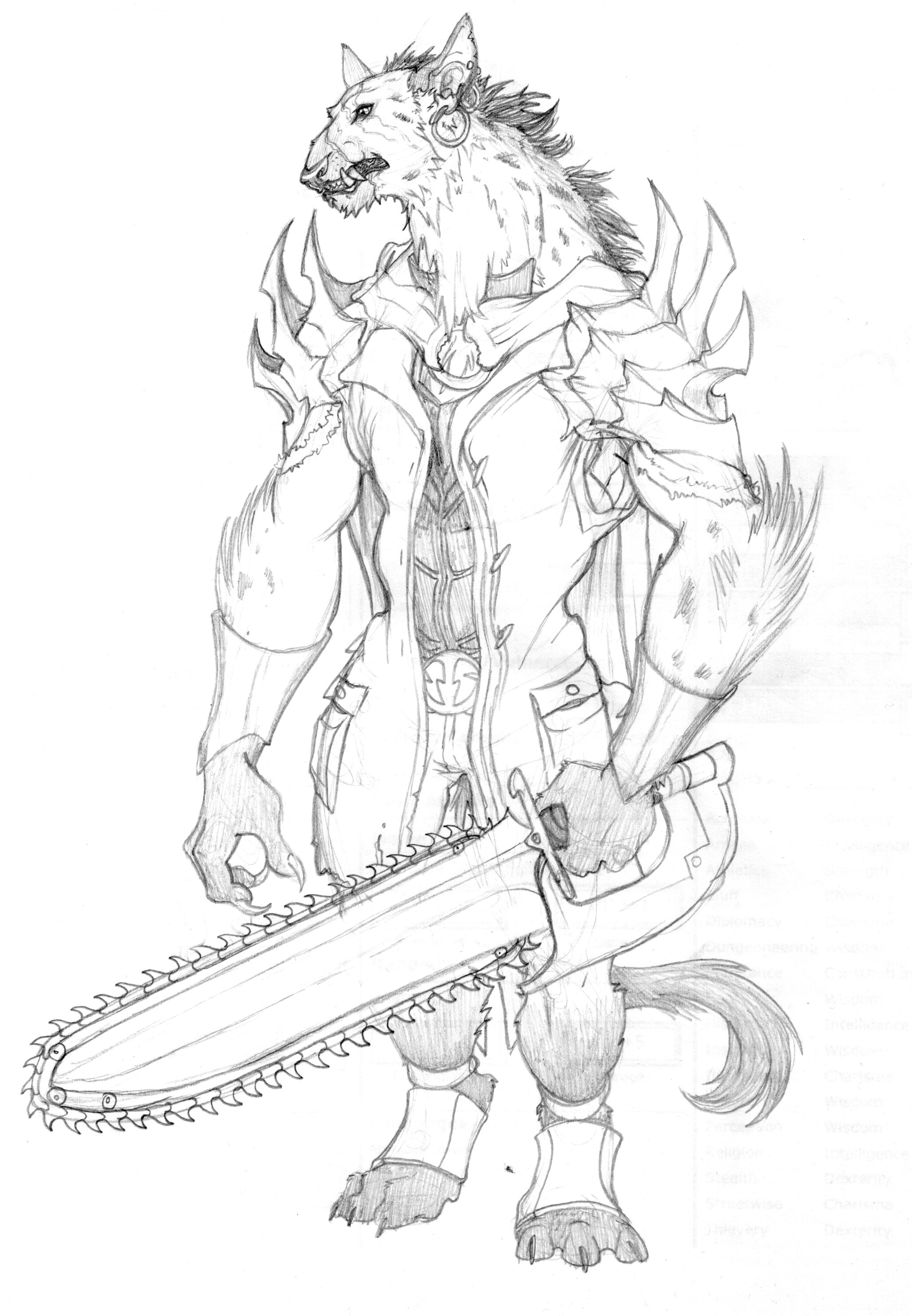
Jay’s character Kleeve – hairy, fanged and not-to-be-messed-with.
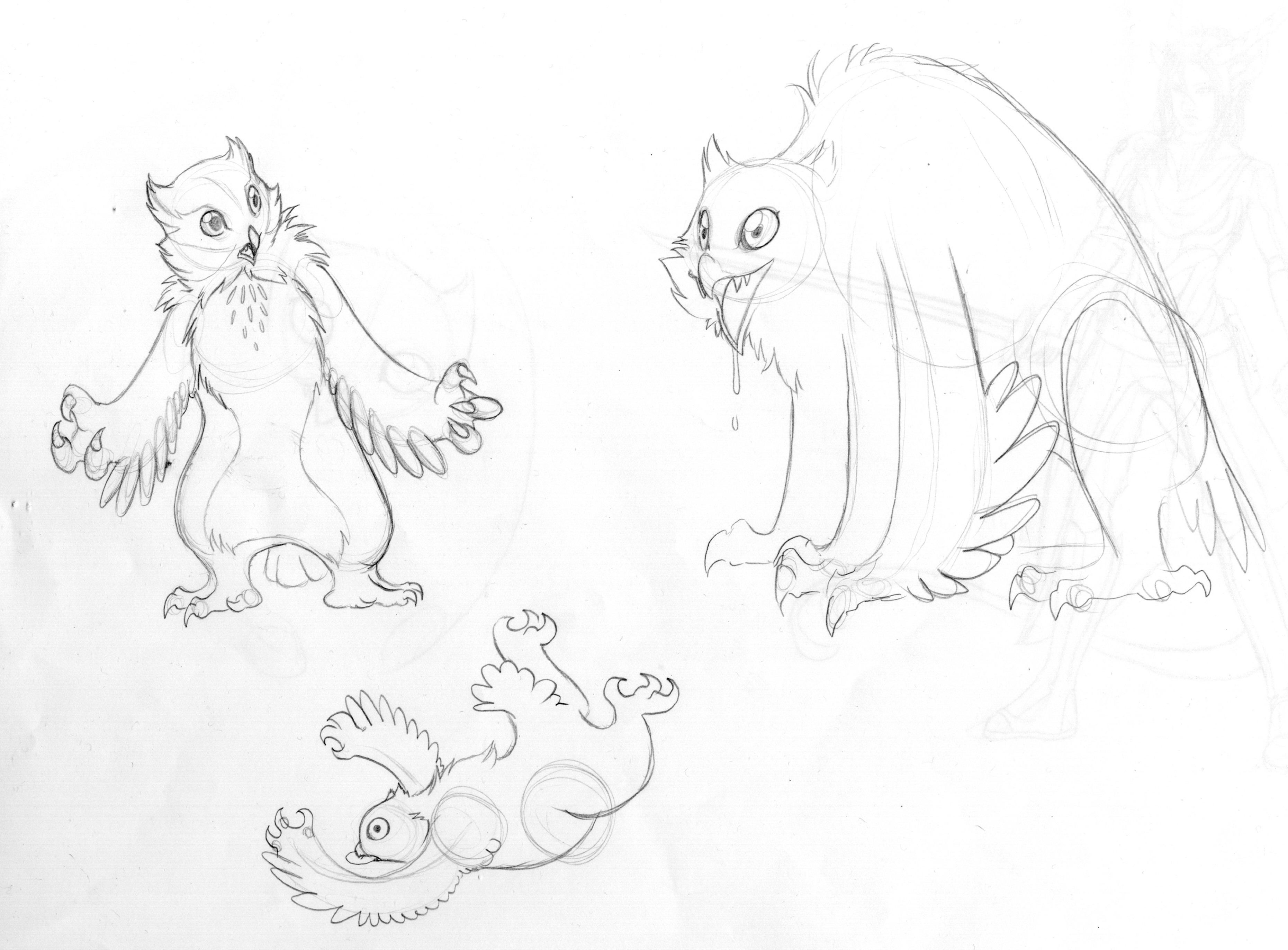
Beardface Goldberg’s animal familiar – the late, lamented Owlbear known as ‘Party Bear’…
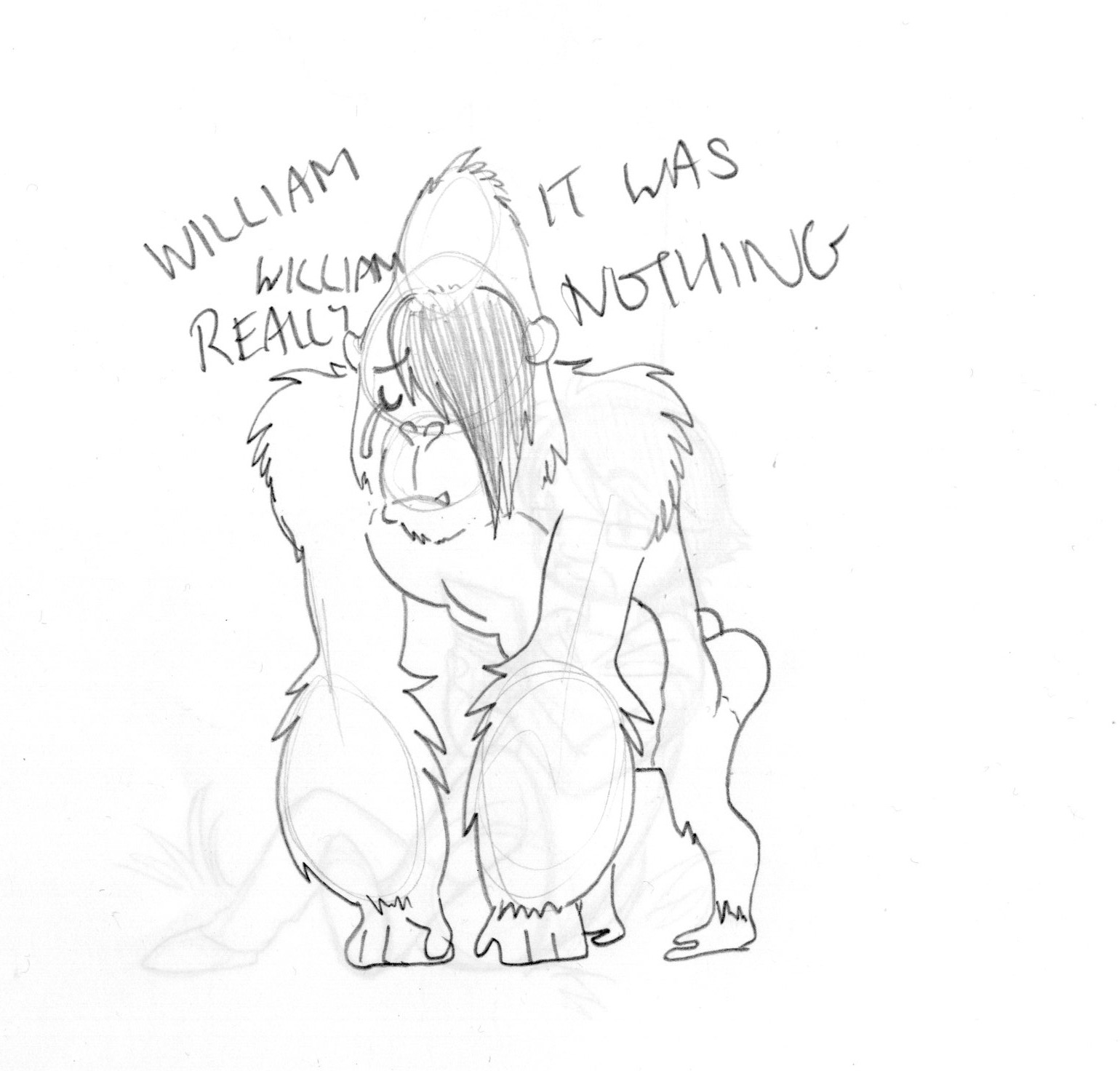
One of the extremely mournful Sadness Monkeys…
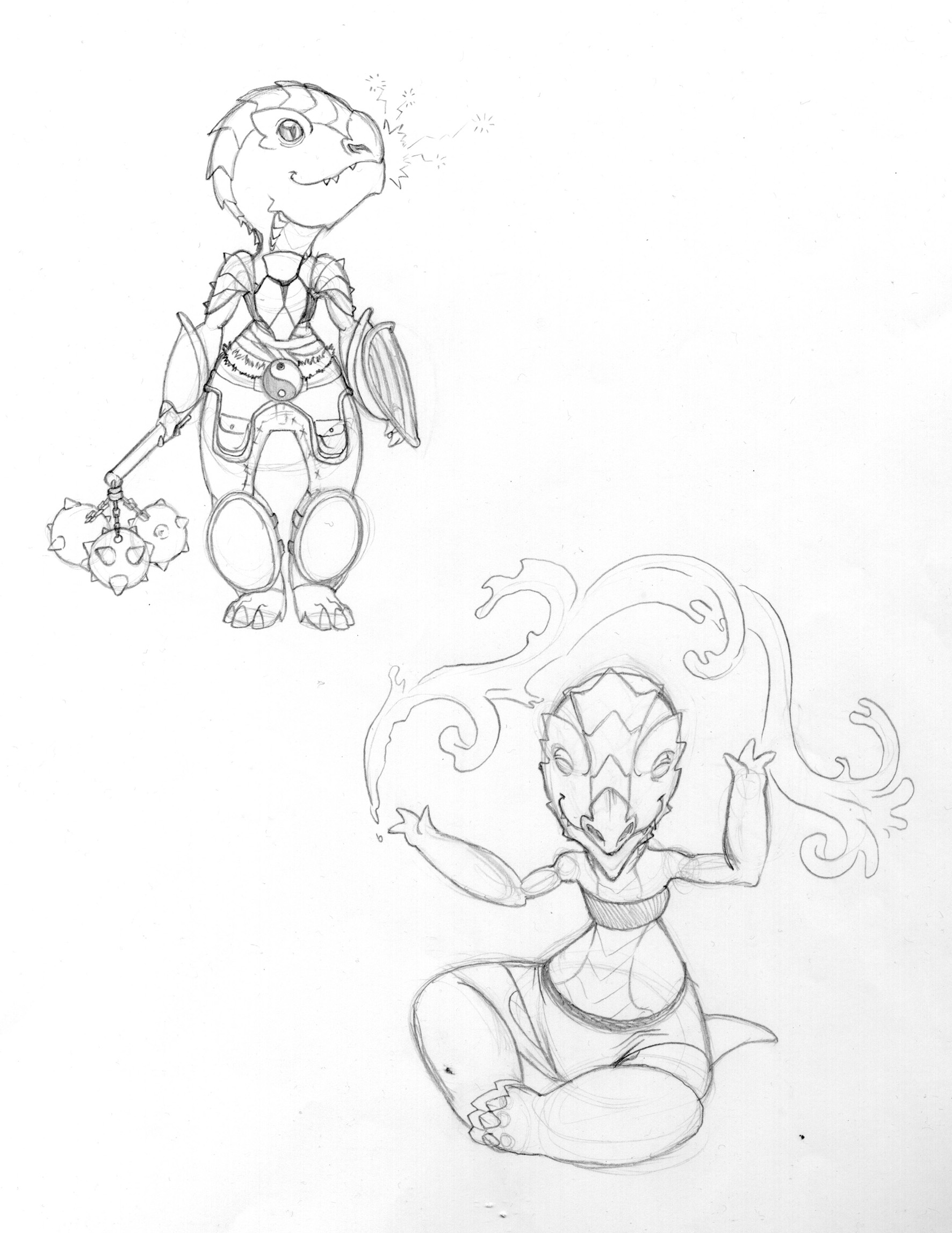
Some exceedingly cute Manga-style Dragonborn.
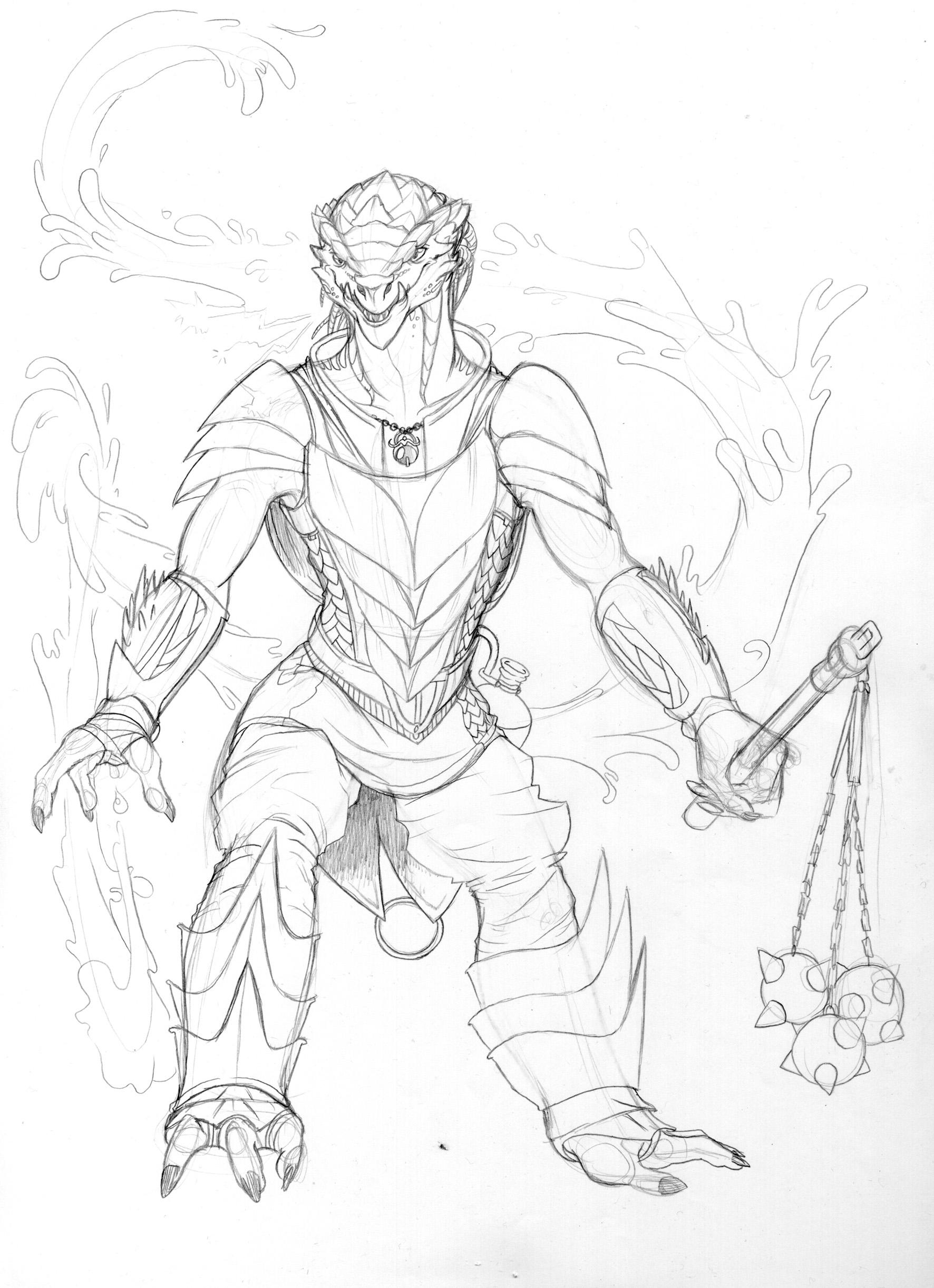
Tayzah – the second character to be played by Jay (and who ended up leaving the party in a bit of a bind…)

A Brief History of ‘Chill Out’ (Or: How I Learned to Stop Worrying and Write My Second Novel)

Some things need to be commemorated. I haven’t been blogging for a very long time (with a lot of effort taken up by my review blog Schizopolitan which, to be honest, is going through a very quiet patch right now). But when something really important happens, I still feel like the occasion needs to be marked – and having just finished my second novel, I wanted to talk about it a little.

(Firstly, the phrase ‘finished’ is a little open here – it’s done enough that I’m sending it to my agent, but I’m fully expecting to be doing some more work on it in a month or so (Hopefully it’ll just be small tweaks, though – I’m really not keen on the idea of having to do even more heavy-duty rewrites, after the stuff I’ve already had to do). Secondly, novels aren’t ever properly ‘finished’ – you just get to a point where you can’t learn any more from working on it, and you know it’s the best you can do at the current stage of your life. ‘Finishing’ a novel has just as much to do with learning when to back away from the keyboard, stop fiddling and leave the damn thing alone.)

Initially, for those tuning in for the first time, I should probably answer a simple question: what actually is my second novel?

Chill Out is a contemporary fantasy story, a mix of weird pulp adventure and emotional drama that could be described as somewhere between Neil Gaiman, Iain Banks, Douglas Adams and the weirder edges of British comic 2000AD. It’s the story of a woman taking her fiance home to meet the family she doesn’t get along with, and how the events of that visit force her to deal with a lot of the issues in her past (as well as putting both her and her family in a ludicrous amount of danger).

It currently weighs in at 178,000 words (which is big, but actually 10,000 words shorter than my first novel, at least), and here’s the blurb:

Don’t call her Chill…

She’s getting married. She’s got a job she enjoys. She’s got a good life. For Jill Baxter, everything should be fantastic. There’s only one problem:

Her family.

It’s eleven years since she left them behind, moved out, and changed her name. She doesn’t call herself Chill anymore – she’s living a normal life, and she likes it. But now that she’s engaged, questions are being asked. Her family want to meet her fiancé. She’s got to take him home for the weekend, to the sprawling country estate where she grew up. And there’s the very strong risk… that he might find out the truth.

The truth is that the world is a much stranger, wilder and more dangerous place than most people ever suspect. Jill’s family know this, and for generations they’ve been living at a crossroads in reality, battling gods, monsters and sanity-bending forces. They’ve travelled to other worlds, other realms, other universes. They’re some of the only people who stand between normality and the gibbering strangeness that lurks just around the corner.

And they’re exceptionally good at messing up Jill’s life.

One weekend. That’s all she’s got to manage – one weekend of keeping her fiancé from discovering the truth, and preventing her family from unwittingly tearing her life apart. But something else is happening, something that threatens more than just Jill’s engagement. Shadowy, terrifying forces are gathering, and before the weekend is out, the girl who used to be called Chill is going to find out that certain things – and certain names – aren’t so easy to run away from…

That’s the book that I’ve just (relatively speaking) finished. And, for those who are interested, what follows are some details on the strange and fairly organic way the ideas for this book developed…

‘Chill Out’ has had a rather complicated journey to the page. It’s a story that has, in certain ways, been lurking around my head since 1997, when I was engaged in a foolish (but weirdly enjoyable) attempt to break into the world of TV writing by a completely unorthodox (and, to be honest, shambolic and rather daft) route. While I was succesful enough to actually get meetings with a few people about my TV series pilot script – an overambitious bit of SF/Fantasy action adventure called ‘Sanity Claws’ – it never went further than that, and it’s probably just as well that it did, as I wasn’t anywhere near mature enough to be a decent writer back then. I did, however, come up with lots of ideas for other potential series, once of which – ‘Chill Out – was planned to be a kind of romantic screwball comedy, with one of its main characters being a punky, bisexual occult troubleshooter in her early-to-mid-twenties, who went by the name of Chill Baxter.

Being someone who grew up with an unusual name, I know the kind of effect it can have – so Chill was defined by her name, the same as me. She was designed to be a wild card, someone who functions outside the normal world, and who’d bounce off the other main character, who was someone perfectly normal dragged into a world of magic, adventure and strangeness purely by a twist of fate. (Yes, alright, a lot of this is influenced by the X-Files era, I’m completely unashamed to say). It was a potentially fun set-up – the wild and crazy girl versus the straight-laced guy – and I honestly felt there was some definite possibilities there for something that was commercially viable.

I just couldn’t actually write the damn thing.

It happens sometimes – you get an idea that seems like it should be dynamite, and yet it just doesn’t come together. In this case, it was simply that I couldn’t quite get the character to catch fire and actually start working – I’d thought all I’d have to do is write ‘punky bisexual occult troubleshooter’ and the rest would write itself, but what I actually ended up with was a character who wasn’t that interesting, and was verging on one-note. I still liked her, and tried her out on a number of stories that simply didn’t come together. It’s tempting to speculate what would have happened if I’d learned one of my most important writing lessons back then – simply, that you actually have to finish things – but after a while, it seemed pretty much that Chill Out wasn’t going to happen, and Chill went on the list of characters who I liked, and would at some point find an actual place for.

It wasn’t until late 2006/early 2007 that I started thinking about the idea again – in this case, it was because I was rewriting my first novel (a lengthy process which taught me a lot) and was trying to think up what I could do next. Various ideas were floating around in my head – and one of the things that my first novel, The Hypernova Gambit, had taught me is that it’s always good to look at things from a different angle. The Hypernova Gambit started out life as a proposal for a Doctor Who novel, and for years I thought it was stuck that way, until I finally came up with a way of taking the Doctor out of the story. As a result, the idea of turning ideas on their head was something that at least appealed, but I was mulling things over, throwing concepts at the wall and seeing what stuck.

What actually made it work was, oddly enough, thinking about my sister. She’s three years older than me, her name is Samantha – and, with a surname of Bullock, you can imagine that her time at Secondary School wasn’t exactly a non-stop cavalcade of blissful fun. We both had a rough time at school in different ways – but what really made me think was the realisation that she’d been through a lot of the kind of things I’d been through, only she’d handled things in a different way, and it had – in essence – made her a different person from me. Not a better or worse person, just a different one. It’s very easy to see the way you perceive the world as the way the world is – for example, my middle name is John, and my parents gave it to me so that if I did get to the point where I was fed up of being called Saxon (they were sensible enough to realise this might be a problem), I could switch, and Saxon could become my middle name. Only, I never got fed up with it, and the idea of changing my name to make life easier for myself and suit everyone around me never even occurred to me, to the extent that I was genuinely shocked and surprised when I found out from my parents (at the age of 16) that this was the reason I had John as a middle name.

So, all this was going through my head – the way I’d grown up, contrasted with the way my sister had grown up, the way we’d evolved into different people and gone down very distinctive paths. And suddenly, like a lightning bolt from the heavens, the idea was there inside my head, waiting for me:

What if Chill didn’t like her name? What if instead of being defined by having such an odd name, she’d actually found it an immense annoyance? What if instead of being punky, bisexual and off-beat, she was actually a ridiculously normal person saddled with a name that’s extremely hard to explain, one that she’d legally changed the minute she turned 18 years old?

That was the key. That was the moment when I sat up and went “Ooohh…”, because suddenly, I had a way of doing a story I’d been trying to write for a long time. I’ve got a very strong interest in characters who dwell on the border between the normal world and the unreal – I’ve spent a long time trying to tell those kinds of story, and I love the idea of treating the offbeat and the insane with a very distinct kind of emotional reality. Trouble is, finding ways of contriving for a ‘normal’ person to get involved in weird investigations and adventures isn’t always easy when your normal character isn’t, say, an FBI agent. I’d tried a whole series of solutions that didn’t work, or didn’t play, or simply felt way too contrived (whether it was ‘They’re flatmates’, or ‘They’re old university friends’ or ‘They work in the same bookshop’), and it was always near impossible to come up with a solution to the question “Why doesn’t the normal character just run like hell the minute weird stuff starts happening?”

And suddenly, I had an answer. They would, but they’re connected via family. Someone who grew up as the normal sheep of the family – someone who was raised around weirdness, and all they wanted to do was get away.

Instantly, you’ve got conflict, and you’ve got something that’s emotionally relatable. I soon realised that I was basically planning a family drama as seen through a really weird lens, and to force these characters together, I figured a nice way of doing it would be a ‘meeting the parents’ set-up, where at least some of the story is based around the central character having a fiance who doesn’t know the truth, and building tension around the risk that they might find out. Obviously, there’d be a threat as well (and it took me a while to find the threat – it wasn’t until I finally found an effective set of bad guys that the story felt like it was starting to work), but the plan was to try and keep the emotional drama (and a certain amount of comedy) going all the way through. I didn’t know exactly how I was going to write it, but I figured I was just going to have to find out. The fact that my agent liked it (and said it was potentially a more sellable idea than The Hypernova Gambit), combined with the fact that the editor who I’d had contact with about The Hypernova Gambit also said she liked it, made me think that it was worth pressing on with, whatever happened.

I’ll be honest here about influences, as well. I’m a bit of a magpie when it comes to influences – I’ll grab stuff from anywhere I find it, and as a result ‘Chill Out’ has ended up a bit of an eclectic blend. First of all, there was Anansi Boys by Neil Gaiman – I’d read it and enjoyed it relatively recently, and I liked the way that it mapped normal emotional problems onto a fantasy story – after all, it’s the tale of a family reunion that gets out of hand, and I wanted to try and do that with the book, combine crazy fantasy with emotional reality so that no matter how weird it gets, it’s always based around something relatable and real. Then, there was Jonathan Strange and Mr Norrel by Susanna Clarke – a book I absolutely adored, one of the most immersive fantasies that I’d read since Lord of the Rings, which made me really want to work on the history and size of the world I was creating. I love stuff that feels like it stretches out beyond the confines of what you’re reading, and I adored the convincing background and sense of myth.

Another influence was the comic series Planetary, by Warren Ellis and John Cassady, mainly for the way it explores pulp fiction as history. I’ve always liked the idea of building whole universes, and being able to do stories where anything can happen, and Planetary’s left-field approach to adventure fiction sent me in a lot of odd and interesting directions. There was also – rather more surprisingly – the comedy series Arrested Development, whose energy and oddball setup (the one normal member of a ridiculously rich family tries to keep his relations on the rails) gave me a road map on certain ways I could handle the story. There was the 2008 film Rachel Getting Married – directed by Jonathan Demme, it’s a harshly emotive drama all about family dysfunction with a stunning performance from Anne Hathaway, and there’s one particular scene – where Hathaway’s character is confronted and emotionally torn to shreds by her sister – that had a massive effect exactly how real I wanted to play the emotional side of the story.

Most of all, though, there was Grant Morrison’s head-spinning run on the experimental superhero comic Doom Patrol. Possibly my favourite superhero comic, it’s packed full of energy, ideas and weirdness, as well as being one of the few superhero comics that are genuinely about being a freak – the Doom Patrol are fascinating characters, but they’re also damaged people who you’d never actually want to be (unlike the mostly far more photogenic X-Men). Re-reading stories like The Painting that Ate Paris and the whole bewildering Flex Mentallo saga really gave me a handle on the tone I wanted to go for, as well as showing me what bad guys I should use. (I resurrected a team of bad guys I’d used in various attempts at stories, but – showing that I may have at least learned something – I pared their ridiculously complex motivation down to a one-sentence pitch line, and they’re so much better as a result).

The other influence is more of a general one, and is also more of an influence I was reacting against, than anything else. In short – urban fantasy and ‘paranormal romance’, especially the first-person driven tales of kick-ass heroines who ride the line between mundane reality and wild fantasy. I’ve read a number of these books (mostly thanks to work), and one thing which had always goten to me was the way they were always based around very strict fantasy rules – specific mythologies, specific references – and I liked the idea of trying to do an emotive, character-driven adventure story with a strong female central character, but which also has the kind of anything-can-happen storytelling that appeared in the kind of crazy comics that I grew up with (2000AD being a major touchstone here). I wanted to do something that would play a little on that side of the line, but which would also subvert it and deliberately not go in expected directions. (I’ve also ended up with a novel that features a whole selection of strong female characters, so thinking about what would appeal to a female audience wasn’t exactly insane…)

All these influences came together over the period of around two years – and it hasn’t exactly been easy. I didn’t even know if I could write Chill Out, so I started without having fully planned it out (mainly because it was the only way I was ever actually going to get started). Yes, I got the joy of improvisation, and there’s a lot that happened organically (like the way an off-hand idea about a supervillain trapped in a section of my main character’s house evolved into one of the most emotive threads in the book), but it also meant that I ended up going down a few blind alleys. One thing that I have learned thanks to Chill Out – which confirmed something I was told by an editor in relation to my first book – is that you’ve always got to stay focussed on what the book’s actually about. You can have lots of stuff surrounding your central thread, but that central thread itself needs to be strong and clear. I once again ended up with a book that was a little too busy, into which I was cramming too much stuff – and the end result was that I spent a big proportion of the last 6-9 months doing a massive rewrite, and taking out two characters (one of whom was a minor supporting role, the other of whom was previously a character I’d thought was vital). It was a slog, and I want to avoid doing it on my next book… but Chill Out is stronger because of the changes I’ve made.

It was a slightly loopy choice – to do a book that was part fantasy adventure, part comedy, part intense family drama (something I had no experience whatsoever of writing), and while I am hoping to do more books in this sequence of stories (it’s planned out as a five volume series), the other stories would be extremely different, bigger in scale, and hopefully a little less intense. Because while the initial story was pretty simple, and I kept the action confined mostly to one weekend (with a handful of flashbacks), I still managed to get a pretty damn big book. I’m aiming for my next book to be shorter, by golly – as books these size are a major, major slog to get right (and I want to make sure that I’m having fun while I write).

And yet, I’ve learned a hell of a lot. Pushing myself into unfamiliar areas has actually helped – I’ve had to work on the characterisation of this novel harder than anything I’ve ever done writing-wise before, and it’s made me want to go back and work on The Hypernova Gambit again simply because I want to be able to use what I’ve learned to make that book as good as is humanly possible. There have been plenty of times when this has been an incredibly difficult process – and, to be honest, I also found myself going through some major insecurity issues last year.

Keeping confidence in yourself when writing is hard, especially when you’re working on big projects. Publishing always moves slower than you want it to – and when it got to the point when I realised it had been three years since I’d gotten my agent, and I still hadn’t finished my second book, things did start to get to me a little. I’ve been hanging out on Twitter a lot as well – and while some sides of social networking can be great, there can be something a little dispiriting about constantly, every day, being reminded about all the progress that everyone else is making, and all the wonderfully exciting things they’re doing, while you’re still slogging away on the same book you’ve been working on since the end of 2009. That kind of thing can very easlily feed insecurity – that you’re not good enough, that you’re not fast enough, that your book isn’t sellable enough, and add to that some complicated life changes (like the fact that I moved house last year, and that my girlfriend has been suffering from some pretty major health issues for the past few months), and it’s easy to get downhearted – when the truth is that sometimes, life gets in the way. And that’s okay.

It’s been a hard road keeping myself going on this, especially since the end result is… well, it’s extremely me. I’m very proud of it, though – it’s better than the book that I set out to write, and even if this one isn’t the one to get me published, I’ve learnt even more from writing Chill Out. I’m going to keep going. I’m going to keep writing. And one of these days, I am going to make it.

Anyhow – my current plan is to take a few days to do some practical-related stuff, get a few things sorted, and then knuckle down to some serious work on my next project – a romantic comedy adventure, set in the same universe as Chill Out, currently under the title of Bradley and Hoyle. I’m planning it as a short and fun screwball adventure, something that’s hopefully going to come in at about 120,000 words maximum (unlike the 178,000 word behemoth that is Chill Out’s current draft). I’ll work on that until my agent gets back to me with everything I need to do to Chill Out in order to fix it (I’m expecting the list to be pretty big), at which point I’ll hopefully just have to do a final polish, and then Chill Out will be out of the door – and I graduate once more into the world of waiting to see if the next e-mail I receive is THE e-mail. Once that’s done, I’ll trek onwards with Bradley and Hoyle – once that’s done, my next project is rewriting The Hypernova Gambit. And once that’s done? Well… if by that point I still haven’t gotten a bite (figuratively speaking…), I’m going to take a risk and work on the incredibly dark, female-oriented and sexually explicit fantasy series that I’ve been developing. Because, frankly, the idea of writing it scares me (it’s a pitch-black story), and sometimes I think being scared is a good thing. I guess we’ll see…

But for now, Chill Out is done. It’s been an adventure. And I hope to get to share it with more people soon.

Schizopolitan

I really should have posted this last week, but life got rather busy and intense in a whole collection of interesting shades. Therefore, I must make a proclamation:

I have a new review blog. And it’s called Schizopolitan. Look upon my works, ye mighty, and DESPAIR!!!

For anyone who’s still counting, that’s the secret project I was working on at the end of last year. The focus is mainly going to be on comics (hopefully dealing with them in an accessible and fun manner), but there’ll also be TV, Film and Book reviews as well – in short, the kind of stuff most of this blog was made up of when I wasn’t talking personal, but tidied up a bit and presented a little bit more structured. I’ll also be digging back into the history of this blog and resurrecting occasional posts and reviews, giving them a new lick of paint and republishing them on Schizopolitan. I’m going to be doing this for at least a year (at the moment I’ve got new content going up every week- this may slow down at some point), and it’ll be interesting to see how it develops. Hopefully it’s going to be fun, and you’re more than welcome to come along for the ride.

Schrodinger’s Novelist

The start of another week. And this time… well, there’s a possibility that I might actually know what’s going on with my book once I get to the end of it. Of course, I might not. This whole process (since the build-up to the rewrite, the rewrite itself and the wait since then), has gone on for a very long time. And I’ve still got to face the possibility that out of the two alternate futures facing me, I could end up in the one I don’t want. But, to be honest, it would be very nice to just settle the uncertainty, open up the box, and find out whether the cat’s alive or dead. There’s a lot of uncertainty lurking around in my head, looking for somewhere to go. At the least, I’ve also got plenty to do – the next six weeks, working up to Christmas, are going to be pretty busy. And I’m spending Christmas in Cornwall, and will be out of Manchester for two whole weeks, which is another unexpected but extremely nice turn of events.

What I’m trying to say is that by the end of this week, I could be a bit upset, and a bit miserable, but generally dusting myself off and readying myself to move onto the next challenge. I could be both happier than I can ever remember being, and gulping in slight terror at the size of what I’m about to take on. Or, I could still be stuck as Schrodinger’s Novelist, wondering when my waveform is going to collapse.

Only one way to find out…